During milking, a light flashes. Straight away, the milker knows: the conductivity of that teat is off. A sensor that measures conductivity, milk volume, milk flow, the temperature and the vacuum level. In addition to monitoring udder health at the teat level, the sensor also provides a detailed overview of milking parlor performance. That’s the Milk Sensor, CowManager’s latest innovation.
The story behind CowManager’s newest innovation
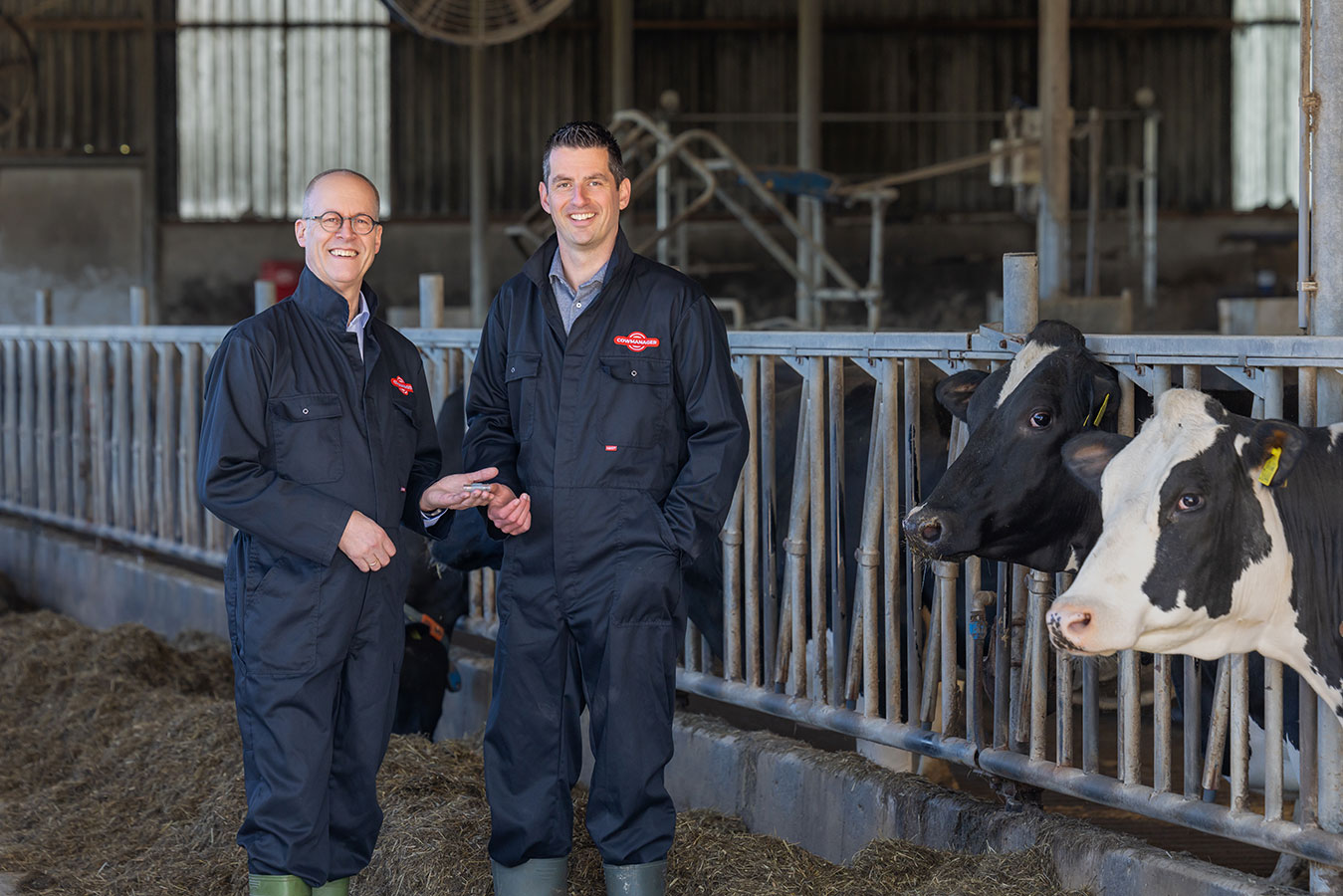
CowManager’s Gerard Griffioen and Koen van Meurs with the Milk Sensor.
“Thanks to the Milk Sensor, farmers can stay one step ahead of udder health issues,” says Gerard Griffioen, dairy farmer and founder of CowManager. Mastitis not only affects milk production and animal health, it also affects profit. That is why preventing it is vital.
“When I was visiting one of our customers who milks about 125,000 cows, I saw his struggle with mastitis and the accuracy of his milk data. Cows were left unidentified and for them, no milk production data was available. And at the same time there was a wealth of data from other cows – but unreliable,” Griffioen recalls.
That’s how the idea for the Milk Sensor came about.
“Our Milk Sensor was developed in collaboration with dairy farmers,” says Koen van Meurs, Head of Product Development, enthusiastically.
Because the Milk Sensor measures at the teat level and CowManager has an extensive global network of large-scale dairy farms, a significant amount of data has been collected in a short amount of time.
Comparing our results with milk analyses from the lab was a big part of the development process and vital for ensuring maximum reliability. Artificial Intelligence, in combination with CowManager’s many years of experience with algorithms and large-scale data, resulted in a smart, advanced and reliable dashboard.
Five indicators in one Milk Sensor
The Milk Sensor currently has five indicators: temperature, conductivity, milk volume, milk flow and the vacuum level.
“The Milk Sensor is positioned very close to the udder to ensure reliable data. Milk quality has also been taken into account: the sensor ensures a clean, unobstructed milk flow. The system can be fully customized. Installation is quick and easy: cut the tube beneath the milk cup, slide the transparent sensor into place and reattach the tubes on either side of the sensor. This works with virtually any brand and type of milk cup in the milking parlor,” Gerard explains.
All data computer. CowManager’s Milk Sensor is available to all dairy farmers who have a CowManager ear sensor or who wish to purchase one. In the future, the Milk Sensor can also be upgraded with cow identification.
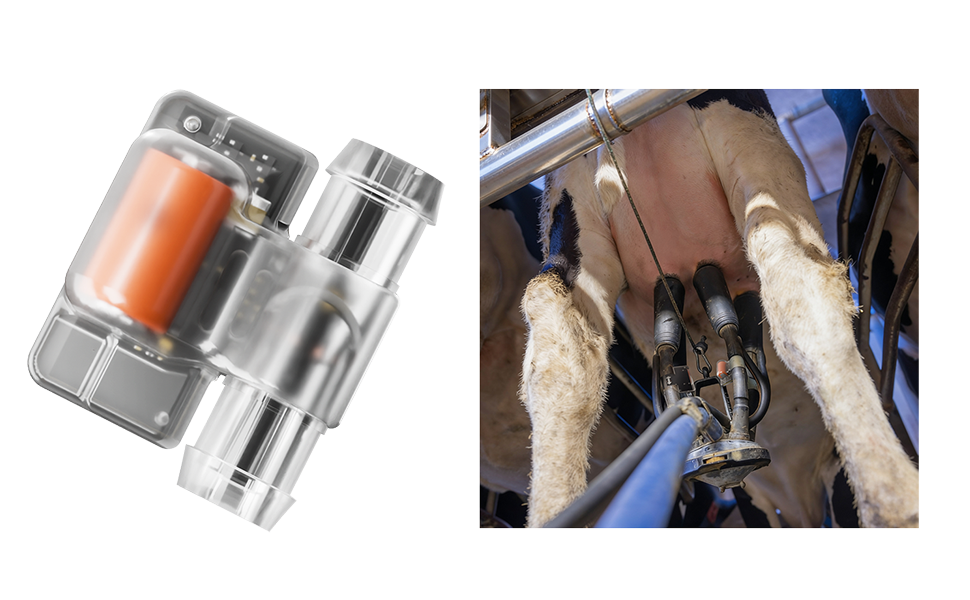
Left: CowManager Milk Sensor. Right: The Milk Sensor in action during milking.
Early detection and prediction of mastitis
Helping to detect and even predict mastitis is one of the Milk Sensor’s main features. Continuous monitoring of milking parlor performance has a positive effect on teat health and can prevent risk factors for mastitis such as teat tip calluses.
The Milk Sensor can also play a key role in producing milk with a low somatic cell count. Gerard and Koen are looking even further ahead.
“This preventive approach has a positive impact on animal welfare. It will help reduce culling due to high cell counts or mastitis problems,” the men predict. “This ultimately results in a longer lifespan for the cows,” Gerard explains.
Performance of each unit at a glance
Another main feature of the Milk Sensor is to analyze milking parlor performance down to the level of individual milk cups.
“The proper functioning of a milking parlor is essential for preventing udder problems. Blind milking, air in the milk or a low flushing temperature aren’t visible, but they can pose a huge risk when it comes to mastitis or a high bacterial count,” Koen explains.
The Milk Sensor monitors this and helps detect mastitis. The Milk Sensor also ensures continuity throughout the milking process when multiple milkers are involved. Any differences between milkers or milking sessions will immediately become visible.
“The combination of the ear and Milk Sensor and the accompanying sorting gate offers unprecedented possibilities,” says Gerard about the entire CowManager ecosystem. The Milk Sensor is a key component of the overall package.
But, according to Koen and Gerard, that’s not all. “This is just the first step. Eventually, the Milk Sensor will be able to measure even more parameters in both the milk and the milking parlor,” Koen reveals.
Discover More
The Milk Sensor adds a new layer of insights – quarter-level milk data that connects to the health and performance signals you’re already tracking with CowManager ear sensors.
Sign up now to be first in line for Milk Sensor updates, trial insights and availability announcements.
Stay Up to DateYear one with CowManager is often about trust. Year two is about unlocking potential.
Once CowManager is installed, producers spend the first several months learning the alerts, understanding the technology, and building confidence in the system. The CowManager ear sensors measure behavior and temperature. Based on this data, both individual and group alerts are calculated.
The dashboard is an easy-to-use visual representation of real-time data, designed to simplify daily routines. All relevant alerts and insights are displayed in one place through various widgets. The onboarding process ensures producers know how to respond to alerts and leverage the basics.
Year two is where proactive management, integration with farm management software, and team consistency turn insights into measurable impact. Here’s how top dairies make that shift.
Moving beyond basics: integrating farm management software
After year one, the real value emerges when integration deepens between CowManager and on-farm systems, including farm management software. These integrations increase efficiency by reducing double entry and streamlining workflows.
For example, CowManager integrates with herd management and farm management software to synchronize cow data and monitor compliance more effectively, ensuring farm protocols are consistently followed. When pregnancy check results are integrated into herd-management software, it becomes easier to identify discrepancies in protocol execution.
The level of impact depends on herd size and management style, but nearly every dairy can unlock value by advancing these integrations.
The overlooked details
Compliance is not just about following protocols, it is about protecting profitability. Too often, basic compliance such as tag maintenance gets overlooked. Low batteries on multiple tags can compromise accuracy and trust in the system, no different than missing steps in a breeding protocol.
Consider this: What if an employee skipped part of the Ovsynch sequence? Breeding effectiveness would plummet, leading to more days open, lower conception rates, and ultimately higher costs. By monitoring alerts and compliance through CowManager, these breakdowns can be caught early.
Breeding and reproduction strategy with data and farm management software
CowManager data allows tracking of historic heats and real-time compliance. When combined with farm management software, this data becomes even more valuable for decision-making.
For example, if three open cows showed heat alerts but were not inseminated before the next vet check, how would that affect palpation rates? If heat alerts were correlated with insemination records in farm management software, how many days open could be saved? These “what if” analyses highlight not only the cost of inaction but the profitability of improved compliance.
Producers should ensure optimal utilization of Fertility Insights by reviewing management settings within the CowManager web application. Parameters such as average cycle lengths, deviations from norms, and voluntary waiting periods can be customized to align with specific herd requirements.
Health and transition management
The same concept applies to health. What if a review of cows that were sold or died, using insights from CowManager and farm management software, revealed missed sick alerts? What if transition cows were managed by listening to eating minutes instead of relying solely on pen moves?
With CowManager, producers can “listen to the cows.” For example, eating-time data in the fresh pen can identify at-risk animals before visible symptoms. These proactive shifts can reduce treatment costs, improve survival, and shorten recovery times.
Tools within CowManager help detect transition diseases such as ketosis and mastitis up to 50 days before calving. This simplifies transition management, especially when symptoms are difficult to detect naturally. With 75% of adult-cow diseases occurring in the first 30 days after calving, early intervention makes a significant difference.
Symptoms of ketosis, such as loss of appetite, weight loss, and sweet-smelling breath, are difficult to detect early without monitoring. Likewise, early signs of mastitis, including swelling, heat, or hardness in the udder, are easily missed, especially in large herds. Mastitis severely affects milk production, making early identification critical to both animal health and business performance.
Team approach to success
The dairies that have the most success with CowManager use it as part of a broader team strategy, often alongside farm management software. Consultants, veterinarians, and nutritionists are brought into the data conversation.
After year one, involving this advisory team becomes even more valuable. Together, they shape protocols, adapt management practices, and find new efficiencies that drive profitability.
The difference between “working” and “winning” often lies in consistency. Employees must interpret alerts the same way every time. Multiview enables consultants, veterinarians, and nutritionists to participate, turning individual data points into shared strategies.
Simple SOPs for common alerts ensure that whether it is heat detection or a sick-cow alert, everyone knows the next step.
Looking deeper: connecting data, genetics, and performance
CowManager also offers opportunities to connect cow data with genetics. By analyzing how specific genetic indexes correlate with health alerts, alongside data from farm management software, producers can identify traits linked to stronger performance.
This influences both current herd decisions and future breeding strategies.
Year one establishes trust in CowManager. Year two is where real potential is unlocked through integration, compliance, data-driven protocols, and team collaboration. By moving from reactive to proactive management, dairies shift from simply using alerts to truly transforming herd performance.
CowManager works. The question is: Are you using it to its full potential?
Talk with your CentralStar team about CowManager and how to unlock its full potential.
Author: Jared Krull, Vice President of Sales & Service, CowManager North America
Talk to the expert
Connect with a CowManager expert like Jared Krull to unlock more value from your herd data and farm management software.
Get in Touch
In this episode of The Select Sires Podcast, host Ethan Haywood sits down with CowManager’s own Lori Nagel, DVM, to explore how advanced calf health monitoring technology is transforming youngstock care. From early disease detection to maximizing lifetime performance, this conversation highlights the power of real-time data to support healthier calves and protect your herd’s genetic investment.
Why Calf Health Is Critical to Herd Performance
This Select Sires Podcast, Lori Nagel, DVM, Performance Specialist at CowManager, discusses how advanced calf health monitoring technology is transforming modern dairy farm management. The episode highlights the importance of protecting youngstock through early disease detection, proactive intervention, and data-driven decision-making.
Driving Profitability Through Precision Dairy Technology
With rising input costs and increasing pressure to maximize lifetime productivity, calf health has never been more critical to overall herd performance. Lori explains how CowManager’s ear sensor technology and real-time behavioral monitoring provide actionable insights into eating, rumination, activity, and resting patterns. By leveraging precision livestock farming tools, producers can detect subtle behavioral changes that often indicate illness, well before visible clinical symptoms appear.
The conversation dives into how continuous cow and calf health monitoring systems support faster treatment decisions, reduce labor demands, improve treatment accuracy, and ultimately increase survival rates and long-term milk production potential. Whether calves are housed individually or in group settings, CowManager’s herd management software enables dairy producers to monitor youngstock remotely and respond quickly to health alerts.
Supporting Youngstock
Listeners will gain insight into how data-driven dairy management, automated health alerts, and proactive youngstock care help protect genetic investments and improve overall farm profitability. A dairy producers looking to strengthen their calf management strategy, enhance animal welfare, and implement innovative technology that drives measurable results should listen now!
Listen to the Podcast
Curious to hear the full conversation with all of Dr. Lori Nagel’s insights? Listen to the Select Sires Podcast on Spotify.
Download the Calf Guide
Our calf rearing guide is designed to help dairy farmers and youngstock managers take full control of the early stages of development, with a strong focus on calf health monitoring from just 14 days old.
Download nowEarly detection of for example calf pneumonia is essential in raising healthy youngstock. At Benninghoff MilchEnergie, ultrasound lung scans serve as a reliable verification method, confirming that CowManager’s Youngstock Monitor accurately detects early respiratory issues, often days before symptoms appear. This case also shows the power of collaboration: the herd manager and the veterinarian work closely together, combining CowManager’s data with expert clinical insight to make smarter, earlier interventions.
“Our goal is for our calves to grow into healthy, high-performing dairy cows.” Anna Schaate, Benninghoff MilchEnergie.
Detecting Calf Pneumonia Before Symptoms Appear
In addition to our established modules for cows, CowManager introduced the Youngstock Monitor for calves last year. The program enables dairy farmers to improve their calf management. At the Benninghoff Milchenergie farm, herd manager Anna Schaate and her calf team have long been using CowManager for cows and young cattle over ten months, and it now also helps them to successfully detect respiratory disease in calves at an early stage.
Calf health is an important aspect of dairy farming because only healthy calves become productive dairy cows. Farmers and veterinarians are always looking for tools to help them rear healthier calves and reduce the reliance on antibiotics. Pneumonia, in particular, has long been a major challenge in calf rearing. It poses a risk of permanent damage to the lungs and can later on lead to reduced performance as a dairy cow. In practice, the problem is that the infection is often not noticed initially and only severe cases with clear symptoms are clinically apparent. CowManager’s Youngstock Monitor is a valuable tool for detecting sick calves at an early stage. The major advantage of this system is that it flags calves with a health warning and provides an alert even before the animals start showing visible signs of illness.
“I tend to rely on figures, data, and facts, and that’s why I like working with CowManager’s health data for calves.”
Early detection of changes in activity with CowManager
And that’s precisely why herd manager Anna Schaate from Benninghoff Milchenergie in Bevern decided to use CowManager for calves too. “I tend to rely on figures, data, and facts, and that’s why I like working with CowManager’s health data for calves,” she explains, “because once calves stop drinking, you’ve got a major problem on your hands.” At first she thought that she wouldn’t see much difference in activity because the young calves don’t move around that much. “But I came to realize how useful CowManager is when it comes to the early detection of calf pneumonia.” The health warning allows her to recognize early in the day which calves are deviating from the group average in terms of activity and drinking. She then considers information on group changes, rehousing, weaning, and dehorning as this may also influence the data. If there are no such factors to consider, Anna Schaate then examines the calves in question with an ultrasound scan of the lungs.
“We’ve found that CowManager shows us the animals that have pneumonia two days earlier than we would have recognized their labored breathing and general poor health. Since we started consistently monitoring the calves using a combination of CowManager and LungScan, we’ve been able to treat the pneumonia before the symptoms become apparent”
Early stages of respiratory disease are detected in good time
The CowManager health lists are checked three times a day. Anna Schaate identifies calves with deviations and then examines them with her colleagues from the calf team. Depending on the diagnosis, the calves are treated with anti-inflammatory drugs or painkillers. “We’ve found that CowManager shows us the animals that have pneumonia two days earlier than we would have recognized their labored breathing and general poor health,” she reports. “Since we started consistently monitoring the calves using a combination of CowManager and LungScan, we’ve been able to treat the pneumonia before the symptoms become apparent,” adds the herd manager. “I’m not a fan of the blanket use of antibiotics, so we only really treat calves when it is absolutely necessary,” she says, explaining another advantage of this approach.
Working with a veterinarian on prevention
The herd’s veterinarian, Hanna Strodthoff-Schneider, confirms the benefits of using activity monitoring for the early detection of disease: “With pneumonia in particular, it allows us to identify the affected calves at a very early stage of the disease – at a time when lung tissue is showing minimal change on the ultrasound.” The veterinarian goes on to explain that as lung tissue cannot regenerate, any loss of functional tissue results in a permanent decline in lung function. Early diagnosis using an activity monitoring system can therefore help to minimize structural changes in the lungs. “It is likely that this will also have a positive effect on lactation performance later on,” says Hanna Strodthoff-Schneider. Despite these undisputed benefits, she underlines that every dairy farm should be aiming to minimize cases of pneumonia from the outset with appropriate feeding practices as well as optimal housing and environmental conditions.
“If this helps us to rear more high-quality heifers that are well-prepared for the start of lactation, then it will have been worth it!”
Consistent hygiene management, health monitoring, and treatment
Herd manager Anna Schaate agrees. “Consistent compliance with hygiene measures and constant monitoring of housing conditions, for example with adequate ventilation, is extremely important in the prevention of calf disease. Damp conditions and draughts must be avoided,” she adds. “We make sure to check the ventilation in all barns on a regular basis and install new ventilation tubes when necessary. We also shave three strips on the backs of older calves so that they can dry off more quickly.” She is confident that this combination of hygiene management, health monitoring, and early treatment has considerably improved the health of the calves on the farm. Lung scans take five to ten minutes per calf, but she considers it worth the time as cases of acute and chronic respiratory disease have decreased significantly. The impact on staff satisfaction and motivation is also noticeable as working with healthy animals is much more enjoyable than trying to alleviate the pain of sick animals. “If this helps us to rear more high-quality heifers that are well-prepared for the start of lactation, then it will have been worth it!” she says.
Learn more about Benninghof Milchenergie and their experiences with CowManager.
Farm Profile
Benninghoff MilchEnergie: Bevern/Bremervörde, Rotenburg/Wümme District, Lower Saxony
- 1,275 Holstein-Friesian cows, including ~1,100 lactating
- Entire female youngstock raised on-site; 750 head of youngstock
- Team of 25 employees plus interns
- Modern two- and three-row freestall barns
- 510 ha of farmland: 330 ha silage corn, 180 ha grassland
- Nearly all roughage grown in-house
- 460-kW biogas plant (joint venture), three CHP units with 1,064 kW combined output, demand-oriented power supply
- Milking center with a 2×16 herringbone parlor
- Milk production approx. 46–47 kg ECM per cow per day (4.08% fat, 3.43% protein)
- Health monitoring through milk-flow data and CowManager ear sensors (fertility, health, nutrition)
- CowManager in use for almost six years: Health Module, Fertility Module, Transition Monitor
- For female calves and male calves destined for ET-bull programs, CowManager has been used for one year, with health alerts combined with lung scanning
Written by Angelika Sontheimer
Download Calf Guide
Download the Calf Guide to learn how CowManager’s Youngstock Monitor helps you catch calf health issues. Act fast, reduce antibiotic use, and raise healthier, higher-performing heifers.
Download*Written by Tara Bohnert, CowManager Performance Specialist for the USA.
In this article, CowManager Performance Speciliast Tara Bohnert explains the value of data on the dairy. Without insights, producers oftentimes rely on guesswork to make decisions. Bohnert explains that, thanks to data, you can turn that gut-feeling into data-driven decision making.
Data-Driven Decisions
I grew up in the era dial-up internet, road atlases and my first smart phone was a BlackBerry. I learned to breed cows in high school and through internships and industry have been lucky to work with herds of every size and all around the globe. Yet, here I sit still below the average age of a US dairy farmer.
The evolution of dairy farming over my lifetime is enough to write multiple books on. However, the part I am most excited about is the move to data-driven decision making. For once we have the tools available to let the cow be the source of truth and remove the bias.
Transformational Technology
Wearable activity systems were once a very operational tool letting users know when cows were in heat or how many steps they took. Today’s insights allow dairy producers to be more proactive than ever, giving users a competitive advantage. Those that go beyond the basics make a transformational change in how they dairy.
There are pieces of data from a sensor system that offers insights to managers and employees within the entire dairy. Imagine the productivity of stakeholder meetings when everyone brings facts verses opinions to the table. From calves to cows – every animal on the dairy has a voice.
On-Farm Investments
There’s no doubt that dry cows are the most under the radar group of cows on the dairy. They require minimal labor and minimal inputs. Yet they give us some of the biggest warning signs during the dry period on how their transition to lactation is going to go. Dairies that use these insights to navigate this crucial time get their cows off to a healthier start – which leads to gains in productivity and reproduction.
When we talk about creating clear visions for the future and cultural shifts amongst staff, it is imperative that the team sees the value of technology and how it works for them and not the other way around. The quickest way to kill a good investment is by internal sabotage. After all, data-driven decisions don’t just happen in the office, they come to life in the barn.
Get a Free System Demo
Get a glimpse of all the benefits and possibilities of using CowManager. A local representative will give you a tour through the system to show you how easy to use our app is and how it monitors your cows 24/7.
Request a Free DemoThe impact of bird flu in cattle, or avian influenza, has extended beyond poultry farms, with cases now affecting dairy herds. Early detection and proactive management are crucial to safeguarding herd health and milk production. Using modern tools like health monitoring systems can help farmers detect symptoms before severe illness sets in.
Get expert insights on bird flu in cattle and effective strategies to safeguard your herd.
DownloadRequest a free demo of CowManager’s health monitoring system today!
We could tell you all about our cow monitoring system, but we’d rather show you. Try our Demo and explore how real-time monitoring helps:
- Detect bird flu symptoms early
- Improve herd health
- Protect milk production
Discover all the possibilities. Let’s go!
Request a Free DemoWhat Are the Symptoms of Bird Flu in Dairy Cows?
While bird flu primarily affects birds, cases in dairy cattle have revealed symptoms such as decreased appetite, reduced rumination, and noticeable drops in milk production. These signs often emerge before more severe symptoms appear, giving dairy farmers a small but crucial window to act.
Detecting bird flu symptoms in cows early helps to prevent the disease from spreading across the herd, minimize economic losses, and protect the dairy industry as a whole. With a 24/7 health monitoring system, farmers can receive real-time alerts about changes in cow behavior and health.
How Bird Flu Impacts Milk Production & Herd Health
Bird flu in dairy cattle can cause disruptions in milk production, herd performance, and overall farm operations. Affected cows often exhibit behavioral changes such as reduced eating or inactivity, which are early indicators of illness. These signs may seem minor initially, but when ignored, they can lead to widespread health challenges in the herd. Farmers using monitoring solutions can stay ahead of these challenges.
Why Early Detection of Bird Flu in Cattle Is Crucial
Identifying bird flu symptoms in cows early enables farmers to take immediate action. Early intervention can include supportive care for affected animals, implementing stricter biosecurity measures, and reducing the need for antibiotics and expensive treatments. By catching the problem right from the start, farmers not only protect their herd but also reduce the likelihood of spreading the disease to neighboring farms.
For instance, DeJager Farms South in California credited CowManager’s health module with helping them detect suspicious cases of bird flu before symptoms became severe. This proactive approach allowed them to minimize the impact of the disease, ultimately saving their cows and reducing losses.
How Health Monitoring Helps Farmers Detect Bird Flu Symptoms
Modern health monitoring systems like CowManager provide invaluable insights for dairy farmers. The system tracks each cow’s rumination, eating, and activity levels, along with ear temperature. Producers can quickly identify cows that might be sick, often days before visual symptoms appear.
CowManager offers a color-coded alert system: 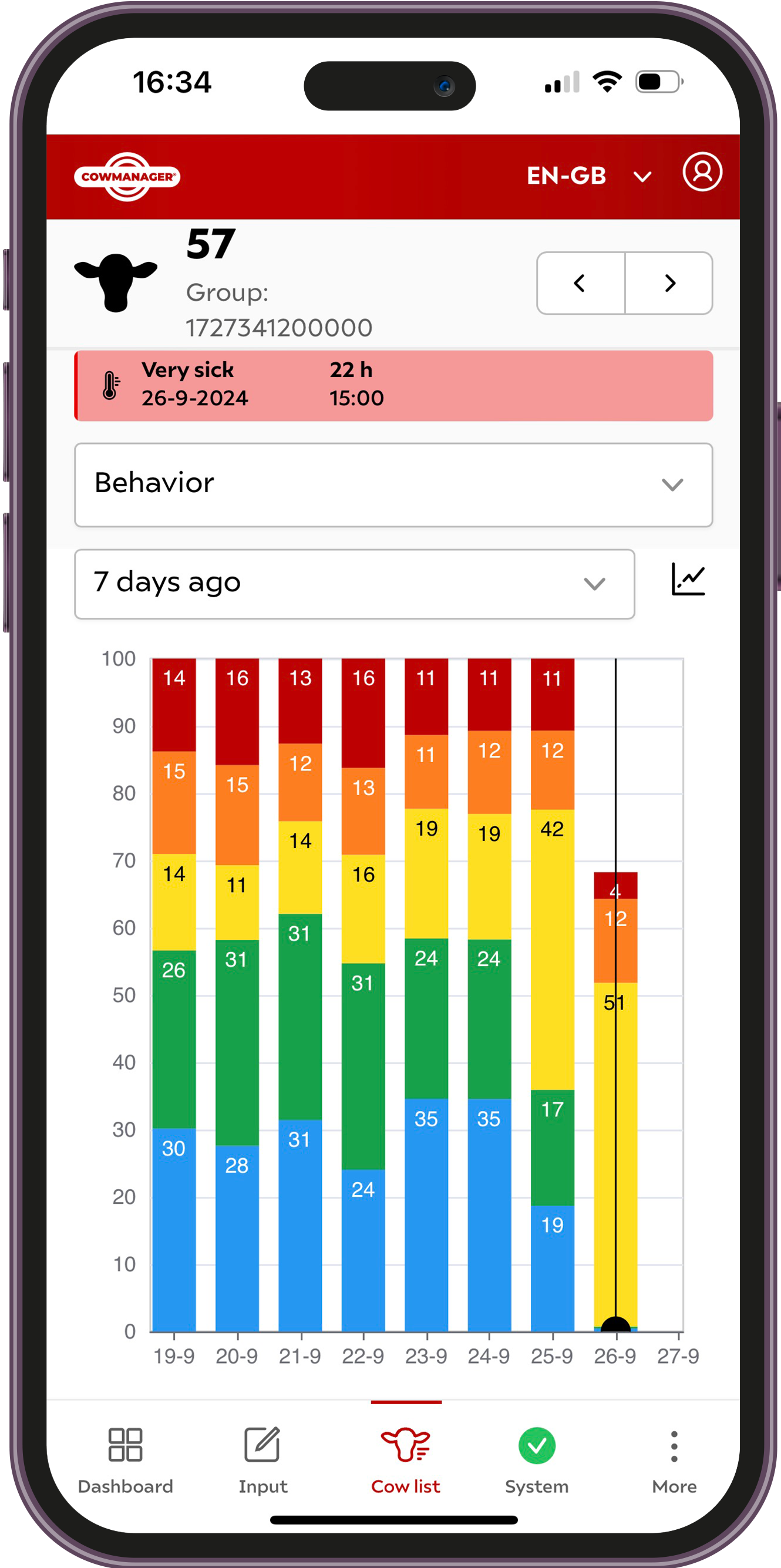
- Yellow: Early signs of reduced activity or eating.
- Orange: A clear indication of illness.
- Red: Severe illness requiring immediate attention.
With real-time data available via smartphone or laptop, dairy farmers can make informed decisions about their herd’s health and tackle issues like bird flu symptoms in cows efficiently.
Practical Steps to Protect Your Dairy Cattle from Bird Flu
In addition to monitoring cow health, farmers can take these proactive measures to reduce the risk of bird flu in cattle:
- Improve biosecurity: Limit visitors to your farm and screen new animals for infections.
- Quarantine affected cows: Prevent the disease from spreading by isolating infected animals.
- Work with your veterinarian: Stay informed about bird flu outbreaks and prevention strategies.
Bird flu in dairy cattle is an evolving challenge, and its long-term impact on the industry remains uncertain. However, tools like CowManager provide dairy farmers with the means to detect health issues early and minimize risks. By combining technology with good farm management practices, producers can help protect their herds and ensure the sustainability of their operations.
To learn more about how to keep your herd healthy, get in touch with your local CowManager dealer or consult with your veterinarian for tailored advice.

Do you want a deeper dive into bird flu in cattle and strategies to protect your herd? Download our comprehensive article with insights from Dr. Russo, Gerard Griffioen and a CowManager customer.
DownloadBy Liz Snaith for Dairy Farmer, June 2024.
The transition period is the primary at risk period; it’s when 75% of all adult cow diseases find their origin. However, dairy farmers who are continuing to explore tech horizons can now pre-empt these challenges by considering introducing ear sensors which provide some of the most accurate insights into at-risk cows up to 50 days before calving.
Fine-Tuning Dry Cow Management
Fine tuning management during the dry period is critical to the cows next lactation performance for Cumbrian producer Matt Vevers, who farms with his parents Richard and Julie at High Plains, Longtown, UK. A 480 cow housed Holstein herd; which is currently averaging 10,500kg at 4.4BF and 3.4 Protein, whilst achieving a preg rate of 34%. The herd is milked twice a day through a 24-48 Herringbone parlour and fed on a full TMR based system. Effective dry cow management ensures optimal health and productivity after calving, crucial for milk production in the UK dairy industry.
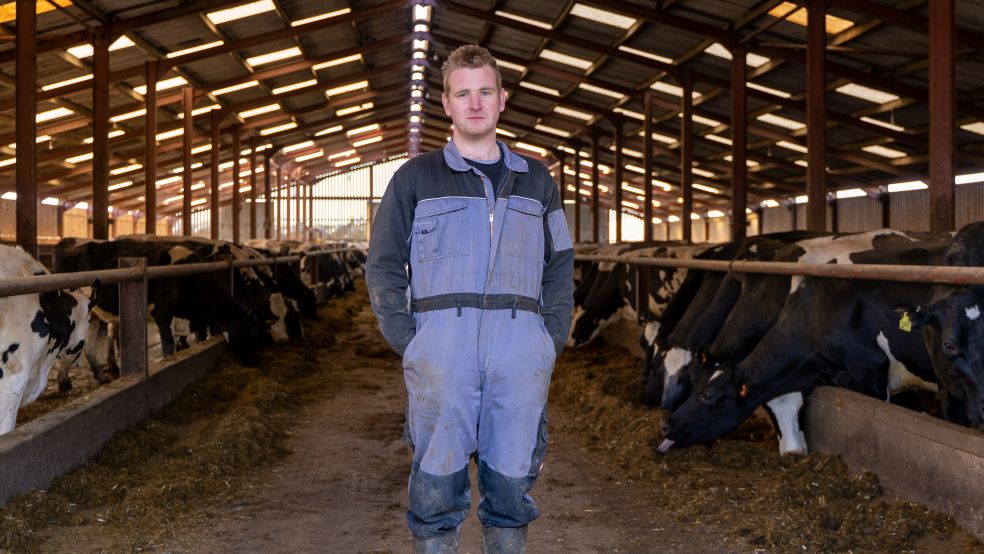
Matt Vevers
“Since introducing CowManager ear sensors to all the cows and heifers six years ago, we can now access a huge range of factual information about the behaviour of each individual animal, including their ear temperature, which has allowed us to streamline protocols for dealing with any potentially sick cows,” Matt explains. “The system has massively improved herd management and the outcome is a healthier, more fertile herd that is more of a pleasure to work with along with reducing our antibiotic usage by two thirds which, in turn benefits our carbon footprint, antibiotic resistance and leaves more profit.”
Herdsman, Chris Curruthers continues: “In 2021 we introduced the Nutrition Module which specifically monitors the cows in their transition period using individual eating and rumination time compared to the herd. Prior to installation, we knew how to deal with cows with milk fever after showing physical signs, whereas now the system tells us if the cows are potentially going to have problems so we can try our best to minimize their risk.”
Matt Vevers uses CowManager to monitor his herd and nutrition during the transition period to head-off any problems.
“Based on the information the system tells us, we can make early, evidence-based management changes. For example, we can alter the magnesium chloride level fed and also fetch the cows into the transition group sooner. If our efforts still haven’t sufficiently benefited individual cows, then we will supplement her with yeast boluses and give her a lot more TLC post calving.”
The Vevers introduced the technology back in 2018 when their existing collar system came to the end of its productive life. “Our World Wide Sires representative, Richard Graham introduced CowManager and as soon as we had seen the system working on another farm we decided this was the one for us,” says Matt.
Each of CowManagers’ unique ear sensors continually measures the cow’s movement, while an algorithm translates this to specific behavioural parameters such as eating and rumination. This real time data is transmitted wirelessly to a cloud-based software where it is processed to provide a visual insight into her performance. The system can be accessed using the online application or using the mobile app, enabling regular checks throughout the day. Additionally, the application can be accessed by your nutritionist or veterinarian using the Multiview function.
“We initially trialed the Nutrition Module for three months and got on with it great. As soon as the trial ended and the data stopped coming, we once again started to feel a bit blind to the transition cows’ performance so we made sure we got the upgrade installed as soon as we could. This module provides alerts identifying ‘at-risk’ individuals up to 50 days pre-calving, notifying us that she is spending less time eating and ruminating compared to the rest of the group’s average behaviour, leaving her vulnerable to issues at calving and or post calving.”
Chris adds: “If an alert flashes up, we go and check her out. If she is showing symptoms, we treat her appropriately. If, on the other hand a cow has performed okay in the dry period, but after calving an alert flashes up that she’s not eating, then we can intervene ASAP. Initially with pumping her with a fresh cow sachet and checking her temperature. Nine out of 10 times, pumping the cow alone seems to be enough to get her back on track and it’s kept our post calving health issues to a minimum.”
Matt continues: “We BCS three times per lactation whilst foot trimming – four weeks post calving, at 140 days and four weeks pre-dry-off. If the pre-dry-off cows are starting to sit too high on the BCS chart, we adjust their diet to keep them in prime condition – we always aim to calve cows at BCS 2.75-3, a range we feel they perform best in during the next lactation. However, it wasn’t until we started using the Nutrition Module that we realised why. As soon as a cow reached BCS 3.5 or above, she wouldn’t eat as much as the cows in the preferred BCS 2.75-3 range and in turn would have a lower rumen fill. When paying attention to this, it was even more obvious to us why the higher BCS cows didn’t perform as well.”
Vet’s view
High Plains vet, James Brocket of Craig Robinson comments: “The Nutrition Module, targeting the transition period, can pinpoint cows at risk of disease post calving during the dry period. Reduced dry matter intake in the dry period negatively impacts health and performance post calving. Cows with reduced intakes will be at higher risk of milk fever, retained foetal membranes, ketosis, and displaced abomasums.
“Reduced intake could be a result of low feed availability, poor palatability or bullying from dominant cows, not necessarily illness or disease, so careful examination and correct management of these animals is important. Why Matt and the team have been so successful, they are acting on the information and data being collected and intervening to make a positive impact to the individual cow and the group.”
Monitor Transition, Reduce Risk
The Transition Monitor identifies cows at risk up to 50 days before calving, ensuring proactive intervention and reducing transition diseases.
Catch Diseases Early, Reduce Sick Cows
Get alerted immediately when a cow isn't ruminating or eating, and intervene proactively. Pick up on diseases like mastitis and ketosis in an early stage.
Monitor Your Herd’s Health 24/7
Our Health Module provides early disease detection! CowManager cows live longer, produce more milk, are in better shape and therefore perform better.
A smooth dry off prevents health issues after calving. Extra stress for cows in the dry period could be detrimental to her health and that of her calf. The negative effects could become a factor for multiple generations. The transition period is a make-or-break moment. A troubled stressful and unhealthy transition period can have serious consequences for the health of both the cow and calf after calving. Nearly 80% of diseases occur during the transition period of dairy cows.
But how can you predict these risks in the transition period of these dairy cows?
Identify At Risk Cows Using Data
Identifying a cow that is at risk without the use of technology is a very time-consuming task. On large dairies the number of fresh cows you need to monitor can easily reach 150. Early identification of cows at risk can save you a lot of time, trouble, and money. Data recognizes symptoms you would never be able to identify on your own. On top of that, health problems with fresh cows are usually results of issues that have gone on for much longer. In case of changes in behavior, you search for a possible explanation. In addition to nutrition, there are other reasons why cows become sick after calving. Cows that eat less before calving and become sick after calving already had an inflammatory response before calving.
For example, cows that eat less before calving and become sick afterward already had an inflammatory response before calving. According to Peter Hut, Product Manager at CowManager and veterinarian, there are three reasons for this: inflammation (like mastitis), pain (like lameness), and stress, especially chronic stress from heat or ranking systems, that cows cannot recover from at night.
Pinpoint ‘At Risk’ Cows Before Calving – Transition Alerts
All these uncertainties can be identified with CowManager’s Transition Monitor. Transition alerts can pinpoint ‘at risk’ dairy cows, indicating that this cow could be at risk for health issues after calving. These transition alerts mean the cow is underperforming in the dry period. “Cows are reported showing abnormalities in their behavior and feed intake from 50 days before the calving date,“ Peter explains. “More than 85% of these cows become sick within 30 days after calving. You want to have these cows insight, so you can apply interventions to prevent ilness.”
Proper Preparation with Preventive Interventions
The ‘at risk’ alert doesn’t indicate that an animal is sick, it just notifies you that this specific cow is spending less time eating and ruminating compared to normal behavior and the herd average. This puts her at risk for postpartum health issues. You may think you need to act immediately, transition alerts are not emergency alerts but rather early-warning indicators that a cow requires closer monitoring. This gives you a clear overview of cows that may become ill after calving, allowing you to address problems before they escalate.
All Eyes On The Recovery
From the moment a cow gets her first transition alert, she remains at risk for diseases until after calving. For cows treated at the transition alert, you can review their recovery easily. No more monitoring based on guesswork. Thanks to the precise data from the Transition Monitor, you know exactly which dairy cows need extra attention during the critical transition period. This benefits your herd and improves efficiency in your operation, saving you valuable time and effort.
Herd Risks During the Transition Period
Monitoring herd risk in the transition period is crucial for effective dairy management. A cow’s immunity is at its lowest, making her vulnerable to diseases like mastitis, metritis, and ketosis. A herd risk monitoring system helps track individual cow health metrics, allowing you to identify patterns or issues affecting multiple cows. Transition dairy cows often face temperature fluctuations, and temperature monitoring in dairy cows during the transition period can reveal early signs of illness, helping you to act proactively.
Fresh Cow Health Risks and Monitoring
Fresh cow health risks are highest in the first few days after calving, as stress and physiological changes affect the cow’s immune system. Implementing a cow health monitoring system can alert you to these risks earlier, tracking feed intake, temperature, and behavior in real time. This monitoring can help prevent health complications from affecting milk production or calf development.
Conclusion
By adopting a comprehensive herd risk transition period management strategy with the right technology, you can predict, monitor, and intervene before cows become critically ill. Cow health monitoring systems and early intervention are the key to minimizing health risks and maximizing efficiency, making a major difference for the long-term success of your dairy operation.
Experience smoother transitions and healthier herds with our advanced Transition Monitor. Read more!
More StoriesWhy CowManager?
Monitor Transition, Reduce Risk
The Transition Monitor identifies cows at risk up to 50 days before calving, ensuring proactive intervention and reducing transition diseases.
Monitor Your Herd’s Health 24/7
Our Health Module provides early disease detection! CowManager cows live longer, produce more milk, are in better shape and therefore perform better.
Improve Herd Performance
Your cow's ears are full of vital information. Monitor their rumination, eating, inactivity, activity, ear temperature, and high active behavior.
By Liz Snaith for Scottish Farmer, April 2024.
It’s a perpetual challenge when it comes to finetuning cow management for Sandy Mitchell and his team, who are responsible for the Kelsobased 1400 cow Kennetsideheads Holstein herd which currently averages 12,000 litres.
However, during the last two years since introducing ear sensors to each milking cow, the technology has been able to improve preg rate by 3%, while an already low level of antibiotic usage has been reduced by 50% and the vet and med bill by 20%.
“When a high yielding herd reaches a certain level of performance, taking it to the next and continuing to fully exploit its genetic potential can be challenging.
However, we’ve found introducing CowManager’s unique ear sensors have been one of our best investments in the last few years,” says Kennetsideheads herd manager, Bryn Moore.
Sandy Mitchell was introduced to the technology back in 2022 when the unit’s existing pedometers were coming to the end of their productive life and he agreed to trial 50 CowManager ear sensors over a six-month period. “They proved quickly to be a very good aid to our stockmanship skills, so we were convinced it was the right thing for the entire herd, apart from the culls. We’ve since been using the system’s three different modules – Fertility, Health and Nutrition and 18 months on we can say the ear sensors have proved to be our partner in herd management, working shoulder to shoulder.”
Each ear sensor continually measures movement while an algorithm translates this to specific behaviour such as eating and rumination. Additionally, ear temperature is measured, helping to detect for example heat stress.
“This real time data is transmitted wirelessly and received and displayed by cloud-based software linked to a smartphone App or PC, as well as the farm’s existing herd management software. The data can also be shared externally, for example with the farm’s advisor, vet and inseminator.”
At Kennetsideheads, the system’s App has been downloaded to four phones owned by Sandy, Bryn and two staff, while a fourth staff member prefers checking on the office PC. Three experienced milkers also check the office PC while outside professionals including the vet and nutritionist have access to the system to track any health or diet changes all the way back to installation date. “We routinely check an average six times throughout the day. This wealth of real time information provides us with early alerts, allowing earlier treatment which has enabled us to reduce antibiotic use, in some cases eliminate it altogether while providing treatment before the typical 30% reduction in milk yield happens.”
Fertility
He continues: “Preg rate improved from an average 27-28% to a current 29.7%, a level close to Sandy’s 30% target, while managed interventions have reduced from 19% right down to just 14%.
“Each ear sensor is providing us with real time data enabling earlier heat detection and identifying the optimum time to serve, visualised in the insemination window. The system is also providing guidance on the ideal window for serving with conventional or sexed semen while it flags up silent heats, consequently it means fewer hormonal interventions have to be set up by the vet.
“The technology is identifying cows that have failed to hold after the initial 30-day PD, for example any cow that reabsorbs after 100 + days; previously the vet rechecked after 60 days.”
Health
“The system is enabling early intervention, in turn we’ve reduced antibiotic usage by a significant 50%, and we are well on the way to reaching our RUMA target.”
“We’re currently sitting at 11 mastitis cases per 100 cows; two years ago and that figure would have been nearer 26 cases,” says Bryn. “The trend is down to the sensors providing early alerts to all kinds of mastitis, but most notably to E. coli mastitis, enabling faster and more effective treatment – within the first six hours of spotting the alert on the App. We’re able to treat with fluids before the infection reaches the point of no return; previously antibiotics would have been used. This continued success has given us increasing amounts of confidence to change the unit’s treatment strategy.”
Bryn continues: “Other incidents, such as a downer cow with an upset rumen have been identified and immediately and successfully treated with fluids and an NSAID thereby eliminating the need for antibiotics. The ear sensors also provide insights to calving issues. Rumination trends flag up undetected problems including breaches.”
Nutrition Group Alerts
The technology provides nutrition group alerts which provide trends for example amongst the dry cows, he says. “If their feeding regime or diet components are changed, any negative response is flagged up, an immediate response made, and any subsequent issues prevented. This can then hopefully be seen in improved fresh cow performance.” The system also provides low feed intake and heat stress group alerts, along with graphs to compare groups and management changes.
Transition Alerts
CowManager users also have access to transition alerts which identifying at-risk dry cows – up to 50 days before calving; the monitor provides in-depth insights to cow nutrition and well-being at an individual and group level for transition problems and provide the data to interpret in order to ensure there is minimal disruption to her potential, and eliminate any further health issues, Bryn explains.
Transition alerts came up trumps on two recent occasions at Kennetsideheads when the team noted a drop off in rumination which led to investigation. “One was a heifer in the early stages of calving found to be experiencing a breach calving; this not only allowed us to ensure the safe delivery of the calf but also cause no further issue to the dam, only anti-inflammatory was needed,” says Bryn.
“The second cow had dropped off two days before calving resulting in a low feed intake that in turn could have developed milk fever before calving or afterwards turned into an LDA. Instead, we gave the her a nutrient bolus which we use for any pre-calving issues.”
Exploring Tech Horizons
As activity monitoring technologies become more sophisticated in the not-too-distant future it seems possible that the emerging data could be combined with data from genomic testing, milk performance records and CowManager to identify cows that are more resilient to adverse events, comments Dr John Cook of CowManager distributor, World Wide Sires.
“This data will have the potential to find cows that have a greater capacity to maintain performance or bounce back after suffering an adverse event or disturbance such as disease, poor weather conditions, management alterations or diet changes.
“Many of these factors often occur together on a dairy farm or they interact so it makes sense to first identify cows that are generally resilient across a range of stresses and then explore and if possible, select for cows with greater genetic predisposition for resilience.
“Eating and rumination behaviour are indicators of feed intake and consistency of feed intake, and or the ability to recover in the face of adverse circumstances are all believed to be good indicators of resilience in dairy cattle.”
Catch Diseases Early, Reduce Sick Cows
Get alerted immediately when a cow isn't ruminating or eating, and intervene proactively. Pick up on diseases like mastitis and ketosis in an early stage.
24/7 Real-time Data, Never Miss a Heat
Heat peaks, possible pregnancies, non-cycling cows, potential abortions. Never miss a thing.
Monitor Your Herd’s Health 24/7
Our Health Module provides early disease detection! CowManager cows live longer, produce more milk, are in better shape and therefore perform better.
Staying ahead of the herd means understanding that dairy farming technology isn’t just a tool — it’s a team player. With the right cow monitoring technology, running your dairy business becomes a collaborative effort, where you can rely on your partner 24/7. This makes the CowManager system more than just a tool in your toolbox; it’s an indispensable team member in your dairy operation.
Digital Dairy Team
Embracing technology has become a necessity. From tracking milk production to monitoring health metrics and even predicting breeding cycles: Cow monitoring systems provide invaluable insights into the well-being of your cattle. It offers farmers ongoing insights to optimise their dairy operations, improve on-farm efficiency, and ensure the health of their herd.
Paul Quinlan is Business Development Manager at Word Wide Sires Australia and has worked in the Australian dairy industry for decades. He believes technology and teamwork are essential to the future of dairy farming. His system of choice? CowManager ear sensors. In fact, for over 120 Australian dairy farmers, Paul and his coworkers are an important part of their digital dairy teams.
Find Out What’s In It For You and Your Herd
Download the brochure to find out more about how the ear sensor works, what dairy farmers in your area think of us, and who your closest local representative is.
Download BrochureTech as a helping hand
“CowManager is cutting-edge technology. It provides modern-day dairy farmers with a precise cow monitoring system”, Quinlan says. The Fertility Module is an absolute must, according to him. It sends users an alert on their pc and phone whenever a cow is on heat.
“It also picks up non-cycling cows, cystic cows”, he adds. “Any data really that’s required specifically before the mating start date. You don’t have to use the traditional heat detection aids, whether it’s kamars or scratchies. You use the technology to do all the work for you.”
People who don’t consider themselves savvy with technology or software have got nothing to worry about, Quinlan promises. “Anytime anyone is moving towards change, they get a little nervous. But we work with a variety of different farmers, with different levels of technical abilities, that are absolutely loving it.”
Work smarter, not harder
The CowManager system isn’t just about collecting data; it’s about helping dairy farmers to interpret and act upon it. Whether it’s fine-tuning reproduction strategies or addressing potential health issues before they escalate, the system provides the insights you need to make informed choices. Why work even harder when farming could be done smarter?
“In this current climate of people looking at their breeding programme and introducing sexed semen, you can utilise the technology to maximise the value of what you’re spending on genetics. Earlier pregnancies with sexed semen not only provide early and oftentimes healthier heifer calves but also contribute to the overall efficiency, maximising genetic potential and minimising downtime”, Quinlan says.
Here to Help
In Australia, CowManager is distributed and supported by World Wide Sires Australia. No one knows the system better than they do. Want to know more? Don’t hesitate to reach out. They’re excited to discuss cow monitoring with you and answer any questions you may have.
Contact the Team