During milking, a light flashes. Straight away, the milker knows: the conductivity of that teat is off. A sensor that measures conductivity, milk volume, milk flow, the temperature and the vacuum level. In addition to monitoring udder health at the teat level, the sensor also provides a detailed overview of milking parlor performance. That’s the Milk Sensor, CowManager’s latest innovation.
The story behind CowManager’s newest innovation
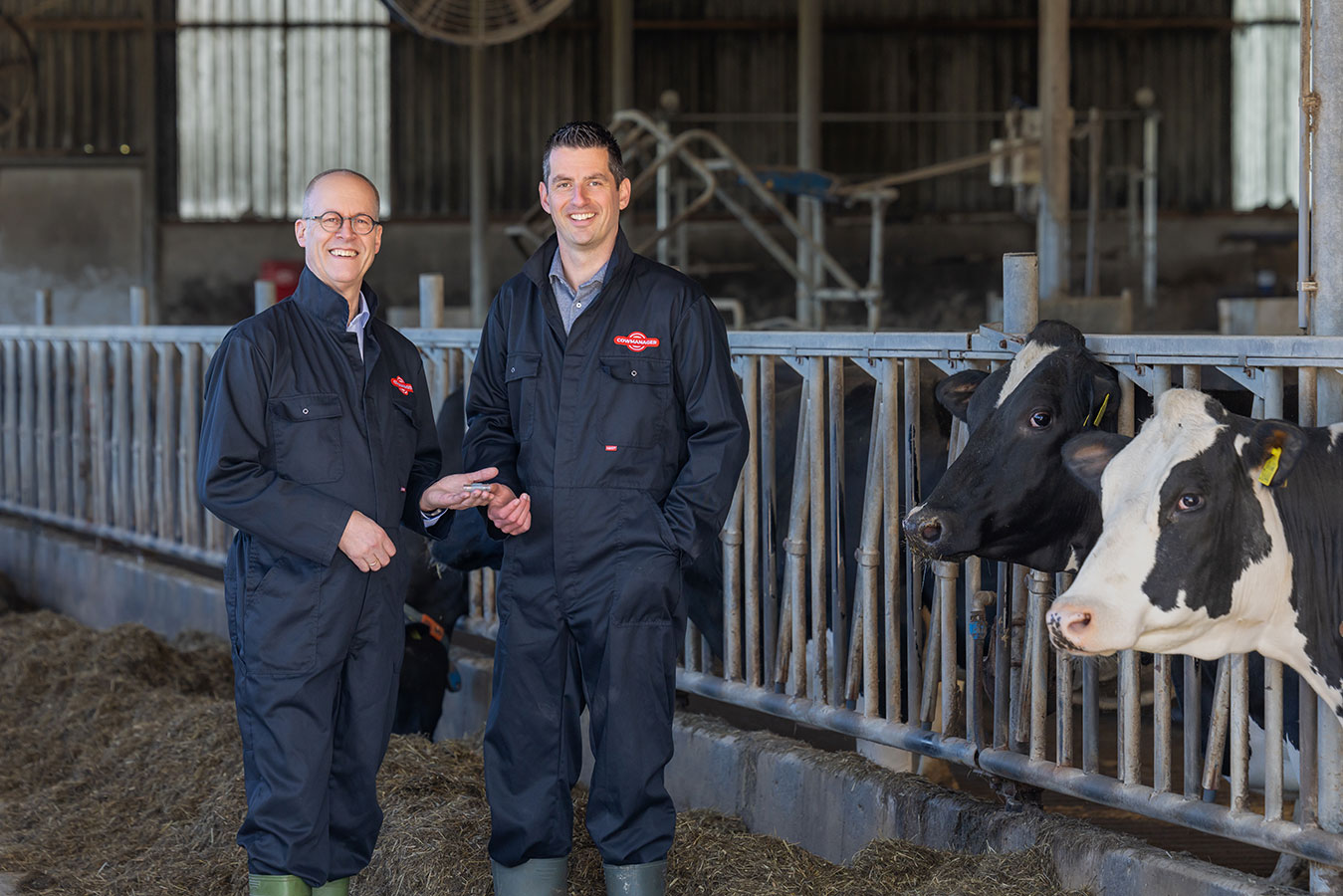
CowManager’s Gerard Griffioen and Koen van Meurs with the Milk Sensor.
“Thanks to the Milk Sensor, farmers can stay one step ahead of udder health issues,” says Gerard Griffioen, dairy farmer and founder of CowManager. Mastitis not only affects milk production and animal health, it also affects profit. That is why preventing it is vital.
“When I was visiting one of our customers who milks about 125,000 cows, I saw his struggle with mastitis and the accuracy of his milk data. Cows were left unidentified and for them, no milk production data was available. And at the same time there was a wealth of data from other cows – but unreliable,” Griffioen recalls.
That’s how the idea for the Milk Sensor came about.
“Our Milk Sensor was developed in collaboration with dairy farmers,” says Koen van Meurs, Head of Product Development, enthusiastically.
Because the Milk Sensor measures at the teat level and CowManager has an extensive global network of large-scale dairy farms, a significant amount of data has been collected in a short amount of time.
Comparing our results with milk analyses from the lab was a big part of the development process and vital for ensuring maximum reliability. Artificial Intelligence, in combination with CowManager’s many years of experience with algorithms and large-scale data, resulted in a smart, advanced and reliable dashboard.
Five indicators in one Milk Sensor
The Milk Sensor currently has five indicators: temperature, conductivity, milk volume, milk flow and the vacuum level.
“The Milk Sensor is positioned very close to the udder to ensure reliable data. Milk quality has also been taken into account: the sensor ensures a clean, unobstructed milk flow. The system can be fully customized. Installation is quick and easy: cut the tube beneath the milk cup, slide the transparent sensor into place and reattach the tubes on either side of the sensor. This works with virtually any brand and type of milk cup in the milking parlor,” Gerard explains.
All data computer. CowManager’s Milk Sensor is available to all dairy farmers who have a CowManager ear sensor or who wish to purchase one. In the future, the Milk Sensor can also be upgraded with cow identification.
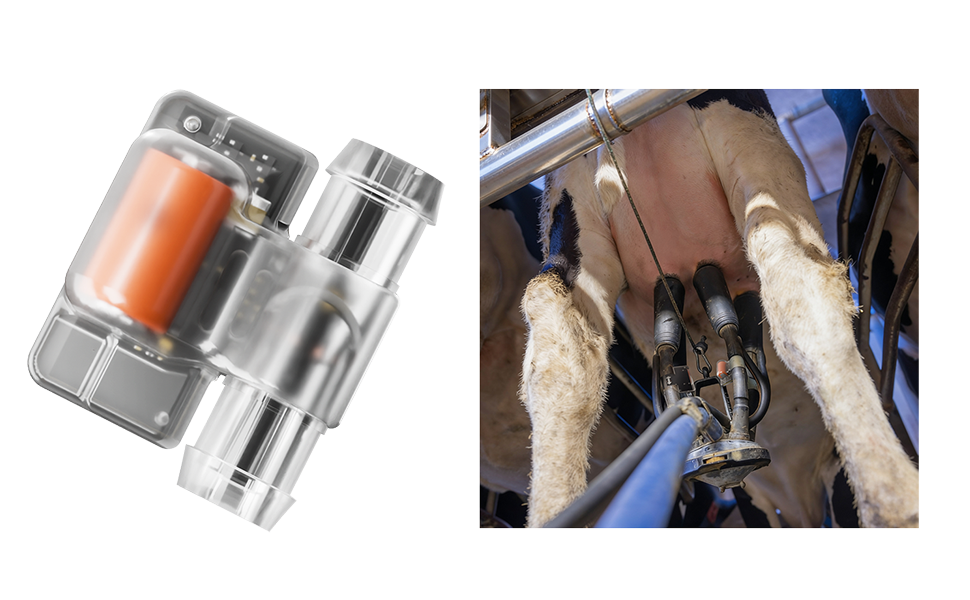
Left: CowManager Milk Sensor. Right: The Milk Sensor in action during milking.
Early detection and prediction of mastitis
Helping to detect and even predict mastitis is one of the Milk Sensor’s main features. Continuous monitoring of milking parlor performance has a positive effect on teat health and can prevent risk factors for mastitis such as teat tip calluses.
The Milk Sensor can also play a key role in producing milk with a low somatic cell count. Gerard and Koen are looking even further ahead.
“This preventive approach has a positive impact on animal welfare. It will help reduce culling due to high cell counts or mastitis problems,” the men predict. “This ultimately results in a longer lifespan for the cows,” Gerard explains.
Performance of each unit at a glance
Another main feature of the Milk Sensor is to analyze milking parlor performance down to the level of individual milk cups.
“The proper functioning of a milking parlor is essential for preventing udder problems. Blind milking, air in the milk or a low flushing temperature aren’t visible, but they can pose a huge risk when it comes to mastitis or a high bacterial count,” Koen explains.
The Milk Sensor monitors this and helps detect mastitis. The Milk Sensor also ensures continuity throughout the milking process when multiple milkers are involved. Any differences between milkers or milking sessions will immediately become visible.
“The combination of the ear and Milk Sensor and the accompanying sorting gate offers unprecedented possibilities,” says Gerard about the entire CowManager ecosystem. The Milk Sensor is a key component of the overall package.
But, according to Koen and Gerard, that’s not all. “This is just the first step. Eventually, the Milk Sensor will be able to measure even more parameters in both the milk and the milking parlor,” Koen reveals.
Discover More
The Milk Sensor adds a new layer of insights – quarter-level milk data that connects to the health and performance signals you’re already tracking with CowManager ear sensors.
Sign up now to be first in line for Milk Sensor updates, trial insights and availability announcements.
Stay Up to DateHow continuous insights help detect issues early and keep cows performing after calving
Displaced abomasum (DA) is one of those post-calving challenges that can quietly derail a cow’s recovery and milk production before you even realize something’s wrong.
The abomasum — the cow’s fourth stomach compartment — shifts out of its normal position, usually occurs within the first 30 DIM. When that happens, digestion slows, feed intake drops, and milk yield follows.
Every dairy producer knows what DA is. The real question is: how do you catch it early enough to prevent damage?
What Makes DA Hard to Spot
A displaced abomasum occurs after a period of subtle changes at first. Affected cows may eat less, ruminate less, and produce less milk.
An abomasum is not easily visible on external examination. Only trained veterinarians are usually able to detect it. You can recognize displaced abomasum using several clinical indicators, such as:
- An increased heart rate
- Cold ears
- Poor rumen fill
- Loose or watery manure
- An abnormal ‘ping’ when you tap the abdomen
- Positive fluid-splashing sounds
DA often appears within less than 30 DIM, when cows are already under metabolic stress and your team’s focus is split among fresh cow checks, feeding, and milking routines.
A displaced abomasum doesn’t occur spontaneously. Often a cow first shows other signs, like an infection.
That’s where technology makes the difference.
How Continuous Monitoring Changes the Game
CowManager’s Health solution turns early detection from guesswork into data-driven insight. Instead of waiting for visible symptoms, the system continuously tracks eating, rumination, and activity patterns. These behavioral indicators are the first to change when a cow’s abomasum begins to displace.
Both ketosis (decreased appetite, lower milk production) and a displaced abomasum can have similar early signs, and it is common for a cow to have both conditions simultaneously.
During ketosis, a slight and gradual decline in rumination and feeding activity is typically observed. In contrast, a displaced abomasum is characterized by a sudden and marked reduction in both parameters.
Spotting Those Early Warning Signs
For example, a healthy fresh cow should steadily increase her eating time after calving. If the Health solution shows a consistent drop instead, it’s an early warning sign.
The same goes for rumination — one of the most reliable indicators of digestive comfort. A sudden decline can point to displaced abomasum or related metabolic issues such as ketosis.
CowManager’s real-time alerts help you act fast and prevent health issues before they escalate. Instead of reacting to DA cases after production loss or veterinary treatment, you can intervene at the first signs of trouble — saving time, money, and improving animal welfare.
Discover the Value of Health Monitoring
As the industry faces increasing pressures, the integration of advanced health monitoring technology has become essential. This document examines the role technology can play in reducing health risks and health problems and maximizing farm profitability.
Download the Health GuideSupport Your Transition Cows Proactively
A good dry period is crucial for preventing health abnormalities under 30 DIM. Rumen fill should remain at an adequate level throughout the dry period, to avoid pre-partum ketosis and lower feed intake postpartum.
Most displaced abomasum cases occur around calving, when a cow’s energy balance shifts dramatically. CowManager’s Transition solution complements the Health solution by helping you manage this critical period more effectively.
It monitors each cow’s recovery after calving, showing whether she’s adapting well or struggling with feed intake. That makes it easier to fine-tune nutrition, adjust management for high-risk cows, and prevent metabolic problems before they cascade into a DA case.
The Nutrition solution sends an alert whenever a decline in both rumination and eating time for dry cows is detected, which gives users a chance to adjust management to avoid low feed intakes. This has huge impact on a cow’s welfare during dry period and postpartum.
When you can see how each cow transitions in real time, your team doesn’t have to rely solely on daily pen checks or milk data. You get a complete picture of her health and recovery — exactly when it matters most.
Detect, Act and Prevent
Displaced abomasum doesn’t have to be a production-draining surprise. With CowManager’s Health, Transition and Nutrition solutions you gain early, actionable insights into every cow’s health status.
Parameters like low feed intake and transition alerts give you the opportunity to dive deeper in dry cow management. That means fewer missed cases, faster interventions, and a smoother transition period for your herd.
Healthy cows produce more milk, breed back faster, and stay in the herd longer. Preventing DA isn’t just about treating disease — it’s about protecting performance.
CowManager can help you detect cow diseases so you can act early – keeping your herd healthy and your performance high.
CowManager Health Benefits
Catch Diseases Early, Reduce Sick Cows
Get alerted immediately when a cow isn't ruminating or eating, and intervene proactively. Pick up on diseases like mastitis and ketosis in an early stage.
Improve Herd Performance
Your cow's ears are full of vital information. Monitor their rumination, eating, inactivity, activity, ear temperature, and high active behavior.
Monitor Your Herd’s Health 24/7
Our Health Module provides early disease detection! CowManager cows live longer, produce more milk, are in better shape and therefore perform better.
In a recent issue of Hoard’s Dairyman, five dairy producers from across the country shared how they are using technology to gain insights for disease prevention and early detection. The common theme: identifying issues sooner leads to better outcomes for both cows and the bottom line.
Notably, three of the featured operations rely on CowManager to deliver actionable herd insights: Daystar Dairy (Little Falls, Minn.), Pleasant Dutch Dairy (Willow Lake, S.D.), and Valadao Dairy (Hanford, Calif.). While their experience with the system ranges from less than a year to nearly a decade, all report similar results, including more efficient management and measurable performance gains.
Daystar Dairy: Driving Efficiency Through Data
Owned and operated by Dave and Sara Jane Brutscher and their sons, Jesse and Paul, Daystar Dairy is an 800-cow Holstein herd. After nearly a decade with CowManager, the family has benefited by integrating data into their daily decision-making process. They emphasized that the cow monitoring system helps guide breeding, culling, feeding and herd health protocols.
Their goals when implementing the cow monitoring system were clear: improve efficiency, strengthen management, and enhance margins. With better visibility into herd health and behavior, they are able to make more informed, timely decisions that support those objectives.
Pleasant Dutch Dairy: Maximizing Labor
At Pleasant Dutch Dairy, the family partnership is led by John and Linda Vande Weerd along with their sons Alan, Mike, and Nick. They manage 2,500 cows across three sites. After implementing CowManager almost a year ago, the team quickly began leveraging its insights to improve both herd care and labor efficiency.
By reviewing daily data and responding quickly to health alerts, they can address issues earlier—often before visible symptoms appear. The ability to customize alerts based on their own farm data allows them to fine-tune their approach, helping reduce disease incidence and culling rates while making better use of employee time and expertise.
Valadao Dairy: From Heat Detection to Health Gains
Eduardo and Maria Valadao, along with their son Mike, operate a 2,100-cow Holstein herd. They initially adopted CowManager for heat detection, but soon realized broader benefits as they became more familiar with the system.
Today, they are able to identify cows at risk of health issues, such as clinical mastitis, before symptoms appear. The cow monitoring system’s impact has been significant, including improved fertility and a reduction in culling rates from 6.5% to 3.8%. Mike also credits CowManager with helping them through an HPAI (Bird flu) event, allowing them to intervene sooner and monitor recovery.
Shared Results Across Diverse Operations
Despite differences in herd size, management style, and length of use, all three dairies report similar advantages from using CowManager:
- Earlier detection of subclinical health issues
- Improved fertility and heat detection
- Reduced culling rates
- Faster cow identification and sorting
- Actionable, real-time herd insights
Technology that Supports – Not Replaces – Good Management
While each producer emphasized the value of CowManager, they also noted that technology is not a replacement for skilled employees or sound management practices. Instead, it serves as a powerful tool to enhance both.
They also stressed the importance of evaluating any new technology to ensure it delivers measurable value and supports overall operational goals. For these three operations, CowManager has proven to be more than just a monitoring system—it’s a decision-making tool that supports healthier cows, more efficient teams, and stronger financial performance.
Hoard’s Dairyman
A longer version of this article has previously been published by Hoard’s Dairyman.
Many dairy producers rely on monitoring systems to track behavior, activity, and other indicators that help identify potential health issues earlier.
One physiological factor that is considered to play an important role in animal health is cow body temperature. Because temperature reflects internal biological processes, monitoring it can provide useful insights into the condition of individual cows and the overall herd.
When combined with behavioral monitoring, cow body temperature data helps producers make faster and more informed herd management decisions. But it can be done even better and more precise by specifically monitoring cow ear temperature.
Temperature as Health Indicator
Temperature is one of the most widely recognized indicators of health in animals. When a cow experiences stress, illness, or metabolic challenges, changes in a cow’s body temperature may occur as part of the body’s natural response. The ear is one of the first places in the body where these changes are noticeable.
When a cow’s body temperature rises, it usually means the immune system responds to stress, infection, inflammation, or heat. The body increases temperature to help support immune activity, which can lead to reduced feed intake, lower milk production, and lethargy.
When a cow’s body temperature drops, it often indicates that the cow is struggling to maintain normal body functions. This can happen during severe illnesses, metabolic disorders, or after calving, when blood flow shifts from the cow’s ear toward vital organs and the body tries to conserve energy.
Cow Body Temperature in Dairy Herd Monitoring
Modern cow monitoring systems often track behavioral indicators such as eating behavior, rumination patterns, activity and inactivity.
Adding temperature monitoring, specifically ear temperature, to this data can strengthen the overall understanding of herd health. When producers have access to multiple indicators, they can better interpret what is happening within the herd and respond quickly when conditions change.
For dairy producers managing large herds, it can be difficult to detect subtle health changes through observation alone. Monitoring technologies that track indicators such as activity, rumination, and temperature trends can provide valuable insights that support early intervention.
Cow Ear Temperature
Tracking a cow’s temperature alongside behavioral indicators contributes to a more complete picture of cow health. Continuous monitoring helps producers detect changes sooner and respond more effectively.
The CowManager system measures ear temperature specifically, making cow monitoring much more accurate and actionable with early alerts.
Whenever a cow develops an infection, blood flow in the ears shifts toward vital organs. By monitoring ear temperature, this change can be detected early, potentially preventing more serious issues for both you and the cow later on.
Supporting Better Herd Management
Cow monitoring innovations continue to change how dairy farms manage animals. Monitoring technologies allow producers to move from reactive management to proactive herd care.
It may seem tooling makes herd management more complex, but systems that provide reliable data are an important part of driving herd management forward. With real-time data, herd management teams can make more informed decisions about herd health, reproduction, and overall management.
CowManager Benefits
Improve Herd Performance
Your cow's ears are full of vital information. Monitor their rumination, eating, inactivity, activity, ear temperature, and high active behavior.
Catch Diseases Early, Reduce Sick Cows
Get alerted immediately when a cow isn't ruminating or eating, and intervene proactively. Pick up on diseases like mastitis and ketosis in an early stage.
Monitor Transition, Reduce Risk
The Transition Monitor identifies cows at risk up to 50 days before calving, ensuring proactive intervention and reducing transition diseases.
Bovine Respiratory Disease (BRD) is one of the most common and costly health problems on dairy farms. It’s also known simply as pneumonia, or “shipping fever”; an acute, stress-related form of BRD that typically develops after a long transport.
It isn’t caused by just one thing, but rather by what’s known as the bovine respiratory disease complex – a mix of stress, viruses, and bacteria that can quickly take down even healthy-looking calves.
The most common bovine respiratory disease symptoms include coughing, fever, and labored breathing.
Calves may lose their appetite, lie down more, experience accelerated breathing, a change in temperature and generally look dull. The real challenge is that by the time you notice these visible signs, the disease is often already well advanced. Early detection and quick bovine respiratory disease treatment are critical to saving calves and preventing serious losses.
Why BRD is Such a Problem
For farmers, BRD isn’t just an animal health issue; it’s an economic one. Calves that battle pneumonia often struggle to catch up in growth, which means they won’t perform as well later in life. This is why bovine respiratory disease prevention matters so much.
Cows have a relatively limited lung capacity in proportion to their body weight. Therefore, it’s crucial to maintain good lung health throughout their life. Issues like BRD translate into lower milk yields, higher veterinarian bills and in some cases, calf mortality.
How Cow Monitoring Technology Helps
Relying on visual checks for BRD can be a tricky business. Coughing, nasal discharge, or falling behind compared to the rest of the herd can be signs of BRD. But calves and cows, prey animals by nature, are experts at hiding weaknesses. This makes it harder to spot bovine respiratory disease symptoms.
That’s where cow monitoring technology makes a real difference. By keeping track of activity and behavior around the clock, these systems can identify early warning signs that would otherwise be missed.
For example, opting for an ultrasound at an early state can detect budding pneumonia. Something that sometimes occurs when calves and cows receive health alerts and nothing comes out of the clinical examination.
CowManager Calf Guide
Download the Calf Guide to discover how CowManager sensors can detect illness sooner, reduce antibiotic use, and promote faster recovery, ultimately protecting your future milk production.
Download Calf GuideMonitor Herd Health with CowManager
A great example of a BRD prevention tool is CowManager’s Youngstock Monitor, designed specifically to track calf health. The system collects detailed data on ear temperature, eating and rumination time, behavior and activity and flags anything unusual. When a calf shows changes that could indicate the bovine respiratory disease complex, the system alerts the farmer early, giving time to act before the disease becomes severe.
This approach supports earlier bovine respiratory disease treatment, which improves recovery rates, reduces antibiotic use, and ultimately lowers mortality. Healthier calves grow into healthier, more productive cows – and that protects your bottom line.
The CowManager system enables farmers to keep an eye on their herd’s entire life cycle, monitoring them from calf to cow with just one ear sensor. Comparing groups, diving into the data and making sure their herd gets everything they need.
When calves become cows, CowManager’s Health Module continues to track their health, ensuring a lifetime of monitoring.
Keeping BRD from Being Damaging
Monitoring is powerful, but it works best alongside strong everyday management. Good bovine respiratory disease prevention practices include ensuring calves get enough colostrum, reducing stress during weaning and transport, maintaining proper ventilation, keep group changes at a minimum and manage them well, and following vaccination programs.
When these are combined with technology like CowManager’s Health monitor, it’s the best defense against BRD.
Protecting calves from bovine respiratory disease isn’t just better for animal welfare – it’s better for your business.
CowManager Benefits
Catch Diseases Early, Reduce Sick Cows
Get alerted immediately when a cow isn't ruminating or eating, and intervene proactively. Pick up on diseases like mastitis and ketosis in an early stage.
Improve Herd Performance
Your cow's ears are full of vital information. Monitor their rumination, eating, inactivity, activity, ear temperature, and high active behavior.
From Calf to Cow
Our lightweight sensor is designed to last a lifetime, offering a seamless and continuous monitoring solution tailored to your specific farm and your cow's life phase.
Early detection of for example calf pneumonia is essential in raising healthy youngstock. At Benninghoff MilchEnergie, ultrasound lung scans serve as a reliable verification method, confirming that CowManager’s Youngstock Monitor accurately detects early respiratory issues, often days before symptoms appear. This case also shows the power of collaboration: the herd manager and the veterinarian work closely together, combining CowManager’s data with expert clinical insight to make smarter, earlier interventions.
“Our goal is for our calves to grow into healthy, high-performing dairy cows.” Anna Schaate, Benninghoff MilchEnergie.
Detecting Calf Pneumonia Before Symptoms Appear
In addition to our established modules for cows, CowManager introduced the Youngstock Monitor for calves last year. The program enables dairy farmers to improve their calf management. At the Benninghoff Milchenergie farm, herd manager Anna Schaate and her calf team have long been using CowManager for cows and young cattle over ten months, and it now also helps them to successfully detect respiratory disease in calves at an early stage.
Calf health is an important aspect of dairy farming because only healthy calves become productive dairy cows. Farmers and veterinarians are always looking for tools to help them rear healthier calves and reduce the reliance on antibiotics. Pneumonia, in particular, has long been a major challenge in calf rearing. It poses a risk of permanent damage to the lungs and can later on lead to reduced performance as a dairy cow. In practice, the problem is that the infection is often not noticed initially and only severe cases with clear symptoms are clinically apparent. CowManager’s Youngstock Monitor is a valuable tool for detecting sick calves at an early stage. The major advantage of this system is that it flags calves with a health warning and provides an alert even before the animals start showing visible signs of illness.
“I tend to rely on figures, data, and facts, and that’s why I like working with CowManager’s health data for calves.”
Early detection of changes in activity with CowManager
And that’s precisely why herd manager Anna Schaate from Benninghoff Milchenergie in Bevern decided to use CowManager for calves too. “I tend to rely on figures, data, and facts, and that’s why I like working with CowManager’s health data for calves,” she explains, “because once calves stop drinking, you’ve got a major problem on your hands.” At first she thought that she wouldn’t see much difference in activity because the young calves don’t move around that much. “But I came to realize how useful CowManager is when it comes to the early detection of calf pneumonia.” The health warning allows her to recognize early in the day which calves are deviating from the group average in terms of activity and drinking. She then considers information on group changes, rehousing, weaning, and dehorning as this may also influence the data. If there are no such factors to consider, Anna Schaate then examines the calves in question with an ultrasound scan of the lungs.
“We’ve found that CowManager shows us the animals that have pneumonia two days earlier than we would have recognized their labored breathing and general poor health. Since we started consistently monitoring the calves using a combination of CowManager and LungScan, we’ve been able to treat the pneumonia before the symptoms become apparent”
Early stages of respiratory disease are detected in good time
The CowManager health lists are checked three times a day. Anna Schaate identifies calves with deviations and then examines them with her colleagues from the calf team. Depending on the diagnosis, the calves are treated with anti-inflammatory drugs or painkillers. “We’ve found that CowManager shows us the animals that have pneumonia two days earlier than we would have recognized their labored breathing and general poor health,” she reports. “Since we started consistently monitoring the calves using a combination of CowManager and LungScan, we’ve been able to treat the pneumonia before the symptoms become apparent,” adds the herd manager. “I’m not a fan of the blanket use of antibiotics, so we only really treat calves when it is absolutely necessary,” she says, explaining another advantage of this approach.
Working with a veterinarian on prevention
The herd’s veterinarian, Hanna Strodthoff-Schneider, confirms the benefits of using activity monitoring for the early detection of disease: “With pneumonia in particular, it allows us to identify the affected calves at a very early stage of the disease – at a time when lung tissue is showing minimal change on the ultrasound.” The veterinarian goes on to explain that as lung tissue cannot regenerate, any loss of functional tissue results in a permanent decline in lung function. Early diagnosis using an activity monitoring system can therefore help to minimize structural changes in the lungs. “It is likely that this will also have a positive effect on lactation performance later on,” says Hanna Strodthoff-Schneider. Despite these undisputed benefits, she underlines that every dairy farm should be aiming to minimize cases of pneumonia from the outset with appropriate feeding practices as well as optimal housing and environmental conditions.
“If this helps us to rear more high-quality heifers that are well-prepared for the start of lactation, then it will have been worth it!”
Consistent hygiene management, health monitoring, and treatment
Herd manager Anna Schaate agrees. “Consistent compliance with hygiene measures and constant monitoring of housing conditions, for example with adequate ventilation, is extremely important in the prevention of calf disease. Damp conditions and draughts must be avoided,” she adds. “We make sure to check the ventilation in all barns on a regular basis and install new ventilation tubes when necessary. We also shave three strips on the backs of older calves so that they can dry off more quickly.” She is confident that this combination of hygiene management, health monitoring, and early treatment has considerably improved the health of the calves on the farm. Lung scans take five to ten minutes per calf, but she considers it worth the time as cases of acute and chronic respiratory disease have decreased significantly. The impact on staff satisfaction and motivation is also noticeable as working with healthy animals is much more enjoyable than trying to alleviate the pain of sick animals. “If this helps us to rear more high-quality heifers that are well-prepared for the start of lactation, then it will have been worth it!” she says.
Learn more about Benninghof Milchenergie and their experiences with CowManager.
Farm Profile
Benninghoff MilchEnergie: Bevern/Bremervörde, Rotenburg/Wümme District, Lower Saxony
- 1,275 Holstein-Friesian cows, including ~1,100 lactating
- Entire female youngstock raised on-site; 750 head of youngstock
- Team of 25 employees plus interns
- Modern two- and three-row freestall barns
- 510 ha of farmland: 330 ha silage corn, 180 ha grassland
- Nearly all roughage grown in-house
- 460-kW biogas plant (joint venture), three CHP units with 1,064 kW combined output, demand-oriented power supply
- Milking center with a 2×16 herringbone parlor
- Milk production approx. 46–47 kg ECM per cow per day (4.08% fat, 3.43% protein)
- Health monitoring through milk-flow data and CowManager ear sensors (fertility, health, nutrition)
- CowManager in use for almost six years: Health Module, Fertility Module, Transition Monitor
- For female calves and male calves destined for ET-bull programs, CowManager has been used for one year, with health alerts combined with lung scanning
Written by Angelika Sontheimer
Download Calf Guide
Download the Calf Guide to learn how CowManager’s Youngstock Monitor helps you catch calf health issues. Act fast, reduce antibiotic use, and raise healthier, higher-performing heifers.
DownloadRaising replacement heifers is one of the biggest investments on any dairy farm. The way you manage nutrition quality, feed space, and growth rates directly determines whether your heifers become profitable, high-producing cows. By focusing on a few key management practices, you can lay the foundation for a strong, productive herd.
High-Quality Forage
Forage quality is the backbone of every heifer diet. Not all forage delivers the same results — and when it comes to raising heifers, quality matters just as much as quantity.
High-quality forage supports optimal growth and body condition without overfeeding grain. The right balance of protein and minerals is crucial: too much grain can over-condition heifers, while low-quality forage may slow growth.
Protein plays an important role in the overall growth of heifers, as it provides the amino acids needed for tissue and muscle development.
Skeletal growth – bone formation and strength – is important and depends mainly on the availability and balance of minerals such as calcium, phosphorus, and magnesium, as well as vitamin D and adequate energy supply.
The two go hand in hand: Bones also contain protein structures, collagen matrix, that minerals bind to. An excess of protein alone will not improve bone growth.
Feed Efficiency
Neutral Detergent Fiber Digestibility (NDFD) is an important indicator of how much energy a heifer can actually extract from her feed. Higher digestibility means better feed efficiency – something that shouldn’t be underestimated. Higher NDFD means the heifer can extract more energy from the same amount of feed, leading to better feed efficiency and weight gain.
Changes in feed quality or type can easily affect growth rates. That’s why testing forage regularly and adjusting rations with your nutritionist is essential. With CowManager’s Transition & Nutrition Monitor, you can track the effect of ration changes per cow as well as per group.
And with the free MultiView functionality you and your advisors can easily share and monitor real-time data on feed and ration changes – ensuring every heifer stays on track.
Feed Space per Cow
Feed space is often underestimated, yet it plays a major role in growth and future milk production. Overcrowding causes stress, limits feed intake, and leads to uneven growth within groups — especially for subordinate heifers.
Aim for 18 to 24 inches (45 to 60 cm) of bunk space per heifer. This ensures that every animal has equal access to feed, particularly in group housing systems. Providing adequate space reduces injuries, stress, and the risk of disease transmission. A calmer pen leads to healthier heifers, steady growth, and more efficient management.
The Transition & Nutrition Monitor even tracks a cow’s stress level; monitoring whether a cow is feeling safe and secure or is experiencing stress factors that may affect her health, causing her to become less active – in which case you’ll receive an alert. Too much stress also leads to cortisol release, which is immune suppressive.
Dairy Heifer Feed Requirements
When it comes to dairy heifer nutrition, it’s not just about intake — it’s about outcomes. One of the most critical milestones in heifer development is reaching the right breeding weight.
Heifers should reach 55–60% of their mature body weight by 13–15 months of age, allowing them to calve between 22 and 24 months. Hitting this target keeps rearing costs under control and maximizes lifetime milk yield.
Underweight heifers often calve later, increasing costs and reducing production potential. Overweight heifers, on the other hand, are at higher risk for calving and metabolic problems. The right balance is key to achieving strong, productive cows ready for the next stage of their life.
Building a Strong Foundation
When you combine forage quality, feed space, and proper breeding weight, the bigger picture becomes clear — these are the building blocks of your future herd.
Every decision in heifer management has a ripple effect. The heifers you raise today are tomorrow’s high-performing dairy cows. With CowManager’s Transition & Nutrition Monitor and MultiView functionality, you gain the insights to make smart, fact-based feeding and growth decisions.
Set your herd up for long-term success. Download the Calf Guide and stay ahead of the herd together.
CowManager Calf Guide
Improve calf growth and build your future herd with CowManager’s smart insights. Download the Calf Guide to discover how CowManager sensors can detect illness sooner, reduce antibiotic use, and promote faster recovery, ultimately protecting your future milk production.
Download Calf GuideThe first few hours of a calf’s life are critical. High-quality colostrum for calves is the foundation of their immune system and long-term health. Ensuring your calves get the right start begins with ensuring the quality of cow colostrum.
This blog explains why both colostrum quality and quantity matter, how a cow’s dry-period health directly influences colostrum quality, and how to monitor dry cows and transition risks so calves get the strongest possible start.
Why Colostrum for Calves Is Essential
Calves are born without antibodies, making them highly vulnerable to infections. Cow colostrum, packed with immunoglobulins (IgG), provides the essential antibodies that act as a first line of defense for the newborn. This colostrum helps protect the calf from disease while its own immune system develops.
The first 12 hours after birth are critical for antibody absorption, as the calf’s gut is still open to absorb these antibodies directly into the bloodstream. After this window, absorption decreases significantly and closes completely within 24 hours. Timely, adequate feeding of high-quality colostrum is crucial for giving the calf the best start in life, as literature indicates that calves receiving proper colostrum develop a better-functioning gastrointestinal tract.
A Healthy Cow produces Better Colostrum for her Calves
The quality of colostrum for calves is directly linked to the health of the mother cow. A healthy, stress-free cow is more likely to produce high-quality colostrum, which is vital for the calf’s immunity and growth.
While CowManager doesn’t monitor colostrum quality directly, it does help identify when issues arise during a cow’s dry period. Together with advisors, you can investigate potential causes, such as social housing, to ensure cows produce the best colostrum possible.
CowManager’s monitoring system provides valuable insights during critical stages such as the transition phase. Through alerts for heat stress, illness, or transition challenges, you can take early action to prevent these factors from affecting colostrum production.
For example:
- Transition period challenges, such as disease or inadequate nutrition, can lower antibody content.
- Heat stress can decrease colostrum quality.
By addressing these issues early, you help ensure your cows stay healthy and your calves receive the high-quality colostrum they need for a strong start.
By using CowManager to monitor and optimize cow health, and by acting on the alerts to improve your management, you indirectly help ensure that calves receive the best possible colostrum to start their lives strong.
Set Your Calves Up for Success
Colostrum management is truly the first step toward raising healthy, productive dairy cows. Your efforts during those first hours make all the difference.
The Bottom Line: Dry Cow Health Equals Better Colostrum for Calves
Colostrum for calves is a critical part of their early development and long-term productivity. To give your calves the best possible start, it’s essential to ensure that cows produce the highest quality colostrum, and that begins with monitoring and supporting their health.
By using CowManager to track cow health, you can make informed decisions and intervene early when needed, ensuring your cows are in top condition to produce the best colostrum for their calves.
Want to optimize your calf health and give your future dairy cows the best start?
Download CowManager Calf Guide
Download the Calf Guide to learn how better dry cow management and timely colostrum feeding set calves up for stronger immunity, healthier growth, and higher lifetime performance.
Download Calf GuideDairy heifer management is a long game. Every dollar and hour you put into youngstock today will show up years later in the milk tank. Strong calves become strong heifers, and strong heifers turn into high-producing, long-lasting cows. That’s why managing your calves and heifers isn’t just a side job; it’s the foundation of your herd’s future success.
Read on to discover all the important steps in dairy heifer management, and how CowManager helps fulfil your herd’s potential.
Critical: Colostrum for Calves
Calves don’t have much of an immune system when they’re born, so what you do in the first hours makes all the difference. Colostrum is critical. Feed your calves clean, high-quality colostrum within the first two hours. Aim for at least 10% of the calf’s body weight. This liquid gold delivers antibodies and energy that set the calf up for survival and growth. Starter feed and fresh water from day three encourage cow rumen development, which is key for a smooth weaning transition.
Calves on a higher plane of milk nutrition – more energy and protein – in their first eight weeks often develop more mammary tissue, which means better milk yield later on.
Think of this stage as pouring the concrete for your future barn. If it’s a solid foundation, everything built on top will last. CowManager’s Youngstock Monitor allows you to closely watch this critical stage, sending calf health alerts whenever you have a calf or heifer in need of attention.
Measure the Milestones
Once calves are weaned, the goal shifts to steady, efficient growth. This is where feeding programs really shape the future dairy cow. Make sure to create a balanced diet for heifers. Good feed plus grain ensures skeletal growth and rumen development without getting heifers too fat.
Every growth milestone is a steppingstone toward becoming a profitable cow. Dairy heifers should reach 55% to 60% of their mature weight by breeding age (13 to 15 months). That way, they calve by 22 to 24 months – young enough to maximize lifetime productivity but mature enough to avoid calving problems.
Underperforming isn’t good, but neither is overdoing it. Undergrown heifers will freshen late and produce less milk, while over-conditioned heifers risk calving difficulty and metabolic issues.
Mastitis is one of the many health challenges dairy cows face throughout their lifetime. monitoring health risks at every stage of development from birth to first calving, dairy producers can build a healthier, more productive herd. Keeping a close eye on youngstock helps raise healthy heifers, ultimately reducing the risk of mastitis during lactation.
You can use CowManager’s calf development graph to further support early disease detection. The graph highlights behavioral patterns of an individual calf compared to its group. By finding deviations early, you can take initiative and act during the critical first six months of life.
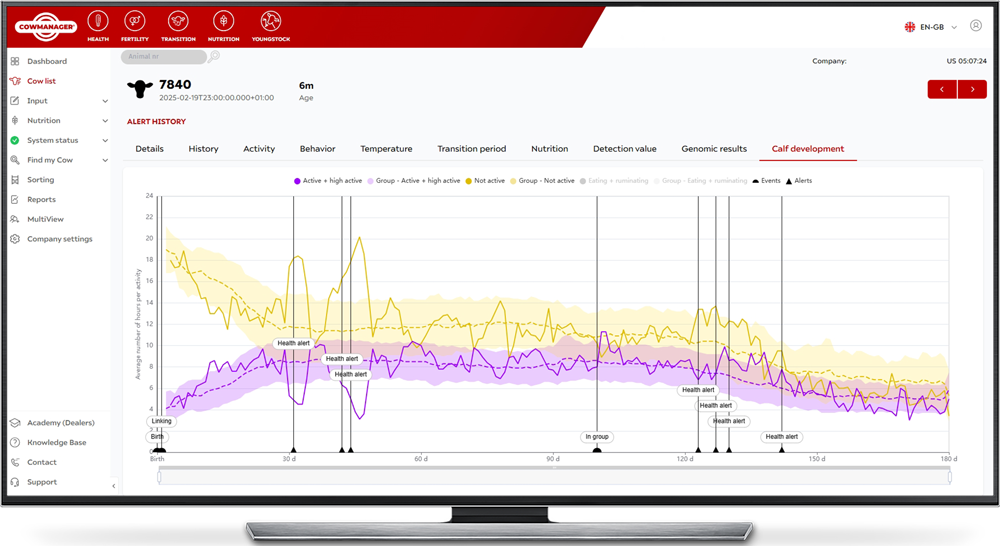
Example of a calf development graph in the CowManager system.
Dairy Heifer Health Tips
Whether you have the perfect diet in place or not, if your housing is off, you’ll lose ground. Dedication in heifer management makes the difference between good and great heifer development. Healthier, more comfortable heifers grow faster and transition more smoothly into the milking herd.
For example, overcrowding stunts growth and spreads disease. Give heifers room to thrive and grow. Make sure they have dry bedding to reduce respiratory disease and scours. Good ventilation prevents heat stress and lung problems.
Moving groups calmly and minimizing sudden changes reduces setbacks in development. Socialized calves and heifers aren’t just healthier; they also manage stress better later in life.
Building the Future
Remember: a healthy heifer is not an expense; she’s your most valuable investment in tomorrow’s milk. Every small dairy heifer management choice, from colostrum quality to feed consistency to housing, directly affects your (future) herd’s bottom line.
The cows that walk into your parlor or paddock in two years are the result of what you’re doing today with your calves and heifers. When you manage them right from the start, you’re not just raising replacements. You’re building the next generation of your dairy’s success.
CowManager Calf Guide
Improve calf growth and build your future herd with CowManager’s smart insights. Download the Calf Guide to discover how CowManager sensors can detect illness sooner, reduce antibiotic use, and promote faster recovery, ultimately protecting your future milk production.
Download Calf GuideBefore you know it, mating season is just around the corner. A crucial time, as it sets the stage for the next generation of healthy and productive cows in your herd. Good preparation is essential in getting the best results possible for your business. These 10 tips make the perfect pre-mating season checklist.
Download Mating Season Checklist
Going into mating while using the CowManager system? Download our CowManager Pre-Mating Checklist to make sure you’ve prepped your system settings for this season.
Download Checklist1: Set Mating Goals
Before you kick off mating season, take a minute to decide what your main mating goals are. Are you looking to improve genetics, improve milk production or replacement heifers? Narrowing your goals down in advance will help you make informed decisions for breeding and mating.
2: Check on Your Cows
Make sure potentially underperforming cows are on your radar early on so you can still make the adjustments needed to ensure they’ll do well during mating. Unsure? Have your vet or breeding specialist analyse your cows’ performance by adding them in MultiView. CowManager’s Nutrition Module helps you identify at-risk cows up to 50 days before calving.
3: Consider Fertility Testing
Fertility testing your cows can help identify any reproductive issues that may affect their performance during mating season, such as infections or hormonal imbalances. Identifying and addressing these issues beforehand could save you a lot of stress and pain down the road.
4: Prep Your Paddocks
Take time to set the mood and make sure your cows will be comfortable. Ensure that your mating paddocks are in good condition and provide adequate shelter and clean water for your cows.
5: Develop a Mating Plan
A well-thought-out breeding plan is key to achieve your goals. Consider factors such as timing, synchronization protocols, available staff, and the selection of appropriate sires. Have plan Bs at the ready in case of any contingencies, such as weather disruptions.
6: Keep Track of Everything
Keep detailed records of everything leading up to, during, and after mating season. Record mating dates, sire information, and any fertility testing results. This will help you analyse results and help identify risks, and your future self will be eternally grateful to you for being so thorough. CowManager’s Fertility Insights helps you keep detailed records of all your cows’ cycles.
7: Monitor Heat Detection
Go for success: Rely on CowManager’s Fertility Module and never miss a heat. Make sure all cows are tagged with the ear sensor so you can recognise peak heats, pregnancies, non-cycling cows and potential abortions. Make sure your entire staff knows which alerts to look out for and give them access to the system by simply adding their email addresses in MultiView.
“We’ve increased our six week in calf rate by about 15%, so we’ve gone up to 78% in our six week in calf rate. Our empty rate has dropped from about 24% down to 13%. It’s quite substantial, yeah. We’re also picking up those silent heats that we weren’t able to pick up beforehand.” – Mike Marshall, Otago farmer. Watch his full story.
8: Keep Your Herd Healthy
A healthy herd equals a healthy base to build your breeding season upon. Work closely with your vet and team to make sure your cows are as healthy as possible before breeding season begins and throughout, and make sure your cows are getting the nutrition they need to be successful. CowManager’s Health Module can help you monitor health as well as discovery.
9: Make Sure You’re Up to Date
Make sure the systems you use are updated to the newest version available before the season starts. This goes for your cow monitoring system, your herd management system, as well as your drafting gate. Good to know: If you’re using CowManager and some ear sensors are close to underperforming, the system will alert you of this months in advance.
“Basically, CowManager finds a cow on heat and the gate drafts them out after the morning milkings. With the two systems we’re saving a labour unit over mating, that’s for sure. Nobody needs to think about anything, really.” – Ruurd Dijkstra, Waikato farmer. Discover the full story.
10: Be Willing to Make Changes
A prepared farmer is a successful farmer, but sometimes life throws us curveballs. Be prepared to make last-minute adjustments to your plan if any unforeseen weather or health conditions pop up. Just make sure to keep monitoring closely and keep detailed records.
Meet the Team
In New Zealand, CowManager is distributed and supported by CowManager NZ. No one knows the system better than them. Want to know more? Don’t hesitate to reach out. They’re excited to discuss cow monitoring with you and answer any questions you may have.
Contact the Team