How continuous insights help detect issues early and keep cows performing after calving

Displaced abomasum (DA) is one of those post-calving challenges that can quietly derail a cow’s recovery and milk production before you even realise something’s wrong.

The abomasum — the cow’s fourth stomach compartment — shifts out of its normal position, usually occurs within the first 30 DIM. When that happens, digestion slows, feed intake drops, and milk solids follow.

Every dairy farmer knows what DA is. The real question is: how do you catch it early enough to prevent damage?

What Makes DA Hard to Spot

A displaced abomasum occurs after a period of subtle changes at first. Affected cows may eat less, ruminate less, and produce less milk.

An abomasum is not easily visible on external examination. Only trained veterinarians are usually able to detect it. You can recognise displaced abomasum using several clinical indicators, such as:

  • An increased heart rate
  • Cold ears
  • Poor rumen fill
  • Loose or watery manure
  • An abnormal ‘ping’ when you tap the abdomen
  • Positive fluid-splashing sounds

DA often appears within less than 30 DIM, when cows are already under metabolic stress and your team’s focus is split among fresh cow checks, feeding, and milking routines.

A displaced abomasum doesn’t occur spontaneously. Often a cow first shows other signs, like an infection.

That’s where technology makes the difference.

How Continuous Monitoring Changes the Game

CowManager’s Health solution turns early detection from guesswork into data-driven insight. Instead of waiting for visible symptoms, the system continuously tracks eating, rumination, and activity patterns. These behavioural indicators are the first to change when a cow’s abomasum begins to displace.

Both ketosis (decreased appetite, lower milk production) and a displaced abomasum can have similar early signs, and it is common for a cow to have both conditions simultaneously.

During ketosis, a slight and gradual decline in rumination and feeding activity is typically observed. In contrast, a displaced abomasum is characterised by a sudden and marked reduction in both parameters.

Spotting Those Early Warning Signs

For example, a healthy fresh cow should steadily increase her eating time after calving. If the Health solution shows a consistent drop instead, it’s an early warning sign.

The same goes for rumination — one of the most reliable indicators of digestive comfort. A sudden decline can point to displaced abomasum or related metabolic issues such as ketosis.

CowManager’s real-time alerts help you act fast and prevent health issues before they escalate. Instead of reacting to DA cases after production loss or veterinary treatment, you can intervene at the first signs of trouble — saving time, money, and improving animal welfare.

Support Your Transition Cows Proactively

A good dry period is crucial for preventing health abnormalities under 30 DIM. Rumen fill should remain at an adequate level throughout the dry period, to avoid pre-partum ketosis and lower feed intake postpartum.

Most displaced abomasum cases occur around calving, when a cow’s energy balance shifts dramatically. CowManager’s Transition solution complements the Health solution by helping you manage this critical period more effectively.

It monitors each cow’s recovery after calving, showing whether she’s adapting well or struggling with feed intake. That makes it easier to fine-tune nutrition, adjust management for high-risk cows, and prevent metabolic problems before they cascade into a DA case.

The Nutrition solution sends an alert whenever a decline in both rumination and eating time for dry cows is detected, which gives users a chance to adjust management to avoid low feed intakes. This has huge impact on a cow’s welfare during dry period and postpartum.

When you can see how each cow transitions in real time, your team doesn’t have to rely solely on daily pen checks or milk data. You get a complete picture of her health and recovery — exactly when it matters most.

Detect, Act and Prevent

Displaced abomasum doesn’t have to be a production-draining surprise. With CowManager’s Health, Transition and Nutrition solutions you gain early, actionable insights into every cow’s health status.

Parameters like low feed intake and transition alerts give you the opportunity to dive deeper in dry cow management. That means fewer missed cases, faster interventions, and a smoother transition period for your herd.

Healthy cows produce more milk, breed back faster, and stay in the herd longer. Preventing DA isn’t just about treating disease — it’s about protecting performance.

CowManager can help you detect cow diseases so you can act early — keeping your herd healthy and your performance high.

CowManager Health Benefits

Catch Diseases Early, Reduce Sick Cows

Get alerted immediately when a cow isn't ruminating or eating, and intervene proactively. Pick up on diseases like mastitis and ketosis at an early stage.

Improve Herd Performance

Your cow's ears are full of vital information. Monitor their rumination, eating, inactivity, activity, ear temperature, and high active behaviour.

Monitor Your Herd’s Health 24/7

Our Health Module provides early disease detection. CowManager cows live longer, produce more milk, are in better shape and therefore perform better.

Many dairy farmers rely on monitoring systems to track behaviour, activity, and other indicators that help identify potential health issues earlier.

One physiological factor that is considered to play an important role in animal health is cow body temperature. Because temperature reflects internal biological processes, monitoring it can provide useful insights into the condition of individual cows and the overall herd.

When combined with behavioural monitoring, cow body temperature data helps farmers make faster and more informed herd management decisions. But it can be done even better and more precise by specifically monitoring cow ear temperature.

Temperature as Health Indicator

Temperature is one of the most widely recognised indicators of health in animals. When a cow experiences stress, illness, or metabolic challenges, changes in a cow’s body temperature may occur as part of the body’s natural response. The ear is one of the first places in the body where these changes are noticeable.

When a cow’s body temperature rises, it usually means the immune system responds to stress, infection, inflammation, or heat. The body increases temperature to help support immune activity, which can lead to reduced feed intake, lower milk production, and lethargy.

When a cow’s body temperature drops, it often indicates that the cow is struggling to maintain normal body functions. This can happen during severe illnesses, metabolic disorders, or after calving, when blood flow shifts from the cow’s ear toward vital organs and the body tries to conserve energy.

Cow Body Temperature in Dairy Herd Monitoring

Modern cow monitoring systems often track behavioural indicators such as eating behaviour, rumination patterns, activity and inactivity.

Adding temperature monitoring, specifically ear temperature, to this data can strengthen the overall understanding of herd health. When farmers have access to multiple indicators, they can better interpret what is happening within the herd and respond quickly when conditions change.

For dairy farmers managing large herds, it can be difficult to detect subtle health changes through observation alone. Monitoring technologies that track indicators such as activity, rumination, and temperature trends can provide valuable insights that support early intervention.

Cow Ear Temperature

Tracking a cow’s temperature alongside behavioural indicators contributes to a more complete picture of cow health. Continuous monitoring helps farmers detect changes sooner and respond more effectively.

The CowManager system measures ear temperature specifically, making cow monitoring much more accurate and actionable with early alerts.

Whenever a cow develops an infection, blood flow in the ears shifts toward vital organs. By monitoring ear temperature, this change can be detected early, potentially preventing more serious issues for both you and the cow later on.

Supporting Better Herd Management

Cow monitoring innovations continue to change how dairy farms manage animals. Monitoring technologies allow farmers to move from reactive management to proactive herd care.

It may seem tooling makes herd management more complex, but systems that provide reliable data are an important part of driving herd management forward.

With real-time data, herd management teams can make more informed decisions about herd health, reproduction, and overall management.

CowManager Benefits

Improve Herd Performance

Your cow's ears are full of vital information. Monitor their rumination, eating, inactivity, activity, ear temperature, and high active behaviour.

Catch Diseases Early, Reduce Sick Cows

Get alerted immediately when a cow isn't ruminating or eating, and intervene proactively. Pick up on diseases like mastitis and ketosis at an early stage.

Monitor Transition, Reduce Risk

The Transition Monitor identifies cows at risk up to 50 days before calving, ensuring proactive intervention and reducing transition diseases.

Vet Plus veterinarian Kyle Kannan has been working with Paul and Sarah Koopal for years. The Koopals are third generation farmers in Rerewhakaaitu, Central Plateau, and won the CowManager system in NZDIA’s Shared Farmer of the Year category in 2024.

Ever since then, Paul and Kyle have been exploring and utilising all the data from the CowManager system together, to take the already high performing farm to the next level.

Cow Tags Tracking Animal Health

With CowManager ear sensors, they track the herd’s ear temperature, rumination and eating time, activity and behaviour. According to Paul, it’s been a life changer for animal health.

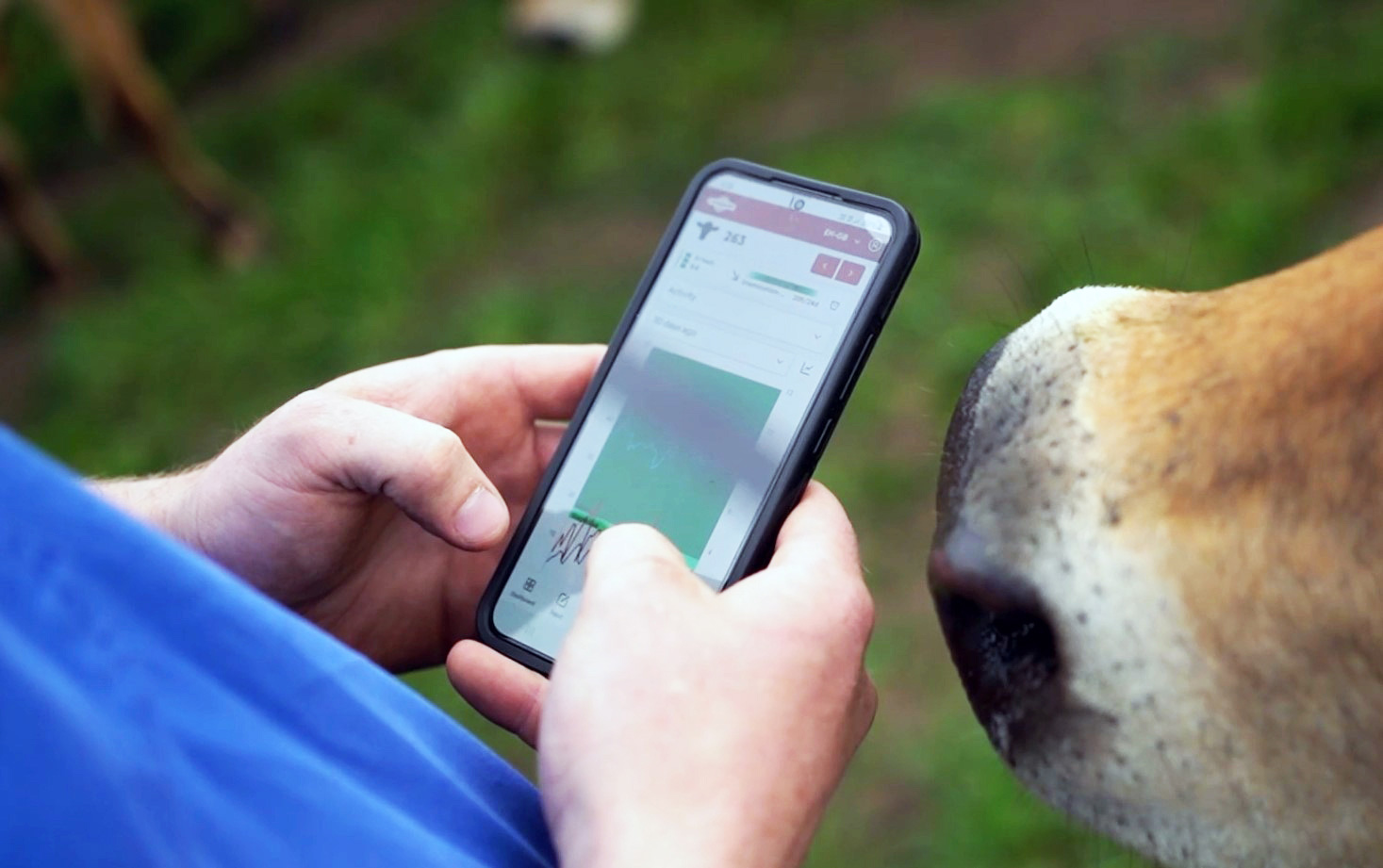
He says: “It’s a real simple app on my phone, on my desktop in the cow shed, or at home. I have alerts come through, like health alerts for sick cows or suspicious cows. You’re picking up something that’s wrong with the cow a lot earlier than you would without the tech. We can intervene a lot earlier.”

It allows the Koopals to reduce the use of antibiotics, which they consider a huge plus.

Paul: “Because we’re picking up sick animals before they’re actually sick, before they know they’re sick, you can make calls on what you’re treating them with. Sometimes it’s just a case of giving them an anti-inflammatory and then they’re back to normal within a day. Whereas if you didn’t have that tech and you didn’t know she was sick until she was sick, you might need to use more antibiotics.”

Better Results Thanks to Tech

Animal health isn’t the only benefit of using the CowManager system. According to Vet Plus vet Kyle Kannan, it’s just scratching the surface.

He says: “There’s also a ton of animal health related to nutrition. Like, how well we feed cows. That has a massive impact on the health of a herd, the health of an individual animal. That information is all coming through as well. And then on top of that, there’s fertility. Which is a key driver of profitability and an integral part of the farm business.”

Paul agrees and shares how the high-tech cow tags have helped him during mating.

“In the cow shed it saves us a lot of time and a lot of labour. Our milkings during mating have become a lot quicker because we’re not having to check tail paint, we’re not having to jump up and check every single cow that comes through.

Because we’re doing AI all the way through our mating, we can use a lot more of the short gestation semen on our herd. The cows that have been given that semen are calving 12 to 13 days earlier, so that’s more days in milk for us on farm. We’re able to actually have more cows in calf as well.”

“And”, he adds, “Because we’ve got CowManager picking up cows that are on heat, we don’t use bulls anymore on farm. That’s been quite a health and safety benefit.”

Unveiling New Data for Vets

Kyle emphasises that cow tag technology isn’t just valuable for farmers – it’s a high-tech treasure chest for vets, too.

“We’re getting information that we’ve never been able to directly measure. You can’t see if your cows are full, or how much they’ve eaten. They look reasonably content, but now we’re getting live data pieces that say, ‘that cow is definitely content’, at a herd level. Now we can jump into our phone and onto our computer screen and actually put some solid information around that.”

Kyle continues: “As vets, we see the more retrospective data that comes through. There was a large scale of information that we just didn’t know, and we weren’t able to collect. An example of that would be between calving and mating.

So, as soon as a cow calves, how fast is she having her first heat? Obviously, we don’t whip tail paint on immediately as soon as they calf, so we don’t know and we don’t measure that as a thing.
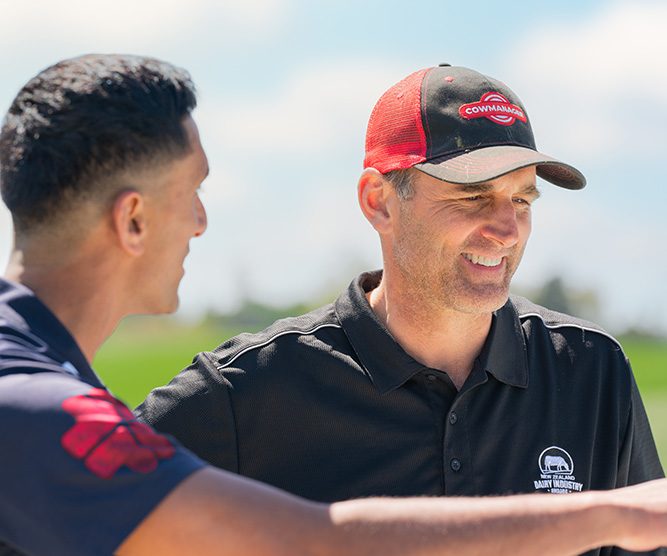
Vet Kyle Kannan and farmer Paul Koopal

Veterinarian Kyle Kannan (left) and dairy farmer Paul Koopal (right).

The first year Paul and Sarah got CowManager, we were able to look at that, and they were actually behind target for what we call the days to first heat; how fast the cows recover from calving. We were able to find a data point that we would never have seen before and then make changes to impact that data point. We managed to improve it.“

He concludes: “At our reviews we’re able to look at the data, have a look at all the different things coming out of it. It’s basically a set of whole brand-new metrics that we’re able to use now in New Zealand that we probably never been able to. It’s quite a cool frontier that we’re currently in.”

Closing the Loop

From a personal side of things, Paul really enjoys the 24/7 aspect of the CowManager cow tags.

“It allows me to get off farm, because I know someone is looking after my cows, through mating, 24/7”, he says.

He elaborates: “I never used to take any time off during mating period and now I’ll literally just come back from a holiday for four days. It’s brilliant, because I know all those cows are still getting their cycling and are still getting picked up by the system.”

Kyle reckons this is just the beginning – as a vet he’s excited about what CowManager will bring to the future of cow monitoring and farm management.

“This isn’t static technology, it’s bloody on the roll. It’s going to be really cool to see what’s coming in the next couple of years. The Milk Sensor is another thing CowManager are rolling in real soon and that’s basically going to close the loop. All the repro stuff that we’re doing is fantastic, but at the end of the day, milk is the product that we want.”
Listen to Paul and Kyle’s full interview on the REX podcast

Bovine Respiratory Disease (BRD) is one of the most common and costly health problems on dairy farms. It’s also known simply as pneumonia, or “shipping fever”; an acute, stress-related form of BRD that typically develops after a long transport.

It isn’t caused by just one thing, but rather by what’s known as the bovine respiratory disease complex – a mix of stress, viruses, and bacteria that can quickly take down even healthy-looking calves.

The most common bovine respiratory disease symptoms include coughing, fever, and laboured breathing.

Calves may lose their appetite, lie down more, experience accelerated breathing, a change in temperature and generally look dull. The real challenge is that by the time you notice these visible signs, the disease is often already well advanced. Early detection and quick bovine respiratory disease treatment are critical to saving calves and preventing serious losses.

Why BRD is Such a Problem

For farmers, BRD isn’t just an animal health issue; it’s an economic one. Calves that battle pneumonia often struggle to catch up in growth, which means they won’t perform as well later in life. This is why bovine respiratory disease prevention matters so much.

Cows have a relatively limited lung capacity in proportion to their body weight. Therefore, it’s crucial to maintain good lung health throughout their life. Issues like BRD translate into lower milk yields, higher veterinarian bills and in some cases, calf mortality.

How Cow Monitoring Technology Helps

Relying on visual checks for BRD can be a tricky business. Coughing, nasal discharge, or falling behind compared to the rest of the herd can be signs of BRD. But calves and cows, prey animals by nature, are experts at hiding weaknesses. This makes it harder to spot bovine respiratory disease symptoms.

That’s where cow monitoring technology makes a real difference. By keeping track of activity and behaviour around the clock, these systems can identify early warning signs that would otherwise be missed.

For example, opting for an ultrasound at an early state can detect budding pneumonia. Something that sometimes occurs when calves and cows receive health alerts and nothing comes out of the clinical examination.

CowManager Calf Guide

Download the Calf Guide to discover how CowManager sensors can detect illness sooner, reduce antibiotic use, and promote faster recovery, ultimately protecting your future milk production.

Download Calf Guide

Monitor Herd Health with CowManager

A great example of a BRD prevention tool is CowManager’s Youngstock Monitor, designed specifically to track calf health. The system collects detailed data on ear temperature, eating and rumination time, behavior and activity and flags anything unusual. When a calf shows changes that could indicate the bovine respiratory disease complex, the system alerts the farmer early, giving time to act before the disease becomes severe.

This approach supports earlier bovine respiratory disease treatment, which improves recovery rates, reduces antibiotic use, and ultimately lowers mortality. Healthier calves grow into healthier, more productive cows – and that protects your bottom line.

The CowManager system enables farmers to keep an eye on their herd’s entire life cycle, monitoring them from calf to cow with just one ear sensor. Comparing groups, diving into the data and making sure their herd gets everything they need.

When calves become cows, CowManager’s Health Module continues to track their health, ensuring a lifetime of monitoring.

Keeping BRD from Being Damaging

Monitoring is powerful, but it works best alongside strong everyday management. Good bovine respiratory disease prevention practices include ensuring calves get enough colostrum, reducing stress during weaning and transport, maintaining proper ventilation, keep group changes at a minimum and manage them well, and following vaccination programs.

When these are combined with technology like CowManager’s Health monitor, it’s the best defense against BRD.

Protecting calves from bovine respiratory disease isn’t just better for animal welfare – it’s better for your business.

CowManager Benefits

Catch Diseases Early, Reduce Sick Cows

Get alerted immediately when a cow isn't ruminating or eating, and intervene proactively. Pick up on diseases like mastitis and ketosis at an early stage.

Improve Herd Performance

Your cow's ears are full of vital information. Monitor their rumination, eating, inactivity, activity, ear temperature, and high active behaviour.

From Calf to Cow

Our lightweight sensor is designed to last a lifetime, offering a seamless and continuous monitoring solution tailored to your farm and your cow's life phase.

Keeping cows healthy, productive, and easy to manage can sometimes feel like juggling in the wind. That’s why more and more farmers are turning to cow monitoring technology — and according to Terang farmer Trevor Uebergang, it’s one of the best decisions he’s ever made.

Watch the Video

All About Comfort

Trevor milks 210 cows and has been using CowManager since 2022.

“The main reason is I don’t like the idea of putting things around a cow’s neck. And I find that ear tags are easier to put in and out,” Trevor says.

For him, it’s all about keeping things simple and comfortable for the cows — and for himself.

“It’s just more ease of management. We like using it and we will continue to use it. And it wasn’t too expensive, I don’t think. I’m 51 now. As we get older, why not make it a little bit easier for yourself?”

Before buying, he asked around. “I got some feedback from other people who use it (CowManager), and it was exactly the same. Once you put it in, you will never regret it. You think, ‘why didn’t I do this earlier?’”

First Thing in the Morning

Trevor says CowManager is now part of his daily routine.

“I check the system first thing in the morning. What cows are cycling, if there’s any health issues. Whether we need to check a cow for mastitis, which is normally the first instance. It tells you exactly what a cow is doing.”

And here’s the real bonus: you don’t even have to be at the farm to be able to keep an eye on the herd.

“If one of us happens to go away, you can still monitor everything, from wherever you happen to be. Whether it’s overseas, or in Australia. We went on a trip to New Zealand, and we could still tell what was going on back on the farm, which was quite nice.”

For Trevor, that’s been huge. “It’s been a game-changer for me.”

Here to Help

In Australia, CowManager is distributed and supported by World Wide Sires Australia. No one knows the system better than they do. Want to know more? Don’t hesitate to reach out. They’re excited to discuss cow monitoring with you and answer any questions you may have.

Contact the Team

No More Tail Painting

One of the big wins for Trevor has been in reproductive management.

“With CowManager, it was a lot easier to pick up empty cows. Any cows that were still cycling when they shouldn’t have been, they should’ve been all in calf.”

He’s also been able to ditch some of the more time-consuming old-school methods.

“I used to tail paint. And that means touching cows up three times a week with paint – I no longer have to do that, which is good. And I always used to jump up and check each individual cow for heat. Whereas now, I just look at the app.”

The app’s Fertility accuracy has even changed how he uses sexed semen.

“CowManager gives you that optimal time of using sexed semen, and I’ve used that a lot. I always used to AI in the morning only, and now – because of that – I AI morning and night, because I can do it myself.”

Trevor has CowManager linked with Easy Dairy.

“We use the system with Easy Dairy, so there’s a touch screen at the front of the pit, which is all linked to CowManager, as well as our phones. Now I can auto draft or just punch them up into the computer and draft them that way.”

This means less running around and more time doing the important stuff.

A Lifesaver

One of the most valuable features for Trevor is CowManager’s health alerts.

“If there is a cow that’s not doing so well, an alert will come up on my phone, and I find that really, really good. When the health alert comes up, one of the things I always do check is what is the temperature doing? Has she got a stomach-ache, or has she got something else wrong with her?”

And when it comes to mastitis, CowManager’s speed is a lifesaver. “It’s definitely saved us. It picks up mastitis a whole lot earlier.”

Trevor’s pretty clear on where he stands: “Once you put it in, you will never regret it.”

Cow monitoring technology like CowManager isn’t just about making farming easier. It’s about keeping your herd healthier, catching problems before they cost you, and freeing up your time. And in Trevor’s case, it’s also about being able to go on family trips while being able to still keep an eye on the cows. For him, the only regret is not getting the system sooner.

Dairy News Australia

This article was previously published by Dairy News Australia.

Benefits of CowManager

Confidently Use Sexed Semen

View cycling and fertility history in Fertility Insights and see if a cow is suited to be mated to sexed semen.

Catch Diseases Early, Reduce Sick Cows

Get alerted immediately when a cow isn't ruminating or eating, and intervene proactively. Pick up on diseases like mastitis and ketosis at an early stage.

Increase Workload Efficiency

Divide your workload more efficiently thanks to real-time alerts. Focus on the right cow at the right time and be able to spend more time off-farm.

A new year on the farm doesn’t start with big promises. It starts with feeding cows, watching behaviour, making breeding decisions, and trying to stay ahead of problems before they cost time, money, or affect animal health.

CowManager Farmer Stories are built on real, day-to-day use of the system – across different herd sizes, farming systems, climates, and countries.

At the end of 2025, many farmers let us know how they like working with CowManager. By sharing their feedback with us, we continue to tailor our service to their needs. And by sharing these voices, farmers can learn from each other and make better-informed decisions for their own farms.

One Story, Many Farms

No matter where a farm is located, cost is always part of the conversation. In Ireland, dairy farmer Sean Corby put it plainly: “Like all farmers, I’d like tools to be cheaper – but CowManager is a fantastic product and working very well here so far.”

That balance between investment and results is familiar everywhere. Farmers weigh every decision carefully, and value becomes clear only when a system proves itself over time.

For Canadian farmer Lynn Moore, that proof came through years of use. “I believe I’ve had CowManager since 2015 and I couldn’t be happier. It’s an excellent product; keep it up!”

Sticking with a system for nearly a decade isn’t about features on paper. It’s about consistency, trust, and knowing the system supports better decisions year after year.

More Farmer Stories

Want to read more real farmer experiences? Visit cowmanager.co.nz/farmer-stories and see how dairy farmers around the world use CowManager to stay ahead of the herd. Or check out the CowManager YouTube channel for more Farmer Stories videos.

From Tool to Partnership

With the right results and support, a tool becomes a partnership.

For many farmers, confidence in technology grows step by step. In the United States, farmer Ryan Carbaugh from Waterside Farm described how results in one part of the operation led to broader adoption.

“I enjoy CowManager. It really works. We started using it on our heifers and had instant success: heifers bred on first and second services. We’re now experimenting with it in our tie stall barn and pasture setup. Seeing those results made me jump in.”

That’s how technology earns its place on a farm. Not through promises, but by delivering results where it matters most.

For others, the value goes beyond performance alone. Catching issues early can make the difference between a small intervention and a serious setback – for both cows and farmers.

In Germany, animal welfare is a top priority for farmer Uwe Petzold: “We’re very satisfied. From an animal welfare point of view, I think the system should be mandatory. We were able to treat cows before major problems occurred.”

Why These Stories Matter

Real experiences – positive, critical, and practical – help set realistic expectations and support better decisions on-farm.

As this new year gets underway, these voices reflect what dairy farming truly looks like: constant decisions, tight margins, and a clear focus on tools and services that help keep cows healthier and farms running more efficiently.

Let’s Meet

Come meet us at many dairy events this year! We’d love to connect and discuss all things cow monitoring. You can find our CowManager Specialists at events all over the globe. Check out our dairy events calendar for 2026.

In modern Australian dairy farming, staying ahead means doing more than just keeping up. It means being proactive, efficient, and data driven. That’s especially true when managing herd fertility, a task that becomes increasingly complex with year-round calving.

For one family-run farm in Winchelsea, Victoria, the CowManager system has become the backbone of their reproduction strategy. With 600 cows and four calving seasons, James Parish embraced technology to simplify joining, improve health monitoring, and lighten the daily workload.

Watch the Video

Year-Round Demands

Running a mixed feeding operation with multiple calving cycles means this farm needs a system that can perform every day of the year.

It’s a pasture-based system but they feed a lot of grain, batch hay and buy local hay in the area to feed the cows and youngstock. They calf four times a year – in February, May, August and November.

The family relies on shared oversight to stay on top of things, made easier by connected tools and shared data.

“Every milking cow has a sensor – we’re at about 600 now. My brother uses the platform and so does my father; we all keep a close eye on the cows together”, James says.

Boosting Repro and Health

With constant joining and a heavy focus on animal health, they needed a system that would give reliable insights and real-time alerts. CowManager fit the bill.

“We started using the CowManager system 2 years ago. We chose the CowManager sensors for the backup support and because we prefer ear tags over collars.”

Their use of both the Fertility and Health modules allows them to handle reproduction and wellbeing with confidence.

James explains: “The Fertility Module is important because we’re joining all year round, and we just use AI. And the Health Module is important as well for seeing how the cows are eating, and if we have any sick cows.”

He adds: “You get notifications from the app all day so if something happens and it needs your attention; you’ve got all information straight away.”

Integration into existing infrastructure also made the transition seamless.

“CowManager integrates seamlessly with the dairy software. We use Jantec in the dairy and it was as simple as ringing up Jantec to make sure it all works properly. We haven’t had any issues since. The benefit of them being integrated is that all the CowManager alerts go straight into Jantec. So, all of the heat and health alerts automatically come up when we want to draft.”

Get a Free System Demo

Get a glimpse of all the benefits and possibilities of using CowManager. A local representative will give you a tour through the system to show you how easy to use our app is and how it monitors your cows 24/7.

Request a Free Demo

Less Guesswork

Where before, James and his family were relying on visual methods like stickers, they’ve now gone fully digital—and haven’t looked back.

“One of the biggest benefits has been heat detection. We were using stickers beforehand, but after 2 weeks of using both stickers and CowManager, the stickers disappeared. We just rely on the CowManager system now for heats – it’s more accurate.”

The simplicity and clarity of the system’s data makes day-to-day work easier.

“All the data in the system is easy to find and very easy to understand. You can look up individual cows to find pretty much anything. The reports on the pc are really handy as well. It gives you early indications of how many you’ve got in calf, any suspect aborted cows that you can get rechecked.”

And with the added control of sexed semen timing, they can be more strategic in their decisions.

“We use the Insemination Window to select the right cows for sexed semen. If they’re not in the right window and they’re too early, then we’ll not join them in the morning and wait ‘till the PM to join them.”

Faster Action

Frequent calving can increase the risk of health issues, but CowManager’s alerts are helping them act earlier and faster, according to James.

“The health alerts from CowManager are really good. They pick on rumination and eating and can tell you how the cows are performing. But for sick alerts, the temperature alert is the best. It gives you very quick information on whether a cow is actually sick and needs treating.”

This has been especially valuable during calving, when milk fever can strike suddenly.

“Just because we’re calving so often, the temperature alert from CowManager picks up a lot of cases of milk fever. We can see from the phone straight away if a cow is down and needs treating. You get an alert, and you know which cows to look out for. Whereas before CowManager, we were checking every cow individually to make sure that she wasn’t sick.”

Essential Technology

With constant calving, intensive feed systems, and a large herd, this Victorian farm shows how digital tools like CowManager are not just convenient, but essential.

“The installation was really easy; it only took about 3 or 4 hours. They (WWS Australia) helped set up all the solar routers and routers and get it all connected.”

With the whole family now involved in managing the herd through a single platform, there’s more confidence in every decision.

“I’d recommend CowManager to anyone who asks what system we’re using, or if anyone has any doubts about getting a system. I’d strongly recommend getting CowManager”, James says.

Dairy News Australia

This article was previously published by Dairy News Australia.


Benefits of CowManager

Catch Diseases Early, Reduce Sick Cows

Get alerted immediately when a cow isn't ruminating or eating, and intervene proactively. Pick up on diseases like mastitis and ketosis at an early stage.

Always Know When to Inseminate

Our alerts and Insemination Window tell you the best time to inseminate a cow. This makes mating and breeding a breeze.

Increase Workload Efficiency

Divide your workload more efficiently thanks to real-time alerts. Focus on the right cow at the right time and be able to spend more time off-farm.

Technology is playing an increasingly important role in how dairy farms are managed, from reproduction and health monitoring to daily decision-making. For Brady Croft and his father in Allansford, Victoria, embracing technology with CowManager has helped simplify the complexity of managing a 300-cow herd while improving outcomes across the board.

Watch the Video

Embracing Tech

Running a pasture-based operation across 200 hectares, Brady and his family were looking for a way to streamline herd monitoring; especially when it came to heat detection.

Brady: “We milk 300 cows – mostly Jerseys – and are a 100% pasture-based system on 200 hectares. We started working with CowManager in December 2021. We wanted a heat detection system and had a look at a few others, but CowManager is what we chose.”

Their decision to choose CowManager was based on both the functionality and ease of setup, which made implementing it across the farm a smooth process.

Ease of Use

Modern dairy tech needs to work with the farm’s existing environment. For Brady, the CowManager system did just that—powered entirely by solar.

“The whole farm is networked on a solar setup. It’s been very simple. I think we’ve got 7 solar routers.”

He adds: “Installation of the system was very simple. They (representatives from WWS Australia) came out here and helped us put the sensors in and put the routers up.”

Once the system was in place, it didn’t take long for it to become part of the daily rhythm on the farm. CowManager’s ease of use is a recurring theme for Brady and his dad.

“Working with the system is extremely simple and it’s worked really well”, he says. “Me and my father, we both use the data sharing function, so we’ve both got it and know what’s happening all the time.”

Brady continues: “We find it very easy to read the system. The graphs are very easy to understand and they’re all colour-coded for their activity. It’s good when you’re away from the farm. It’s just made it a lot easier. When I’m not here or my father’s not here, it’s made things a lot simpler.”

Brady Croft with CowManager system on his phone

Smarter Heat Detection Means Better Joining

CowManager’s heat detection module has helped the Crofts improve the accuracy and timing of joining, especially with all cows submitted to AI. They’re using both the heat and health modules—ensuring year-round visibility into herd performance.

“We use the Fertility Module for heat detection, for our joining. And the Health Module we use all year round, just to keep an eye on the cows’ overall health.”

“Probably the main advantage of the heat detection is getting your cows joined at the right time. And the fertility reports, that’s a good one. So, you can pick up cows that may be cycling odd or not cycling at all.”

“We’ve seen a lot better conception and a lot better first round submission rate, too. Because you can pick up those cows that aren’t quite right and you can get them sorted early. You’re submitting every cow to AI, so it’s been a lot better.”

“We started using sexed semen within the last 2 years with CowManager. And now they’ve got the little timing graph (Insemination Window) on there, which makes it a lot easier to use, too.”

Early Alerts Save Cows

Health monitoring plays just as important a role as fertility on a busy dairy, especially during calving. With CowManager, problems are identified before they become emergencies.

“During calving time, you might get an alert for a cow that’s a bit less active, and you keep an eye on her. She might have milk fever or even an issue. This year we’ve had a couple of LDA’s (displaced abomasum). CowManager picked them up before we did, so it’s done its job there.”

Those early alerts don’t just save cows – they save costs, too.

“If you’ve got a crook cow, you’re picking them up before they really go downhill. So, if you save yourselves a few cows, you’re probably earning back your subscription costs every year. Just on a few cows that you might pick up, might keep in the herd, or a few extra pregnancies; it all adds up.”

Dairy News Australia

This article was previously published by Dairy News Australia.


Benefits of CowManager

Monitor Your Herd’s Health 24/7

Our Health Module provides early disease detection. CowManager cows live longer, produce more milk, are in better shape and therefore perform better.

Always Know When to Inseminate

Our alerts and Insemination Window tell you the best time to inseminate a cow. This makes mating and breeding a breeze.

Dive Into a Herd’s History

Advisors can dive into and analyse cow data, including alerts and graphs, dating all the way back to the install date.

Hamilton, New Zealand – August 14, 2025 – CowManager, a global leader in smart cow monitoring solutions, is excited to announce the establishment of its own office in Hamilton, New Zealand. This strategic move marks a significant milestone in CowManager’s journey, bringing us closer to our New Zealand customers and enhancing the service, support, and innovation that our farmers rely on. The official transition to CowManager NZ will take place on Saturday, August 16.

A Decade of Growth and Success

Since tagging our first cow in New Zealand in 2014, CowManager has steadily grown to support hundreds of forward-thinking farms across the country. Over the past 10 years, our presence has built a solid foundation, and now, with a direct presence in New Zealand, CowManager is accelerating its efforts and continuing to help farmers thrive with enhanced support and capabilities.

“We’ve seen tremendous growth and success over the years, and now it’s time to take the next step,” says Jared Bekhuis, Managing Director of CowManager NZ.

“By adding specialists and establishing our direct presence in New Zealand, we’re enhancing our capabilities to deliver faster, more expert service exactly where it’s needed. At the same time, we are expanding our portfolio with exciting innovations like Draft my Cow, the Youngstock Monitor, and Find my Cow Flash. These new solutions will provide our farmers with even more powerful tools to optimize their operations and improve herd management. And we’re just getting started-keep an eye out for even more cutting-edge advancements that will further transform the way we support our farmers.”

This transition opens an exciting new chapter for CowManager. With more resources and local expertise, we’re better positioned to offer tailored solutions and increased responsiveness, helping farmers achieve even greater success with our innovative solutions.

“New Zealand’s dairy sector is world-renowned for its excellence,” Bekhuis adds. “We’re proud to contribute to its ongoing success and invest in the future of every farmer we serve.”

What This Means for You

The contracts between CowManager and our valued customers will remain unchanged. Your terms, support, and service remain intact, with no alterations to your agreement.

  • All current dealer employees will continue with CowManager NZ, along with additional new team members to enhance our support network.
  • Our new office will be located at 3/137 Ossie James Drive, Hamilton Airport.
  • You can reach us at our new office phone number: 0800 – 770566 or support@cowmanager.com per Saturday, August 16.
  • We’ll be providing new contact details for your respective contact people, including support staff. They will be in touch soon to share their updated contact information, ensuring a smooth transition.

Looking Ahead

With a stronger local presence, CowManager NZ will work even harder to deliver the best possible experience for our farmers. As always, we are here to ensure that you’re well-supported and prepared for whatever comes next in your dairy operation.

We look forward to continuing our journey together and working with you to achieve even greater success.

About CowManager

At CowManager, we are committed to providing dairy farmers with the tools they need to succeed. Our revolutionary cow monitoring ear sensors help farmers stay ahead with actionable insights on herd health, nutrition, fertility, and more. Whether you have 20 or 125,000 cows, CowManager ensures that farmers always have eyes on their herd.

Before you know it, mating season is just around the corner. A crucial time, as it sets the stage for the next generation of healthy and productive cows in your herd. Good preparation is essential in getting the best results possible for your business. These 10 tips make the perfect pre-mating season checklist.

Download Mating Season Checklist

Going into mating while using the CowManager system? Download our CowManager Pre-Mating Checklist to make sure you’ve prepped your system settings for this season.

Download Checklist

1: Set Mating Goals

Before you kick off mating season, take a minute to decide what your main mating goals are. Are you looking to improve genetics, improve milk production or replacement heifers? Narrowing your goals down in advance will help you make informed decisions for breeding and mating.

2: Check on Your Cows

Make sure potentially underperforming cows are on your radar early on so you can still make the adjustments needed to ensure they’ll do well during mating. Unsure? Have your vet or breeding specialist analyse your cows’ performance by adding them in MultiView. CowManager’s Nutrition Module helps you identify at-risk cows up to 50 days before calving.

3: Consider Fertility Testing

Fertility testing your cows can help identify any reproductive issues that may affect their performance during mating season, such as infections or hormonal imbalances. Identifying and addressing these issues beforehand could save you a lot of stress and pain down the road.

4: Prep Your Paddocks

Take time to set the mood and make sure your cows will be comfortable. Ensure that your mating paddocks are in good condition and provide adequate shelter and clean water for your cows.

5: Develop a Mating Plan

A well-thought-out breeding plan is key to achieve your goals. Consider factors such as timing, synchronization protocols, available staff, and the selection of appropriate sires. Have plan Bs at the ready in case of any contingencies, such as weather disruptions.

6: Keep Track of Everything

Keep detailed records of everything leading up to, during, and after mating season. Record mating dates, sire information, and any fertility testing results. This will help you analyse results and help identify risks, and your future self will be eternally grateful to you for being so thorough. CowManager’s Fertility Insights helps you keep detailed records of all your cows’ cycles.

7: Monitor Heat Detection

Go for success: Rely on CowManager’s Fertility Module and never miss a heat. Make sure all cows are tagged with the ear sensor so you can recognise peak heats, pregnancies, non-cycling cows and potential abortions. Make sure your entire staff knows which alerts to look out for and give them access to the system by simply adding their email addresses in MultiView.

“We’ve increased our six week in calf rate by about 15%, so we’ve gone up to 78% in our six week in calf rate. Our empty rate has dropped from about 24% down to 13%. It’s quite substantial, yeah. We’re also picking up those silent heats that we weren’t able to pick up beforehand.” – Mike Marshall, Otago farmer. Watch his full story.

8: Keep Your Herd Healthy

A healthy herd equals a healthy base to build your breeding season upon. Work closely with your vet and team to make sure your cows are as healthy as possible before breeding season begins and throughout, and make sure your cows are getting the nutrition they need to be successful. CowManager’s Health Module can help you monitor health as well as discovery.

9: Make Sure You’re Up to Date

Make sure the systems you use are updated to the newest version available before the season starts. This goes for your cow monitoring system, your herd management system, as well as your drafting gate. Good to know: If you’re using CowManager and some ear sensors are close to underperforming, the system will alert you of this months in advance.

“Basically, CowManager finds a cow on heat and the gate drafts them out after the morning milkings. With the two systems we’re saving a labour unit over mating, that’s for sure. Nobody needs to think about anything, really.” – Ruurd Dijkstra, Waikato farmer. Discover the full story.

10: Be Willing to Make Changes

A prepared farmer is a successful farmer, but sometimes life throws us curveballs. Be prepared to make last-minute adjustments to your plan if any unforeseen weather or health conditions pop up. Just make sure to keep monitoring closely and keep detailed records.

Meet the Team

In New Zealand, CowManager is distributed and supported by CowManager NZ. No one knows the system better than them. Want to know more? Don’t hesitate to reach out. They’re excited to discuss cow monitoring with you and answer any questions you may have.

Contact the Team