How continuous insights help detect issues early and keep cows performing after calving

Displaced abomasum (DA) is one of those post-calving challenges that can quietly derail a cow’s recovery and milk production before you even realize something’s wrong.

The abomasum — the cow’s fourth stomach compartment — shifts out of its normal position, usually occurs within the first 30 DIM. When that happens, digestion slows, feed intake drops, and milk yield follows.

Every dairy producer knows what DA is. The real question is: how do you catch it early enough to prevent damage?

What Makes DA Hard to Spot

A displaced abomasum occurs after a period of subtle changes at first. Affected cows may eat less, ruminate less, and produce less milk.

An abomasum is not easily visible on external examination. Only trained veterinarians are usually able to detect it. You can recognize displaced abomasum using several clinical indicators, such as:

  • An increased heart rate
  • Cold ears
  • Poor rumen fill
  • Loose or watery manure
  • An abnormal ‘ping’ when you tap the abdomen
  • Positive fluid-splashing sounds

DA often appears within less than 30 DIM, when cows are already under metabolic stress and your team’s focus is split among fresh cow checks, feeding, and milking routines.

A displaced abomasum doesn’t occur spontaneously. Often a cow first shows other signs, like an infection.

That’s where technology makes the difference.

How Continuous Monitoring Changes the Game

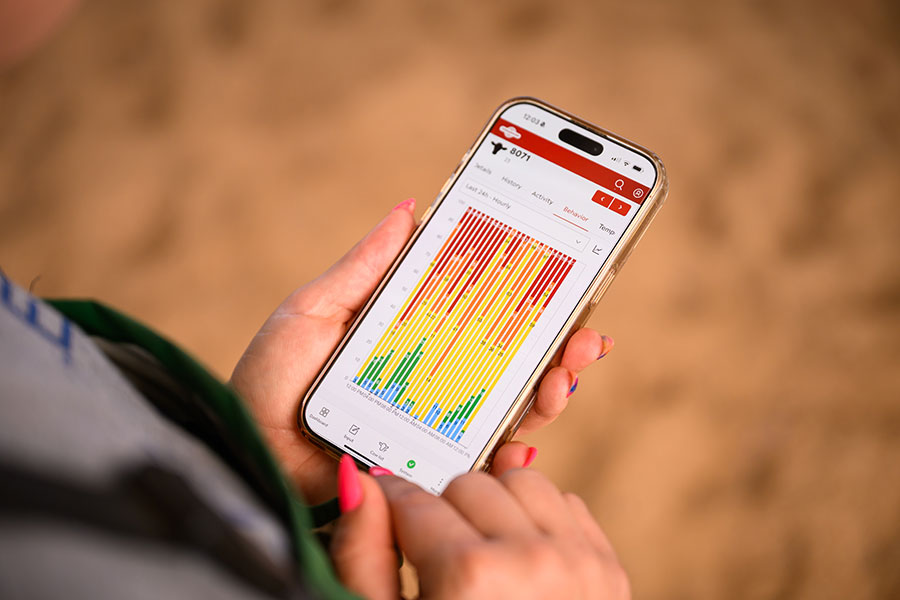
CowManager’s Health solution turns early detection from guesswork into data-driven insight. Instead of waiting for visible symptoms, the system continuously tracks eating, rumination, and activity patterns. These behavioral indicators are the first to change when a cow’s abomasum begins to displace.

Both ketosis (decreased appetite, lower milk production) and a displaced abomasum can have similar early signs, and it is common for a cow to have both conditions simultaneously.

During ketosis, a slight and gradual decline in rumination and feeding activity is typically observed. In contrast, a displaced abomasum is characterized by a sudden and marked reduction in both parameters.

Spotting Those Early Warning Signs

For example, a healthy fresh cow should steadily increase her eating time after calving. If the Health solution shows a consistent drop instead, it’s an early warning sign.

The same goes for rumination — one of the most reliable indicators of digestive comfort. A sudden decline can point to displaced abomasum or related metabolic issues such as ketosis.

CowManager’s real-time alerts help you act fast and prevent health issues before they escalate. Instead of reacting to DA cases after production loss or veterinary treatment, you can intervene at the first signs of trouble — saving time, money, and improving animal welfare.

Discover the Value of Health Monitoring

As the industry faces increasing pressures, the integration of advanced health monitoring technology has become essential. This document examines the role technology can play in reducing health risks and health problems and maximizing farm profitability.

Download the Health Guide

Support Your Transition Cows Proactively

A good dry period is crucial for preventing health abnormalities under 30 DIM. Rumen fill should remain at an adequate level throughout the dry period, to avoid pre-partum ketosis and lower feed intake postpartum.

Most displaced abomasum cases occur around calving, when a cow’s energy balance shifts dramatically. CowManager’s Transition solution complements the Health solution by helping you manage this critical period more effectively.

It monitors each cow’s recovery after calving, showing whether she’s adapting well or struggling with feed intake. That makes it easier to fine-tune nutrition, adjust management for high-risk cows, and prevent metabolic problems before they cascade into a DA case.

The Nutrition solution sends an alert whenever a decline in both rumination and eating time for dry cows is detected, which gives users a chance to adjust management to avoid low feed intakes. This has huge impact on a cow’s welfare during dry period and postpartum.

When you can see how each cow transitions in real time, your team doesn’t have to rely solely on daily pen checks or milk data. You get a complete picture of her health and recovery — exactly when it matters most.

Detect, Act and Prevent

Displaced abomasum doesn’t have to be a production-draining surprise. With CowManager’s Health, Transition and Nutrition solutions you gain early, actionable insights into every cow’s health status.

Parameters like low feed intake and transition alerts give you the opportunity to dive deeper in dry cow management. That means fewer missed cases, faster interventions, and a smoother transition period for your herd.

Healthy cows produce more milk, breed back faster, and stay in the herd longer. Preventing DA isn’t just about treating disease — it’s about protecting performance.

CowManager can help you detect cow diseases so you can act early – keeping your herd healthy and your performance high.

CowManager Health Benefits

Catch Diseases Early, Reduce Sick Cows

Get alerted immediately when a cow isn't ruminating or eating, and intervene proactively. Pick up on diseases like mastitis and ketosis in an early stage.

Improve Herd Performance

Your cow's ears are full of vital information. Monitor their rumination, eating, inactivity, activity, ear temperature, and high active behavior.

Monitor Your Herd’s Health 24/7

Our Health Module provides early disease detection! CowManager cows live longer, produce more milk, are in better shape and therefore perform better.

Peyton Fernandes was recently featured in the March issue of California Dairy. In the cover story, he shared how adopting CowManager technology has helped transform productivity and deliver measurable returns on his family’s operation.

Saving $4 Per Cow Per Day

Fernandes works alongside his father and brother at Legendairy Farms, a 4,500-head Jersey dairy operation. Although the farm has been using CowManager for just over a year, the results have already been significant. According to Fernandes, the system has generated a 25% return on investment with an additional $30.50 in income per cow.

A key driver of that return is improved reproductive performance. CowManager has increased pregnancy detection rates by 6% and improved heat detection accuracy by 8%, helping the farm team identify more cows at the right time. Actual conception is up 4% because CowManager provides a more precise window for insemination. With the cow monitoring system, the average number of open days has decreased from 109 to 105, saving about $4 per cow per day.

Impactful Benefits

California Dairy highlighted how these gains translate into real operational benefits. Improved conception rates are just one piece of the puzzle. Fernandes also reports saving $3,742 in veterinary costs by reducing the need for manual pregnancy checks, as CowManager detects if a cow is pregnant. Labor efficiency has improved as well, freeing up time for other priorities on the farm.

Perhaps the most impactful benefit, however, is herd longevity. By identifying health issues earlier, Fernandes is able to treat cows sooner and avoid unnecessary culling. Combined with stronger breeding efficiency, these improvements create compounding value across the operation.

Improving Day-to-Day Operations

Technology also plays a growing role in improving labor efficiency at Legendairy Farms. Fernandes currently uses a CowManager scanner and wand system that sends real-time cow data directly to his phone while cows are in stanchions, helping him quickly identify animals that need attention. Looking ahead, he plans to implement an automatic sorting gate to further reduce labor and minimize lock-up times. “For every 30 minutes they’re on their feet when they shouldn’t be, they produce one to two pounds less milk,” said Fernandes.

“CowManager pays for itself in breeding alone,” Fernandes noted in the article. “It has made our life a lot easier for sure.”

As more dairy producers look to improve efficiency, animal health and profitability, this real-world example highlights the practical impact of integrating smart technology into everyday operations.

Jersey cows with CowManager sensor at Legendairy Farms

About California Dairy

This article was previously published in the March 2026 issue of California Dairy.

Benefits of CowManager

Always Know When to Inseminate

Inseminating 10 to 22 hours after receiving a heat alert is known to be a success. This makes mating and breeding a breeze!

Catch Diseases Early, Reduce Sick Cows

Get alerted immediately when a cow isn't ruminating or eating, and intervene proactively. Pick up on diseases like mastitis and ketosis in an early stage.

Improve Herd Performance

Your cow's ears are full of vital information. Monitor their rumination, eating, inactivity, activity, ear temperature, and high active behavior.

In a recent issue of Hoard’s Dairyman, five dairy producers from across the country shared how they are using technology to gain insights for disease prevention and early detection. The common theme: identifying issues sooner leads to better outcomes for both cows and the bottom line.

Notably, three of the featured operations rely on CowManager to deliver actionable herd insights: Daystar Dairy (Little Falls, Minn.), Pleasant Dutch Dairy (Willow Lake, S.D.), and Valadao Dairy (Hanford, Calif.). While their experience with the system ranges from less than a year to nearly a decade, all report similar results, including more efficient management and measurable performance gains.

Daystar Dairy: Driving Efficiency Through Data

Owned and operated by Dave and Sara Jane Brutscher and their sons, Jesse and Paul, Daystar Dairy is an 800-cow Holstein herd. After nearly a decade with CowManager, the family has benefited by integrating data into their daily decision-making process. They emphasized that the cow monitoring system helps guide breeding, culling, feeding and herd health protocols.

Their goals when implementing the cow monitoring system were clear: improve efficiency, strengthen management, and enhance margins. With better visibility into herd health and behavior, they are able to make more informed, timely decisions that support those objectives.

Pleasant Dutch Dairy: Maximizing Labor

At Pleasant Dutch Dairy, the family partnership is led by John and Linda Vande Weerd along with their sons Alan, Mike, and Nick. They manage 2,500 cows across three sites. After implementing CowManager almost a year ago, the team quickly began leveraging its insights to improve both herd care and labor efficiency.

By reviewing daily data and responding quickly to health alerts, they can address issues earlier—often before visible symptoms appear. The ability to customize alerts based on their own farm data allows them to fine-tune their approach, helping reduce disease incidence and culling rates while making better use of employee time and expertise.

Valadao Dairy: From Heat Detection to Health Gains

Eduardo and Maria Valadao, along with their son Mike, operate a 2,100-cow Holstein herd. They initially adopted CowManager for heat detection, but soon realized broader benefits as they became more familiar with the system.

Today, they are able to identify cows at risk of health issues, such as clinical mastitis, before symptoms appear. The cow monitoring system’s impact has been significant, including improved fertility and a reduction in culling rates from 6.5% to 3.8%. Mike also credits CowManager with helping them through an HPAI (Bird flu) event, allowing them to intervene sooner and monitor recovery.

US farmer using CowManager system on smartphone

Shared Results Across Diverse Operations

Despite differences in herd size, management style, and length of use, all three dairies report similar advantages from using CowManager:

  • Earlier detection of subclinical health issues
  • Improved fertility and heat detection
  • Reduced culling rates
  • Faster cow identification and sorting
  • Actionable, real-time herd insights

Technology that Supports – Not Replaces – Good Management

While each producer emphasized the value of CowManager, they also noted that technology is not a replacement for skilled employees or sound management practices. Instead, it serves as a powerful tool to enhance both.

They also stressed the importance of evaluating any new technology to ensure it delivers measurable value and supports overall operational goals. For these three operations, CowManager has proven to be more than just a monitoring system—it’s a decision-making tool that supports healthier cows, more efficient teams, and stronger financial performance.

Hoard’s Dairyman

A longer version of this article has previously been published by Hoard’s Dairyman.

Year one with CowManager is often about trust. Year two is about unlocking potential.

Once CowManager is installed, producers spend the first several months learning the alerts, understanding the technology, and building confidence in the system. The CowManager ear sensors measure behavior and temperature. Based on this data, both individual and group alerts are calculated.

The dashboard is an easy-to-use visual representation of real-time data, designed to simplify daily routines. All relevant alerts and insights are displayed in one place through various widgets. The onboarding process ensures producers know how to respond to alerts and leverage the basics.

Year two is where proactive management, integration with farm management software, and team consistency turn insights into measurable impact. Here’s how top dairies make that shift.

Moving beyond basics: integrating farm management software

After year one, the real value emerges when integration deepens between CowManager and on-farm systems, including farm management software. These integrations increase efficiency by reducing double entry and streamlining workflows.

For example, CowManager integrates with herd management and farm management software to synchronize cow data and monitor compliance more effectively, ensuring farm protocols are consistently followed. When pregnancy check results are integrated into herd-management software, it becomes easier to identify discrepancies in protocol execution.

The level of impact depends on herd size and management style, but nearly every dairy can unlock value by advancing these integrations.

The overlooked details

Compliance is not just about following protocols, it is about protecting profitability. Too often, basic compliance such as tag maintenance gets overlooked. Low batteries on multiple tags can compromise accuracy and trust in the system, no different than missing steps in a breeding protocol.

Consider this: What if an employee skipped part of the Ovsynch sequence? Breeding effectiveness would plummet, leading to more days open, lower conception rates, and ultimately higher costs. By monitoring alerts and compliance through CowManager, these breakdowns can be caught early.

Breeding and reproduction strategy with data and farm management software

CowManager data allows tracking of historic heats and real-time compliance. When combined with farm management software, this data becomes even more valuable for decision-making.

For example, if three open cows showed heat alerts but were not inseminated before the next vet check, how would that affect palpation rates? If heat alerts were correlated with insemination records in farm management software, how many days open could be saved? These “what if” analyses highlight not only the cost of inaction but the profitability of improved compliance.

Producers should ensure optimal utilization of Fertility Insights by reviewing management settings within the CowManager web application. Parameters such as average cycle lengths, deviations from norms, and voluntary waiting periods can be customized to align with specific herd requirements.

Health and transition management

The same concept applies to health. What if a review of cows that were sold or died, using insights from CowManager and farm management software, revealed missed sick alerts? What if transition cows were managed by listening to eating minutes instead of relying solely on pen moves?

With CowManager, producers can “listen to the cows.” For example, eating-time data in the fresh pen can identify at-risk animals before visible symptoms. These proactive shifts can reduce treatment costs, improve survival, and shorten recovery times.

Tools within CowManager help detect transition diseases such as ketosis and mastitis up to 50 days before calving. This simplifies transition management, especially when symptoms are difficult to detect naturally. With 75% of adult-cow diseases occurring in the first 30 days after calving, early intervention makes a significant difference.

Symptoms of ketosis, such as loss of appetite, weight loss, and sweet-smelling breath, are difficult to detect early without monitoring. Likewise, early signs of mastitis, including swelling, heat, or hardness in the udder, are easily missed, especially in large herds. Mastitis severely affects milk production, making early identification critical to both animal health and business performance.

Team approach to success

The dairies that have the most success with CowManager use it as part of a broader team strategy, often alongside farm management software. Consultants, veterinarians, and nutritionists are brought into the data conversation.

After year one, involving this advisory team becomes even more valuable. Together, they shape protocols, adapt management practices, and find new efficiencies that drive profitability.

The difference between “working” and “winning” often lies in consistency. Employees must interpret alerts the same way every time. Multiview enables consultants, veterinarians, and nutritionists to participate, turning individual data points into shared strategies.

Simple SOPs for common alerts ensure that whether it is heat detection or a sick-cow alert, everyone knows the next step.

Looking deeper: connecting data, genetics, and performance

CowManager also offers opportunities to connect cow data with genetics. By analyzing how specific genetic indexes correlate with health alerts, alongside data from farm management software, producers can identify traits linked to stronger performance.

This influences both current herd decisions and future breeding strategies.

Year one establishes trust in CowManager. Year two is where real potential is unlocked through integration, compliance, data-driven protocols, and team collaboration. By moving from reactive to proactive management, dairies shift from simply using alerts to truly transforming herd performance.

CowManager works. The question is: Are you using it to its full potential?

Talk with your CentralStar team about CowManager and how to unlock its full potential.

Author: Jared Krull, Vice President of Sales & Service, CowManager North America
Talk to the expert

Connect with a CowManager expert like Jared Krull to unlock more value from your herd data and farm management software.

Get in Touch


Many dairy producers rely on monitoring systems to track behavior, activity, and other indicators that help identify potential health issues earlier.

One physiological factor that is considered to play an important role in animal health is cow body temperature. Because temperature reflects internal biological processes, monitoring it can provide useful insights into the condition of individual cows and the overall herd.

When combined with behavioral monitoring, cow body temperature data helps producers make faster and more informed herd management decisions. But it can be done even better and more precise by specifically monitoring cow ear temperature.

Temperature as Health Indicator

Temperature is one of the most widely recognized indicators of health in animals. When a cow experiences stress, illness, or metabolic challenges, changes in a cow’s body temperature may occur as part of the body’s natural response. The ear is one of the first places in the body where these changes are noticeable.

When a cow’s body temperature rises, it usually means the immune system responds to stress, infection, inflammation, or heat. The body increases temperature to help support immune activity, which can lead to reduced feed intake, lower milk production, and lethargy.

When a cow’s body temperature drops, it often indicates that the cow is struggling to maintain normal body functions. This can happen during severe illnesses, metabolic disorders, or after calving, when blood flow shifts from the cow’s ear toward vital organs and the body tries to conserve energy.

Cow Body Temperature in Dairy Herd Monitoring

Modern cow monitoring systems often track behavioral indicators such as eating behavior, rumination patterns, activity and inactivity.

Adding temperature monitoring, specifically ear temperature, to this data can strengthen the overall understanding of herd health. When producers have access to multiple indicators, they can better interpret what is happening within the herd and respond quickly when conditions change.

For dairy producers managing large herds, it can be difficult to detect subtle health changes through observation alone. Monitoring technologies that track indicators such as activity, rumination, and temperature trends can provide valuable insights that support early intervention.

Cow Ear Temperature

Tracking a cow’s temperature alongside behavioral indicators contributes to a more complete picture of cow health. Continuous monitoring helps producers detect changes sooner and respond more effectively.

The CowManager system measures ear temperature specifically, making cow monitoring much more accurate and actionable with early alerts.

Whenever a cow develops an infection, blood flow in the ears shifts toward vital organs. By monitoring ear temperature, this change can be detected early, potentially preventing more serious issues for both you and the cow later on.

Supporting Better Herd Management

Cow monitoring innovations continue to change how dairy farms manage animals. Monitoring technologies allow producers to move from reactive management to proactive herd care.

It may seem tooling makes herd management more complex, but systems that provide reliable data are an important part of driving herd management forward. With real-time data, herd management teams can make more informed decisions about herd health, reproduction, and overall management.

CowManager Benefits

Improve Herd Performance

Your cow's ears are full of vital information. Monitor their rumination, eating, inactivity, activity, ear temperature, and high active behavior.

Catch Diseases Early, Reduce Sick Cows

Get alerted immediately when a cow isn't ruminating or eating, and intervene proactively. Pick up on diseases like mastitis and ketosis in an early stage.

Monitor Transition, Reduce Risk

The Transition Monitor identifies cows at risk up to 50 days before calving, ensuring proactive intervention and reducing transition diseases.

5th Generation South African Family Dairy

At MacKenzie Farming in South Africa, dairy is a true family operation. Now in its fourth and fifth generations, the MacKenzie family runs a progressive dairy business with approx. 800 milking cows and youngstock bread alongside the forestry side of the business.

Watch the Video

With fertility performance critical to profitability, the team recognized that traditional heat detection methods were limiting their results. After discovering CowManager at a large herd conference, they decided to implement the system; and quickly saw transformative results.

Solving the Biggest Fertility Bottleneck: Heat Detection

For the MacKenzie team, one of the most significant challenges in dairy fertility was accurate heat detection.

“Heat spotting has always been one of the biggest bottlenecks” they explain. “You simply can’t manage what you don’t know about.” Since installing CowManager two years ago, the change has been immediate and dramatic. “It was a night-and-day scenario. Suddenly we were finding all these cows on heat. We’re inseminating cows exactly when CowManager tells us.”

CowManager’s precise heat timing allows the team to inseminate at the optimal moment, a key factor in improving conception rates. “We haven’t missed a heat,” they say. “We’re now getting cows pregnant at 80 to 90 days. That puts you in a different league.” Even weekend inseminations, previously uncommon, have increased significantly, with record numbers of cows identified for breeding at the right time.

Early Health Detection by Measuring Ear Temperature

Operating in South Africa means dealing with tropical and subtropical diseases, many of which cause temperature spikes. CowManager’s advanced ear temperature and behavior monitoring helps the team distinguish between environmental heat stress and genuine illness.

“The health side of CowManager is in a league of its own. It’s identifying cows that are sick; it’s just amazing how it works.” Early detection has significantly improved herd health outcomes. “The earlier you can pick up that something’s wrong, the better your results are going to be. We’re able to intervene way sooner with a sick cow that would normally not be seen.”

The team follows a strict daily protocol, reviewing activity and health lists each morning and closely monitoring flagged cows post-treatment. “Definitely the herd health has improved because we’re intervening much earlier.”

Data-Driven Decisions, Total Control

CowManager integrates seamlessly into daily farm routines. Data from their herd management system syncs each morning, providing up-to-date insights before the workday begins. “All these tools just make working on the farm and making decisions a whole lot easier. Having all the information enables us to make informed decisions at the right time.”

Even team members who do not work in the dairy daily find the system intuitive and easy to use. “There’s no guesswork. It’s a case of you are now in total control.” Staff engagement has also increased, with the team fully adopting and utilizing the system.

CowManager is a True Game Changer

For the MacKenzie family, CowManager has delivered measurable improvements in fertility, herd health, and operational efficiency. “It’s a game changer. The reward is immense.”

With clear performance gains and no hesitation in recommending the system, the MacKenzie family sees CowManager as a critical tool in maintaining a competitive, future-focused dairy operation. “I’d have no hesitation in recommending CowManager to other dairy farmers. It’s delivered the results we were looking for.”

Benefits of CowManager

From Calf to Cow

Our lightweight sensor is designed to last a lifetime, offering a seamless and continuous monitoring solution tailored to your specific farm and your cow's life phase.

Save Labor, Time and Costs

No more wasted hours spent walking around, searching for that one cow. Let Find my Cow find her for you.

Catch Diseases Early, Reduce Sick Cows

Get alerted immediately when a cow isn't ruminating or eating, and intervene proactively. Pick up on diseases like mastitis and ketosis in an early stage.

In this episode of The Select Sires Podcast, host Ethan Haywood sits down with CowManager’s own Lori Nagel, DVM, to explore how advanced calf health monitoring technology is transforming youngstock care. From early disease detection to maximizing lifetime performance, this conversation highlights the power of real-time data to support healthier calves and protect your herd’s genetic investment.

Why Calf Health Is Critical to Herd Performance

This Select Sires Podcast, Lori Nagel, DVM, Performance Specialist at CowManager, discusses how advanced calf health monitoring technology is transforming modern dairy farm management. The episode highlights the importance of protecting youngstock through early disease detection, proactive intervention, and data-driven decision-making.

Driving Profitability Through Precision Dairy Technology

With rising input costs and increasing pressure to maximize lifetime productivity, calf health has never been more critical to overall herd performance. Lori explains how CowManager’s ear sensor technology and real-time behavioral monitoring provide actionable insights into eating, rumination, activity, and resting patterns. By leveraging precision livestock farming tools, producers can detect subtle behavioral changes that often indicate illness, well before visible clinical symptoms appear.

The conversation dives into how continuous cow and calf health monitoring systems support faster treatment decisions, reduce labor demands, improve treatment accuracy, and ultimately increase survival rates and long-term milk production potential. Whether calves are housed individually or in group settings, CowManager’s herd management software enables dairy producers to monitor youngstock remotely and respond quickly to health alerts.

Supporting Youngstock

Listeners will gain insight into how data-driven dairy management, automated health alerts, and proactive youngstock care help protect genetic investments and improve overall farm profitability. A dairy producers looking to strengthen their calf management strategy, enhance animal welfare, and implement innovative technology that drives measurable results should listen now!

Listen to the Podcast

Curious to hear the full conversation with all of Dr. Lori Nagel’s insights? Listen to the Select Sires Podcast on Spotify.

Download the Calf Guide

Our calf rearing guide is designed to help dairy farmers and youngstock managers take full control of the early stages of development, with a strong focus on calf health monitoring from just 14 days old.

Download now

Bovine Respiratory Disease (BRD) is one of the most common and costly health problems on dairy farms. It’s also known simply as pneumonia, or “shipping fever”; an acute, stress-related form of BRD that typically develops after a long transport.

It isn’t caused by just one thing, but rather by what’s known as the bovine respiratory disease complex – a mix of stress, viruses, and bacteria that can quickly take down even healthy-looking calves.

The most common bovine respiratory disease symptoms include coughing, fever, and labored breathing.

Calves may lose their appetite, lie down more, experience accelerated breathing, a change in temperature and generally look dull. The real challenge is that by the time you notice these visible signs, the disease is often already well advanced. Early detection and quick bovine respiratory disease treatment are critical to saving calves and preventing serious losses.

Why BRD is Such a Problem

For farmers, BRD isn’t just an animal health issue; it’s an economic one. Calves that battle pneumonia often struggle to catch up in growth, which means they won’t perform as well later in life. This is why bovine respiratory disease prevention matters so much.

Cows have a relatively limited lung capacity in proportion to their body weight. Therefore, it’s crucial to maintain good lung health throughout their life. Issues like BRD translate into lower milk yields, higher veterinarian bills and in some cases, calf mortality.

How Cow Monitoring Technology Helps

Relying on visual checks for BRD can be a tricky business. Coughing, nasal discharge, or falling behind compared to the rest of the herd can be signs of BRD. But calves and cows, prey animals by nature, are experts at hiding weaknesses. This makes it harder to spot bovine respiratory disease symptoms.

That’s where cow monitoring technology makes a real difference. By keeping track of activity and behavior around the clock, these systems can identify early warning signs that would otherwise be missed.

For example, opting for an ultrasound at an early state can detect budding pneumonia. Something that sometimes occurs when calves and cows receive health alerts and nothing comes out of the clinical examination.

CowManager Calf Guide

Download the Calf Guide to discover how CowManager sensors can detect illness sooner, reduce antibiotic use, and promote faster recovery, ultimately protecting your future milk production.

Download Calf Guide

Monitor Herd Health with CowManager

A great example of a BRD prevention tool is CowManager’s Youngstock Monitor, designed specifically to track calf health. The system collects detailed data on ear temperature, eating and rumination time, behavior and activity and flags anything unusual. When a calf shows changes that could indicate the bovine respiratory disease complex, the system alerts the farmer early, giving time to act before the disease becomes severe.

This approach supports earlier bovine respiratory disease treatment, which improves recovery rates, reduces antibiotic use, and ultimately lowers mortality. Healthier calves grow into healthier, more productive cows – and that protects your bottom line.

The CowManager system enables farmers to keep an eye on their herd’s entire life cycle, monitoring them from calf to cow with just one ear sensor. Comparing groups, diving into the data and making sure their herd gets everything they need.

When calves become cows, CowManager’s Health Module continues to track their health, ensuring a lifetime of monitoring.

Keeping BRD from Being Damaging

Monitoring is powerful, but it works best alongside strong everyday management. Good bovine respiratory disease prevention practices include ensuring calves get enough colostrum, reducing stress during weaning and transport, maintaining proper ventilation, keep group changes at a minimum and manage them well, and following vaccination programs.

When these are combined with technology like CowManager’s Health monitor, it’s the best defense against BRD.

Protecting calves from bovine respiratory disease isn’t just better for animal welfare – it’s better for your business.

CowManager Benefits

Catch Diseases Early, Reduce Sick Cows

Get alerted immediately when a cow isn't ruminating or eating, and intervene proactively. Pick up on diseases like mastitis and ketosis in an early stage.

Improve Herd Performance

Your cow's ears are full of vital information. Monitor their rumination, eating, inactivity, activity, ear temperature, and high active behavior.

From Calf to Cow

Our lightweight sensor is designed to last a lifetime, offering a seamless and continuous monitoring solution tailored to your specific farm and your cow's life phase.

Managing large dairies requires tools that are reliable, easy to use, and deliver real results. For Steven Schaap and his family at Pleasant Hill Dairy, CowManager has become a key part of running an efficient operation across multiple facilities.

Watch the full story

“One good thing with the CowManager, it was a simple program that the employees were able to integrate and utilize, and they were able to understand it very easily,” says Steven.

Pleasant Hill Dairy milks roughly 4,000 cows and uses CowManager’s Sort my Cow to streamline daily operations. Additionally, there are two other dairy sites with 4,000 cows in the family using CowManager.

Automation is the Future

As the operations looked toward the future, especially automation and sort gate integration, Steven saw cow monitoring as a way to improve efficiency without adding complexity.

At this location, CowManager ear tags are used mainly for the Health, Fertility, and Nutrition modules, helping the team make faster, more informed decisions every day.

“We’ve seen better milk production, and I think that’s mainly attributed to the less time the cows are locked up and standing in the feed lanes,” comments Steven. By pairing CowManager data with sort gates, the dairy has also improved labor efficiency and herd workflows.

Great for Large Operations

“We’ve been able to utilize our labor in a different way that is more efficient since using the sort gates now. The veterinarian checks have been getting done about two hours earlier than what they used to,” says Steven.

For Steven, ease of use is what makes CowManager a strong fit for large dairies. “The interface is convenient, it’s easy to use on your phone, and the ear tags are simple. That’s why I’d recommend CowManager to other dairy producers, especially larger operations.”

Keeping cows healthy, productive, and easy to manage can sometimes feel like juggling in the wind. That’s why more and more farmers are turning to cow monitoring technology — and according to Terang farmer Trevor Uebergang, it’s one of the best decisions he’s ever made.

Watch the video

All About Comfort

Trevor milks 210 cows and has been using CowManager since 2022.

“The main reason is I don’t like the idea of putting things around a cow’s neck. And I find that ear tags are easier to put in and out,” Trevor says.

For him, it’s all about keeping things simple and comfortable for the cows — and for himself.

“It’s just more ease of management. We like using it and we will continue to use it. And it wasn’t too expensive, I don’t think. I’m 51 now. As we get older, why not make it a little bit easier for yourself?”

Before buying, he asked around. “I got some feedback from other people who use it (CowManager), and it was exactly the same. Once you put it in, you will never regret it. You think, ‘why didn’t I do this earlier?’”

First Thing in the Morning

Trevor says CowManager is now part of his daily routine.

“I check the system first thing in the morning. What cows are cycling, if there’s any health issues. Whether we need to check a cow for mastitis, which is normally the first instance. It tells you exactly what a cow is doing.”

And here’s the real bonus: you don’t even have to be at the farm to be able to keep an eye on the herd.

“If one of us happens to go away, you can still monitor everything, from wherever you happen to be. Whether it’s overseas, or in Australia. We went on a trip to New Zealand, and we could still tell what was going on back on the farm, which was quite nice.”

For Trevor, that’s been huge. “It’s been a game-changer for me.”

Here to Help

In Australia, CowManager is distributed and supported by World Wide Sires Australia. No one knows the system better than they do. Want to know more? Don’t hesitate to reach out. They’re excited to discuss cow monitoring with you and answer any questions you may have.

Contact the Team

No More Tail Painting

One of the big wins for Trevor has been in reproductive management.

“With CowManager, it was a lot easier to pick up empty cows. Any cows that were still cycling when they shouldn’t have been, they should’ve been all in calf.”

He’s also been able to ditch some of the more time-consuming old-school methods.

“I used to tail paint. And that means touching cows up three times a week with paint – I no longer have to do that, which is good. And I always used to jump up and check each individual cow for heat. Whereas now, I just look at the app.”

The app’s Fertility accuracy has even changed how he uses sexed semen.

“CowManager gives you that optimal time of using sexed semen, and I’ve used that a lot. I always used to AI in the morning only, and now – because of that – I AI morning and night, because I can do it myself.”

Trevor has CowManager linked with Easy Dairy.

“We use the system with Easy Dairy, so there’s a touch screen at the front of the pit, which is all linked to CowManager, as well as our phones. Now I can auto draft or just punch them up into the computer and draft them that way.”
This means less running around and more time doing the important stuff.

A Lifesaver

One of the most valuable features for Trevor is CowManager’s health alerts.

“If there is a cow that’s not doing so well, an alert will come up on my phone, and I find that really, really good. When the health alert comes up, one of the things I always do check is what is the temperature doing? Has she got a stomach-ache, or has she got something else wrong with her?”

And when it comes to mastitis, CowManager’s speed is a lifesaver. “It’s definitely saved us. It picks up mastitis a whole lot earlier.”

Trevor’s pretty clear on where he stands: “Once you put it in, you will never regret it.”

Cow monitoring technology like CowManager isn’t just about making farming easier. It’s about keeping your herd healthier, catching problems before they cost you, and freeing up your time. And in Trevor’s case, it’s also about being able to go on family trips while being able to still keep an eye on the cows. For him, the only regret is not getting the system sooner.

Dairy News Australia

This article was previously published by Dairy News Australia.

Benefits of CowManager

Confidently Use Sexed Semen

View cycling and fertility history in Fertility Insights and see if a cow is suited to be mated to sexed semen.

Catch Diseases Early, Reduce Sick Cows

Get alerted immediately when a cow isn't ruminating or eating, and intervene proactively. Pick up on diseases like mastitis and ketosis in an early stage.

Increase Workload Efficiency

Divide your workload more efficiently thanks to real-time alerts. Focus on the right cow at the right time and be able to spend more time off-farm.