How continuous insights help detect issues early and keep cows performing after calving

Displaced abomasum (DA) is one of those post-calving challenges that can quietly derail a cow’s recovery and milk production before you even realize something’s wrong.

The abomasum — the cow’s fourth stomach compartment — shifts out of its normal position, usually occurs within the first 30 DIM. When that happens, digestion slows, feed intake drops, and milk yield follows.

Every dairy producer knows what DA is. The real question is: how do you catch it early enough to prevent damage?

What Makes DA Hard to Spot

A displaced abomasum occurs after a period of subtle changes at first. Affected cows may eat less, ruminate less, and produce less milk.

An abomasum is not easily visible on external examination. Only trained veterinarians are usually able to detect it. You can recognize displaced abomasum using several clinical indicators, such as:

  • An increased heart rate
  • Cold ears
  • Poor rumen fill
  • Loose or watery manure
  • An abnormal ‘ping’ when you tap the abdomen
  • Positive fluid-splashing sounds

DA often appears within less than 30 DIM, when cows are already under metabolic stress and your team’s focus is split among fresh cow checks, feeding, and milking routines.

A displaced abomasum doesn’t occur spontaneously. Often a cow first shows other signs, like an infection.

That’s where technology makes the difference.

How Continuous Monitoring Changes the Game

CowManager’s Health solution turns early detection from guesswork into data-driven insight. Instead of waiting for visible symptoms, the system continuously tracks eating, rumination, and activity patterns. These behavioral indicators are the first to change when a cow’s abomasum begins to displace.

Both ketosis (decreased appetite, lower milk production) and a displaced abomasum can have similar early signs, and it is common for a cow to have both conditions simultaneously.

During ketosis, a slight and gradual decline in rumination and feeding activity is typically observed. In contrast, a displaced abomasum is characterized by a sudden and marked reduction in both parameters.

Spotting Those Early Warning Signs

For example, a healthy fresh cow should steadily increase her eating time after calving. If the Health solution shows a consistent drop instead, it’s an early warning sign.

The same goes for rumination — one of the most reliable indicators of digestive comfort. A sudden decline can point to displaced abomasum or related metabolic issues such as ketosis.

CowManager’s real-time alerts help you act fast and prevent health issues before they escalate. Instead of reacting to DA cases after production loss or veterinary treatment, you can intervene at the first signs of trouble — saving time, money, and improving animal welfare.

Discover the Value of Health Monitoring

As the industry faces increasing pressures, the integration of advanced health monitoring technology has become essential. This document examines the role technology can play in reducing health risks and health problems and maximizing farm profitability.

Download the Health Guide

Support Your Transition Cows Proactively

A good dry period is crucial for preventing health abnormalities under 30 DIM. Rumen fill should remain at an adequate level throughout the dry period, to avoid pre-partum ketosis and lower feed intake postpartum.

Most displaced abomasum cases occur around calving, when a cow’s energy balance shifts dramatically. CowManager’s Transition solution complements the Health solution by helping you manage this critical period more effectively.

It monitors each cow’s recovery after calving, showing whether she’s adapting well or struggling with feed intake. That makes it easier to fine-tune nutrition, adjust management for high-risk cows, and prevent metabolic problems before they cascade into a DA case.

The Nutrition solution sends an alert whenever a decline in both rumination and eating time for dry cows is detected, which gives users a chance to adjust management to avoid low feed intakes. This has huge impact on a cow’s welfare during dry period and postpartum.

When you can see how each cow transitions in real time, your team doesn’t have to rely solely on daily pen checks or milk data. You get a complete picture of her health and recovery — exactly when it matters most.

Detect, Act and Prevent

Displaced abomasum doesn’t have to be a production-draining surprise. With CowManager’s Health, Transition and Nutrition solutions you gain early, actionable insights into every cow’s health status.

Parameters like low feed intake and transition alerts give you the opportunity to dive deeper in dry cow management. That means fewer missed cases, faster interventions, and a smoother transition period for your herd.

Healthy cows produce more milk, breed back faster, and stay in the herd longer. Preventing DA isn’t just about treating disease — it’s about protecting performance.

CowManager can help you detect cow diseases so you can act early – keeping your herd healthy and your performance high.

CowManager Health Benefits

Catch Diseases Early, Reduce Sick Cows

Get alerted immediately when a cow isn't ruminating or eating, and intervene proactively. Pick up on diseases like mastitis and ketosis in an early stage.

Improve Herd Performance

Your cow's ears are full of vital information. Monitor their rumination, eating, inactivity, activity, ear temperature, and high active behavior.

Monitor Your Herd’s Health 24/7

Our Health Module provides early disease detection! CowManager cows live longer, produce more milk, are in better shape and therefore perform better.

Year one with CowManager is often about trust. Year two is about unlocking potential.

Once CowManager is installed, producers spend the first several months learning the alerts, understanding the technology, and building confidence in the system. The CowManager ear sensors measure behavior and temperature. Based on this data, both individual and group alerts are calculated.

The dashboard is an easy-to-use visual representation of real-time data, designed to simplify daily routines. All relevant alerts and insights are displayed in one place through various widgets. The onboarding process ensures producers know how to respond to alerts and leverage the basics.

Year two is where proactive management, integration with farm management software, and team consistency turn insights into measurable impact. Here’s how top dairies make that shift.

Moving beyond basics: integrating farm management software

After year one, the real value emerges when integration deepens between CowManager and on-farm systems, including farm management software. These integrations increase efficiency by reducing double entry and streamlining workflows.

For example, CowManager integrates with herd management and farm management software to synchronize cow data and monitor compliance more effectively, ensuring farm protocols are consistently followed. When pregnancy check results are integrated into herd-management software, it becomes easier to identify discrepancies in protocol execution.

The level of impact depends on herd size and management style, but nearly every dairy can unlock value by advancing these integrations.

The overlooked details

Compliance is not just about following protocols, it is about protecting profitability. Too often, basic compliance such as tag maintenance gets overlooked. Low batteries on multiple tags can compromise accuracy and trust in the system, no different than missing steps in a breeding protocol.

Consider this: What if an employee skipped part of the Ovsynch sequence? Breeding effectiveness would plummet, leading to more days open, lower conception rates, and ultimately higher costs. By monitoring alerts and compliance through CowManager, these breakdowns can be caught early.

Breeding and reproduction strategy with data and farm management software

CowManager data allows tracking of historic heats and real-time compliance. When combined with farm management software, this data becomes even more valuable for decision-making.

For example, if three open cows showed heat alerts but were not inseminated before the next vet check, how would that affect palpation rates? If heat alerts were correlated with insemination records in farm management software, how many days open could be saved? These “what if” analyses highlight not only the cost of inaction but the profitability of improved compliance.

Producers should ensure optimal utilization of Fertility Insights by reviewing management settings within the CowManager web application. Parameters such as average cycle lengths, deviations from norms, and voluntary waiting periods can be customized to align with specific herd requirements.

Health and transition management

The same concept applies to health. What if a review of cows that were sold or died, using insights from CowManager and farm management software, revealed missed sick alerts? What if transition cows were managed by listening to eating minutes instead of relying solely on pen moves?

With CowManager, producers can “listen to the cows.” For example, eating-time data in the fresh pen can identify at-risk animals before visible symptoms. These proactive shifts can reduce treatment costs, improve survival, and shorten recovery times.

Tools within CowManager help detect transition diseases such as ketosis and mastitis up to 50 days before calving. This simplifies transition management, especially when symptoms are difficult to detect naturally. With 75% of adult-cow diseases occurring in the first 30 days after calving, early intervention makes a significant difference.

Symptoms of ketosis, such as loss of appetite, weight loss, and sweet-smelling breath, are difficult to detect early without monitoring. Likewise, early signs of mastitis, including swelling, heat, or hardness in the udder, are easily missed, especially in large herds. Mastitis severely affects milk production, making early identification critical to both animal health and business performance.

Team approach to success

The dairies that have the most success with CowManager use it as part of a broader team strategy, often alongside farm management software. Consultants, veterinarians, and nutritionists are brought into the data conversation.

After year one, involving this advisory team becomes even more valuable. Together, they shape protocols, adapt management practices, and find new efficiencies that drive profitability.

The difference between “working” and “winning” often lies in consistency. Employees must interpret alerts the same way every time. Multiview enables consultants, veterinarians, and nutritionists to participate, turning individual data points into shared strategies.

Simple SOPs for common alerts ensure that whether it is heat detection or a sick-cow alert, everyone knows the next step.

Looking deeper: connecting data, genetics, and performance

CowManager also offers opportunities to connect cow data with genetics. By analyzing how specific genetic indexes correlate with health alerts, alongside data from farm management software, producers can identify traits linked to stronger performance.

This influences both current herd decisions and future breeding strategies.

Year one establishes trust in CowManager. Year two is where real potential is unlocked through integration, compliance, data-driven protocols, and team collaboration. By moving from reactive to proactive management, dairies shift from simply using alerts to truly transforming herd performance.

CowManager works. The question is: Are you using it to its full potential?

Talk with your CentralStar team about CowManager and how to unlock its full potential.

Author: Jared Krull, Vice President of Sales & Service, CowManager North America
Talk to the expert

Connect with a CowManager expert like Jared Krull to unlock more value from your herd data and farm management software.

Get in Touch


Many dairy producers rely on monitoring systems to track behavior, activity, and other indicators that help identify potential health issues earlier.

One physiological factor that is considered to play an important role in animal health is cow body temperature. Because temperature reflects internal biological processes, monitoring it can provide useful insights into the condition of individual cows and the overall herd.

When combined with behavioral monitoring, cow body temperature data helps producers make faster and more informed herd management decisions. But it can be done even better and more precise by specifically monitoring cow ear temperature.

Temperature as Health Indicator

Temperature is one of the most widely recognized indicators of health in animals. When a cow experiences stress, illness, or metabolic challenges, changes in a cow’s body temperature may occur as part of the body’s natural response. The ear is one of the first places in the body where these changes are noticeable.

When a cow’s body temperature rises, it usually means the immune system responds to stress, infection, inflammation, or heat. The body increases temperature to help support immune activity, which can lead to reduced feed intake, lower milk production, and lethargy.

When a cow’s body temperature drops, it often indicates that the cow is struggling to maintain normal body functions. This can happen during severe illnesses, metabolic disorders, or after calving, when blood flow shifts from the cow’s ear toward vital organs and the body tries to conserve energy.

Cow Body Temperature in Dairy Herd Monitoring

Modern cow monitoring systems often track behavioral indicators such as eating behavior, rumination patterns, activity and inactivity.

Adding temperature monitoring, specifically ear temperature, to this data can strengthen the overall understanding of herd health. When producers have access to multiple indicators, they can better interpret what is happening within the herd and respond quickly when conditions change.

For dairy producers managing large herds, it can be difficult to detect subtle health changes through observation alone. Monitoring technologies that track indicators such as activity, rumination, and temperature trends can provide valuable insights that support early intervention.

Cow Ear Temperature

Tracking a cow’s temperature alongside behavioral indicators contributes to a more complete picture of cow health. Continuous monitoring helps producers detect changes sooner and respond more effectively.

The CowManager system measures ear temperature specifically, making cow monitoring much more accurate and actionable with early alerts.

Whenever a cow develops an infection, blood flow in the ears shifts toward vital organs. By monitoring ear temperature, this change can be detected early, potentially preventing more serious issues for both you and the cow later on.

Supporting Better Herd Management

Cow monitoring innovations continue to change how dairy farms manage animals. Monitoring technologies allow producers to move from reactive management to proactive herd care.

It may seem tooling makes herd management more complex, but systems that provide reliable data are an important part of driving herd management forward. With real-time data, herd management teams can make more informed decisions about herd health, reproduction, and overall management.

CowManager Benefits

Improve Herd Performance

Your cow's ears are full of vital information. Monitor their rumination, eating, inactivity, activity, ear temperature, and high active behavior.

Catch Diseases Early, Reduce Sick Cows

Get alerted immediately when a cow isn't ruminating or eating, and intervene proactively. Pick up on diseases like mastitis and ketosis in an early stage.

Monitor Transition, Reduce Risk

The Transition Monitor identifies cows at risk up to 50 days before calving, ensuring proactive intervention and reducing transition diseases.

Managing large dairies requires tools that are reliable, easy to use, and deliver real results. For Steven Schaap and his family at Pleasant Hill Dairy, CowManager has become a key part of running an efficient operation across multiple facilities.

Watch the full story

“One good thing with the CowManager, it was a simple program that the employees were able to integrate and utilize, and they were able to understand it very easily,” says Steven.

Pleasant Hill Dairy milks roughly 4,000 cows and uses CowManager’s Sort my Cow to streamline daily operations. Additionally, there are two other dairy sites with 4,000 cows in the family using CowManager.

Automation is the Future

As the operations looked toward the future, especially automation and sort gate integration, Steven saw cow monitoring as a way to improve efficiency without adding complexity.

At this location, CowManager ear tags are used mainly for the Health, Fertility, and Nutrition modules, helping the team make faster, more informed decisions every day.

“We’ve seen better milk production, and I think that’s mainly attributed to the less time the cows are locked up and standing in the feed lanes,” comments Steven. By pairing CowManager data with sort gates, the dairy has also improved labor efficiency and herd workflows.

Great for Large Operations

“We’ve been able to utilize our labor in a different way that is more efficient since using the sort gates now. The veterinarian checks have been getting done about two hours earlier than what they used to,” says Steven.

For Steven, ease of use is what makes CowManager a strong fit for large dairies. “The interface is convenient, it’s easy to use on your phone, and the ear tags are simple. That’s why I’d recommend CowManager to other dairy producers, especially larger operations.”

A new year on the farm doesn’t start with big promises. It starts with feeding cows, watching behavior, making breeding decisions, and trying to stay ahead of problems before they cost time, money, or affect animal health.

CowManager Farmer Stories are built on real, day-to-day use of the system – across different herd sizes, farming systems, climates, and countries.

At the end of 2025, many farmers let us know how they like working with CowManager. By sharing their feedback with us, we continue to tailor our service to their needs. And by sharing these voices, farmers can learn from each other and make better-informed decisions for their own operations.

One Story, Many Farms

No matter where a farm is located, cost is always part of the conversation. In Ireland, dairy farmer Sean Corby put it plainly: “Like all farmers, I’d like tools to be cheaper – but CowManager is a fantastic product and working very well here so far.”

That balance between investment and results is familiar everywhere. Farmers weigh every decision carefully, and value becomes clear only when a system proves itself over time.

For Canadian farmer Lynn Moore, that proof came through years of use. “I believe I’ve had CowManager since 2015 and I couldn’t be happier. It’s an excellent product; keep it up!”

Sticking with a system for nearly a decade isn’t about features on paper. It’s about consistency, trust, and knowing the system supports better decisions year after year.

More Farmer Stories

Want to read more real farmer experiences? Visit cowmanager.com/farmer-stories and see how dairy farmers around the world use CowManager to stay ahead of the herd. Or check out the CowManager YouTube channel for more Farmer Stories videos.

From Tool to Partnership

With the right results and support, a tool becomes a partnership.

For many farmers, confidence in technology grows step by step. In the United States, producer Ryan Carbaugh from Waterside Farm described how results in one part of the operation led to broader adoption.

“I enjoy CowManager. It really works. We started using it on our heifers and had instant success: heifers bred on first and second services. We’re now experimenting with it in our tie stall barn and pasture setup. Seeing those results made me jump in.”

That’s how technology earns its place on a farm. Not through promises, but by delivering results where it matters most.

For others, the value goes beyond performance alone. Catching issues early can make the difference between a small intervention and a serious setback – for both cows and farmers.

In Germany, animal welfare is a top priority for farmer Uwe Petzold: “We’re very satisfied. From an animal welfare point of view, I think the system should be mandatory. We were able to treat cows before major problems occurred.”

Why These Stories Matter

Real experiences – positive, critical, and practical – help set realistic expectations and support better decisions on-farm.

As this new year gets underway, these voices reflect what dairy farming truly looks like: constant decisions, tight margins, and a clear focus on tools and services that help keep cows healthier and farms running more efficiently.

Let’s Meet

Come meet us at many dairy events this year! We’d love to connect and discuss all things cow monitoring. You can find our CowManager Specialists at events all over the globe. Check out our dairy events calendar for 2026.

L-R: Chris Sigurdson, CEO SSMC; Brandon Thesing, Key Account Manager SSMC; Dan Curtin, Schaap’s SSMC Sales Representative; Thijs Griffioen, CowManager; Jared Krull, CowManager; Alexander van Tienhoven, CowManager.

December 18, 2025 – CowManager, a global leader in smart cow monitoring solutions, recently recognized its CowManager Success Story of the Year, Up and Coming CowManager Specialist, CowManager Specialist of the Year, and the Dr. Ray Nebel Legacy Award winner during the winter CowManager Training Summit.

CowManager Success Story of the Year

“It is an honor to recognize these award winners and share their success stories,” says Gerard Griffioen, founder of CowManager. “Our partnership with Select Sires allows us to collaborate with industry leaders and exceptional U.S. dairy producers. We are proud to take part in this summit and celebrate those who exceed expectations.”

Schaap Dairies, based in Eastern New Mexico and the Texas Panhandle, has been named the 2025 CowManager Success Story of the Year. The Schaap Family Dairy network includes three operations—Pleasant Hill Dairy, High Lonesome Dairy and North Point Dairy—collectively managing about 20,000 cows.

The dairies first experienced CowManager through an XL Program trial and have since fully implemented the system, including the company’s sort-gate technology at all three locations. Since then, they’ve seen notable improvements in pregnancy, conception and heat-detection rates, resulting in stronger overall reproductive performance.

Up-and-Coming CowManager Specialist

Carson Hillberg of Select Sires Members Cooperative in California has been named the 2025 Up-and-Coming CowManager Specialist. Hillberg was recognized for consistently going above and beyond for both colleagues and customers, exemplifying what it means to be a true team player. He has played a pivotal role in the success of the XL Program, guiding large-herd dairies from initial trials through full adoption.

His contributions extend across several key areas, including CowManager sort gates, calf trials, blinking wand technology and system integrations. Hillberg is also on track to finish near the top of the leaderboard for tag sales in 2025.

CowManager Dr Ray Nebel Award 2025
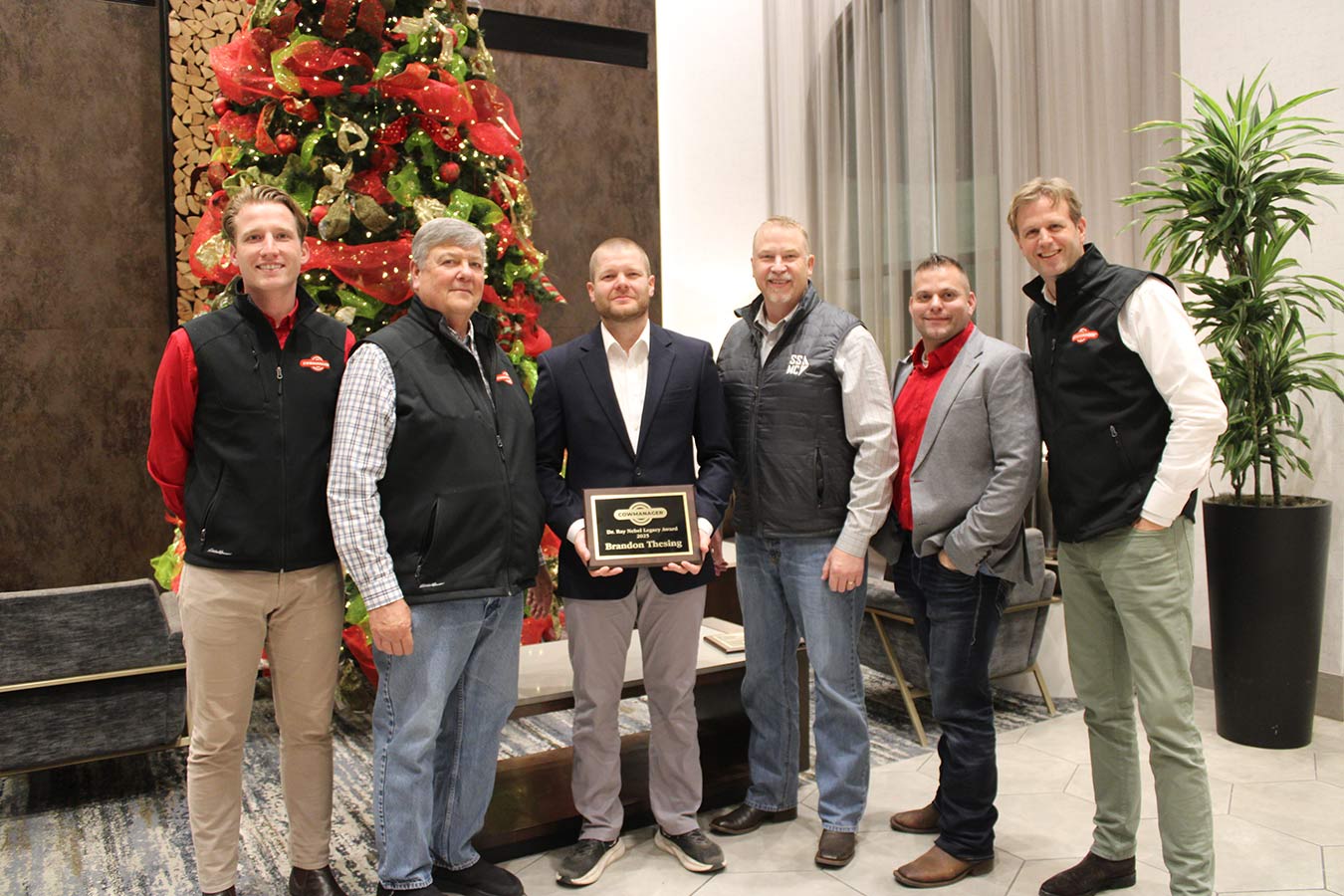
L-R: Thijs Griffioen, CowManager; Dr Ray Nebel; Brandon Thesing, Key Account Manager SSMC; Chris Sigurdson, CEO SSMC; Jared Krull, CowManager; Alexander van Tienhoven, CowManager.

CowManager Jared Krull Award
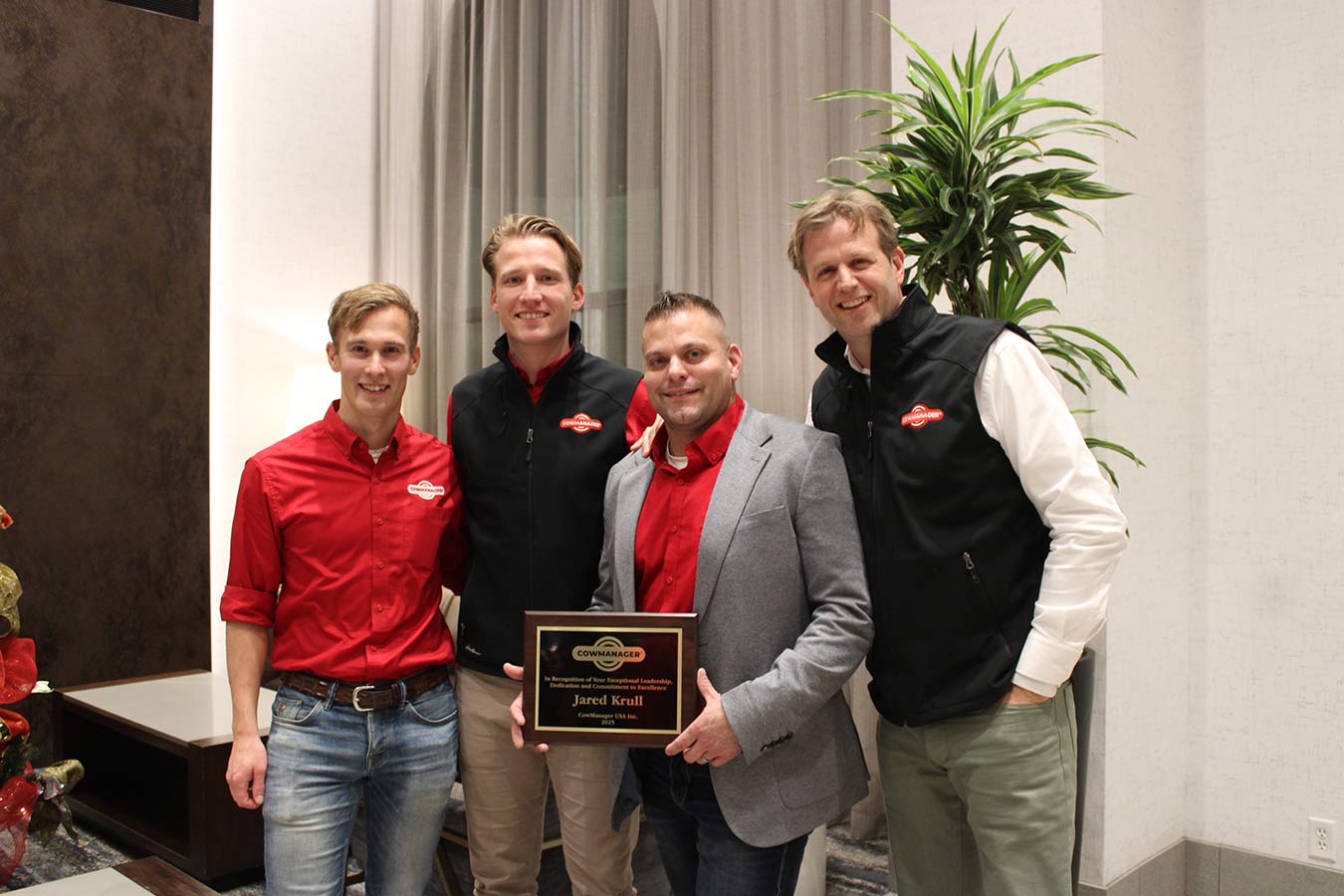
L-R: Tom Stigter, CowManager; Thijs Griffioen, CowManager; Jared Krull, CowManager; Alexander van Tienhoven, CowManager.

CowManager Specialist of the Year

Matt Staner of CentralStar Cooperative in Wisconsin earned the 2025 CowManager Specialist of the Year Award. This award honors Stef Booijink and is given annually to a Specialist who demonstrates exceptional system knowledge, extensive installation experience and expert guidance on system integration.

Staner was recognized for his passion for the product, outstanding customer support and meticulous attention to detail. His accomplishments in 2025 include completing six installations, further underscoring his dedication and expertise.

Dr. Ray Nebel Legacy Award

Brandon Thesing of Select Sires Member Coop in Minnesota received the Dr. Ray Nebel Legacy Award. This award honors Ray Nebel, Ph.D., retired vice president of technical services and a driving force behind Select Sires’ partnership with CowManager. Thesing was recognized for his exceptional work ethic, collaborative approach to promoting and selling CowManager, and his commitment to going above and beyond to meet customer needs. A true advocate for the cow monitoring system, he is dedicated to making a meaningful, everyday difference for producers.

Special Thanks

In addition, CowManager recognized Jared Krull for his outstanding leadership, dedication and unwavering commitment to excellence. As Vice President of Sales and Service at CowManager USA, Krull has played a pivotal role in driving the company’s growth across the United States.

His strategic vision and hands-on support have helped producers not only adopt CowManager’s technology, but also maximize its value on their operations. His contributions continue to strengthen CowManager’s presence in the U.S. market and elevate the success of producers nationwide.

About CowManager

At CowManager, we believe a successful dairy producer is a prepared dairy producer. With our revolutionary cow monitoring ear sensors, we ensure they’re always ahead and prepared for what’s coming, with actionable insights. We believe in working together to help dairy farmers reach their goals, whatever their ambitions are. Whether they have 20 or 20,000 cows; with CowManager they’ll have eyes on all of them.

In the United States, CowManager is distributed and supported by Select Sires Inc. For more information on CowManager, contact your CowManager Specialist at Select Sires.

*Written by Tara Bohnert, CowManager Performance Specialist for the USA.

In this article, CowManager Performance Speciliast Tara Bohnert explains the value of data on the dairy. Without insights, producers oftentimes rely on guesswork to make decisions. Bohnert explains that, thanks to data, you can turn that gut-feeling into data-driven decision making.

Data-Driven Decisions

I grew up in the era dial-up internet, road atlases and my first smart phone was a BlackBerry. I learned to breed cows in high school and through internships and industry have been lucky to work with herds of every size and all around the globe. Yet, here I sit still below the average age of a US dairy farmer.

The evolution of dairy farming over my lifetime is enough to write multiple books on. However, the part I am most excited about is the move to data-driven decision making. For once we have the tools available to let the cow be the source of truth and remove the bias.

Transformational Technology

Wearable activity systems were once a very operational tool letting users know when cows were in heat or how many steps they took. Today’s insights allow dairy producers to be more proactive than ever, giving users a competitive advantage. Those that go beyond the basics make a transformational change in how they dairy.

There are pieces of data from a sensor system that offers insights to managers and employees within the entire dairy. Imagine the productivity of stakeholder meetings when everyone brings facts verses opinions to the table. From calves to cows – every animal on the dairy has a voice.

On-Farm Investments

There’s no doubt that dry cows are the most under the radar group of cows on the dairy. They require minimal labor and minimal inputs. Yet they give us some of the biggest warning signs during the dry period on how their transition to lactation is going to go. Dairies that use these insights to navigate this crucial time get their cows off to a healthier start – which leads to gains in productivity and reproduction.

When we talk about creating clear visions for the future and cultural shifts amongst staff, it is imperative that the team sees the value of technology and how it works for them and not the other way around. The quickest way to kill a good investment is by internal sabotage. After all, data-driven decisions don’t just happen in the office, they come to life in the barn.

Get a Free System Demo

Get a glimpse of all the benefits and possibilities of using CowManager. A local representative will give you a tour through the system to show you how easy to use our app is and how it monitors your cows 24/7.

Request a Free Demo

CowManager, the global leader in smart dairy cow monitoring technology, is proud to have sponsored the World Dairy Expo Virtual Farm Tour featuring Wagner Farms Inc. of Oconto Falls, Wisconsin. For more than two decades, Expo’s Virtual Farm Tours have showcased some of the world’s most progressive dairy operations, highlighting excellence in genetics, technology, community engagement, environmental stewardship, and cow comfort.

This year’s tour, hosted on Friday, October 3, 2025 in Mendota 1 of the Exhibition Hall, spotlighted the Wagners’ fifth-generation dairy and their deep commitment to people, animals, and the environment.

Wagner Farms: A Family Dedicated to Progress

Owned and operated by Hank and Pam Wagner, along with their son Shawn Wagner and daughter Laura Raatz and her husband Tyler Raatz, Wagner Farms is home to 950 cows milked in a double-16 parallel parlor. The family’s focus is on developing functional cows that combine strong production with good health traits for long-term sustainability.

During the Virtual Farm Tour, Laura Raatz delivered an engaging and inspiring presentation, offering attendees a behind-the-scenes look at the family’s daily operations, technology integration, and commitment to continuous improvement. Her thoughtful insights and enthusiasm reflected the family’s dedication to both their people and their cows, earning praise from attendees for her clarity, warmth, and authenticity.

People. Animals. Environment

At Wagner Farms, People are the cornerstone of success. Team members are treated as an extension of the Wagner family, contributing to a farm culture rooted in teamwork, efficiency, and enjoyment. The Wagner’s believe that creating an environment where people love what they do helps fuel passion and drive long-term success. Mentorship, milestone celebrations, and camaraderie are everyday parts of life on the farm.

Animals are at the heart of every decision. From birth, calves receive attentive care guided by precise management systems—including the CowManager Youngstock Monitor. This technology supports growth rates exceeding 2.5 pounds per day and has helped the farm achieve an exceptional near 0% death loss—or as they proudly describe it, a 100% survival rate.

Watch the Virtual Farm Tour

Environmental Leadership and Innovation

Environmental stewardship is equally important to the Wagners. As a demonstration site for conservation practices, Wagner Farms showcases innovative systems that enhance productivity while protecting natural resources. Their autonomous irrigation system delivers water and nutrients directly to crops, reducing nutrient loss, lowering costs, easing manure management, and increasing yields—demonstrating how technology can drive both sustainability and profitability.

CowManager’s Commitment to Supporting Dairy Excellence

CowManager’s sponsorship of the Wagner Farms Virtual Tour reflects its mission to empower dairy producers with data-driven insights that improve herd performance, animal welfare, and farm efficiency. Through innovations such as lifetime monitoring, the CowManager App, and the award-winning Youngstock Monitor, producers can make proactive decisions that lead to healthier cows and more efficient operations.

“Supporting events like the World Dairy Expo Virtual Farm Tours allows us to highlight producers who exemplify the best in dairy farming,” said Gerard Griffioen, founder of CowManager. “The Wagner family represents the spirit of innovation, care, and leadership that defines the dairy industry today.”

Try the System

Curious to dive into the data? Request a free Demo and get a glimpse of the system.

Request a Free Demo

Hamilton, New Zealand – August 14, 2025 – CowManager, a global leader in smart cow monitoring solutions, is excited to announce the establishment of its own office in Hamilton, New Zealand. This strategic move marks a significant milestone in CowManager’s journey, bringing us closer to our New Zealand customers and enhancing the service, support, and innovation that our farmers rely on. The official transition to CowManager NZ will take place on Saturday, August 16.

A Decade of Growth and Success

Since tagging our first cow in New Zealand in 2014, CowManager has steadily grown to support hundreds of forward-thinking farms across the country. Over the past 10 years, our presence has built a solid foundation, and now, with a direct presence in New Zealand, CowManager is accelerating its efforts and continuing to help farmers thrive with enhanced support and capabilities.

“We’ve seen tremendous growth and success over the years, and now it’s time to take the next step,” says Jared Bekhuis, Managing Director of CowManager NZ.

“By adding specialists and establishing our direct presence in New Zealand, we’re enhancing our capabilities to deliver faster, more expert service exactly where it’s needed. At the same time, we are expanding our portfolio with exciting innovations like Draft my Cow, the Youngstock Monitor, and Find my Cow Flash. These new solutions will provide our farmers with even more powerful tools to optimize their operations and improve herd management. And we’re just getting started-keep an eye out for even more cutting-edge advancements that will further transform the way we support our farmers.”

This transition opens an exciting new chapter for CowManager. With more resources and local expertise, we’re better positioned to offer tailored solutions and increased responsiveness, helping farmers achieve even greater success with our innovative solutions.

“New Zealand’s dairy sector is world-renowned for its excellence,” Bekhuis adds. “We’re proud to contribute to its ongoing success and invest in the future of every farmer we serve.”

What This Means for You

The contracts between CowManager and our valued customers will remain unchanged. Your terms, support, and service remain intact, with no alterations to your agreement.

  • All current dealer employees will continue with CowManager NZ, along with additional new team members to enhance our support network.
  • Our new office will be located at 3/137 Ossie James Drive, Hamilton Airport.
  • You can reach us at our new office phone number: 0800 – 770566 or support@cowmanager.com per Saturday, August 16.
  • We’ll be providing new contact details for your respective contact people, including support staff. They will be in touch soon to share their updated contact information, ensuring a smooth transition.

Looking Ahead

With a stronger local presence, CowManager NZ will work even harder to deliver the best possible experience for our farmers. As always, we are here to ensure that you’re well-supported and prepared for whatever comes next in your dairy operation.

We look forward to continuing our journey together and working with you to achieve even greater success.

About CowManager

At CowManager, we are committed to providing dairy farmers with the tools they need to succeed. Our revolutionary cow monitoring ear sensors help farmers stay ahead with actionable insights on herd health, nutrition, fertility, and more. Whether you have 20 or 125,000 cows, CowManager ensures that farmers always have eyes on their herd. Learn more at www.cowmanager.com/newzealand.

Before you know it, mating season is just around the corner. A crucial time, as it sets the stage for the next generation of healthy and productive cows in your herd. Good preparation is essential in getting the best results possible for your business. These 10 tips make the perfect pre-mating season checklist.

Download Mating Season Checklist

Going into mating while using the CowManager system? Download our CowManager Pre-Mating Checklist to make sure you’ve prepped your system settings for this season.

Download Checklist

1: Set Mating Goals

Before you kick off mating season, take a minute to decide what your main mating goals are. Are you looking to improve genetics, improve milk production or replacement heifers? Narrowing your goals down in advance will help you make informed decisions for breeding and mating.

2: Check on Your Cows

Make sure potentially underperforming cows are on your radar early on so you can still make the adjustments needed to ensure they’ll do well during mating. Unsure? Have your vet or breeding specialist analyse your cows’ performance by adding them in MultiView. CowManager’s Nutrition Module helps you identify at-risk cows up to 50 days before calving.

3: Consider Fertility Testing

Fertility testing your cows can help identify any reproductive issues that may affect their performance during mating season, such as infections or hormonal imbalances. Identifying and addressing these issues beforehand could save you a lot of stress and pain down the road.

4: Prep Your Paddocks

Take time to set the mood and make sure your cows will be comfortable. Ensure that your mating paddocks are in good condition and provide adequate shelter and clean water for your cows.

5: Develop a Mating Plan

A well-thought-out breeding plan is key to achieve your goals. Consider factors such as timing, synchronization protocols, available staff, and the selection of appropriate sires. Have plan Bs at the ready in case of any contingencies, such as weather disruptions.

6: Keep Track of Everything

Keep detailed records of everything leading up to, during, and after mating season. Record mating dates, sire information, and any fertility testing results. This will help you analyse results and help identify risks, and your future self will be eternally grateful to you for being so thorough. CowManager’s Fertility Insights helps you keep detailed records of all your cows’ cycles.

7: Monitor Heat Detection

Go for success: Rely on CowManager’s Fertility Module and never miss a heat. Make sure all cows are tagged with the ear sensor so you can recognise peak heats, pregnancies, non-cycling cows and potential abortions. Make sure your entire staff knows which alerts to look out for and give them access to the system by simply adding their email addresses in MultiView.

“We’ve increased our six week in calf rate by about 15%, so we’ve gone up to 78% in our six week in calf rate. Our empty rate has dropped from about 24% down to 13%. It’s quite substantial, yeah. We’re also picking up those silent heats that we weren’t able to pick up beforehand.” – Mike Marshall, Otago farmer. Watch his full story.

8: Keep Your Herd Healthy

A healthy herd equals a healthy base to build your breeding season upon. Work closely with your vet and team to make sure your cows are as healthy as possible before breeding season begins and throughout, and make sure your cows are getting the nutrition they need to be successful. CowManager’s Health Module can help you monitor health as well as discovery.

9: Make Sure You’re Up to Date

Make sure the systems you use are updated to the newest version available before the season starts. This goes for your cow monitoring system, your herd management system, as well as your drafting gate. Good to know: If you’re using CowManager and some ear sensors are close to underperforming, the system will alert you of this months in advance.

“Basically, CowManager finds a cow on heat and the gate drafts them out after the morning milkings. With the two systems we’re saving a labour unit over mating, that’s for sure. Nobody needs to think about anything, really.” – Ruurd Dijkstra, Waikato farmer. Discover the full story.

10: Be Willing to Make Changes

A prepared farmer is a successful farmer, but sometimes life throws us curveballs. Be prepared to make last-minute adjustments to your plan if any unforeseen weather or health conditions pop up. Just make sure to keep monitoring closely and keep detailed records.

Meet the Team

In New Zealand, CowManager is distributed and supported by CowManager NZ. No one knows the system better than them. Want to know more? Don’t hesitate to reach out. They’re excited to discuss cow monitoring with you and answer any questions you may have.

Contact the Team